
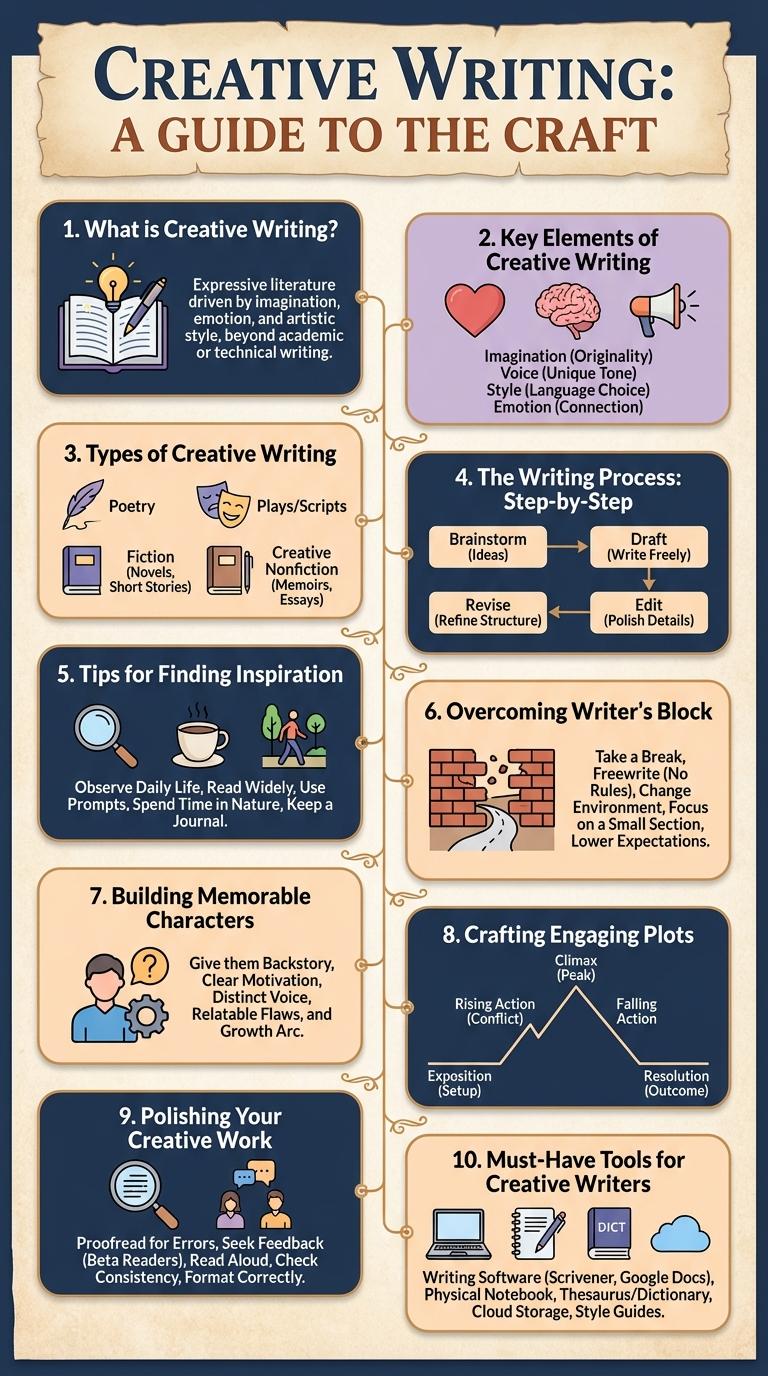
Creative writing unlocks the imagination by encouraging original storytelling and expressive language. Infographics visually organize key elements such as plot structure, character development, and writing techniques to enhance understanding. This format simplifies complex concepts, making creative writing accessible to beginners and inspiring experienced writers.
What is Creative Writing?
Creative writing is the art of expressing ideas and stories in a vivid, imaginative way. It goes beyond just reporting facts by engaging the reader's emotions and creativity.
- Imaginative Expression - Creative writing uses original ideas and vivid descriptions to entertain and inspire readers.
- Emotional Engagement - It aims to evoke feelings and connects deeply with the audience through relatable characters and themes.
- Varied Formats - Includes genres like fiction, poetry, scripts, and creative nonfiction that allow diverse storytelling styles.
Key Elements of Creative Writing
Creative writing thrives on vivid imagination, compelling characters, and engaging plots. Key elements include strong narrative voice, descriptive language, and emotional depth. Mastering these components enhances storytelling and captivates readers.
Types of Creative Writing
Creative writing encompasses various types, each with unique styles and purposes. Common types include fiction, poetry, drama, and creative nonfiction, all offering distinct ways to express ideas and emotions. Understanding these types helps writers choose the best form to convey their stories effectively.
| Type | Description |
|---|---|
| Fiction | Imaginative storytelling, including novels and short stories. |
| Poetry | Expressive writing using rhythm, metaphor, and imagery. |
| Drama | Scripted works intended for performance or dialogue. |
| Creative Nonfiction | Fact-based narratives told with literary techniques. |
The Writing Process: Step-by-Step
Creative writing is an art that transforms ideas into compelling stories, poems, or scripts. Mastering the writing process helps bring clarity and structure to creative expression.
The writing process involves multiple steps: brainstorming, drafting, revising, editing, and publishing. Each step plays a crucial role in refining raw ideas into polished works.
Tips for Finding Inspiration
| Tip | Description |
|---|---|
| Observe Surroundings | Pay close attention to everyday environments to discover unique story ideas and vivid imagery. |
| Read Widely | Explore diverse genres and authors to spark new perspectives and writing techniques. |
| Keep a Journal | Record thoughts, dreams, and experiences regularly to capture inspiration in raw form. |
| Engage in Prompts | Use creative writing prompts or challenges to push boundaries and generate fresh ideas. |
| Connect with Others | Discuss ideas with fellow writers or join writing groups to gain feedback and motivation. |
Overcoming Writer's Block
Creative writing can be challenging, especially when faced with writer's block. Overcoming this obstacle is essential for maintaining productivity and inspiration.
Set small, achievable writing goals to break through the block. Change your environment or try free writing exercises to stimulate creativity. Taking breaks and reading other works can also refresh your mind and ignite new ideas.
Building Memorable Characters
How can you build memorable characters in creative writing? Memorable characters come to life through detailed personality traits and distinct motivations. Crafting unique backstories helps readers connect emotionally and remember these characters long after finishing the story.
Crafting Engaging Plots
Crafting engaging plots is essential for captivating readers and driving a story forward. A well-structured plot creates suspense, develops characters, and delivers satisfying resolutions.
- Introduce Conflict Early - Present a compelling problem or challenge that hooks readers from the beginning.
- Develop Clear Goals - Define what the protagonist strives to achieve to maintain narrative focus and momentum.
- Include Twists and Surprises - Add unexpected events that keep the audience curious and emotionally invested.
Effective plot crafting combines structure, creativity, and emotional stakes to create memorable stories.
Polishing Your Creative Work
Polishing your creative work transforms raw ideas into compelling narratives that resonate with readers. Refinement enhances clarity, engages audiences, and elevates the overall quality of your writing.
- Revise for Clarity - Review sentence structure and word choice to ensure your message is clear and impactful.
- Edit for Grammar and Style - Correct grammatical errors and maintain a consistent voice to strengthen readability.
- Seek Feedback - Share your work with trusted readers to gain valuable insights and identify areas for improvement.