
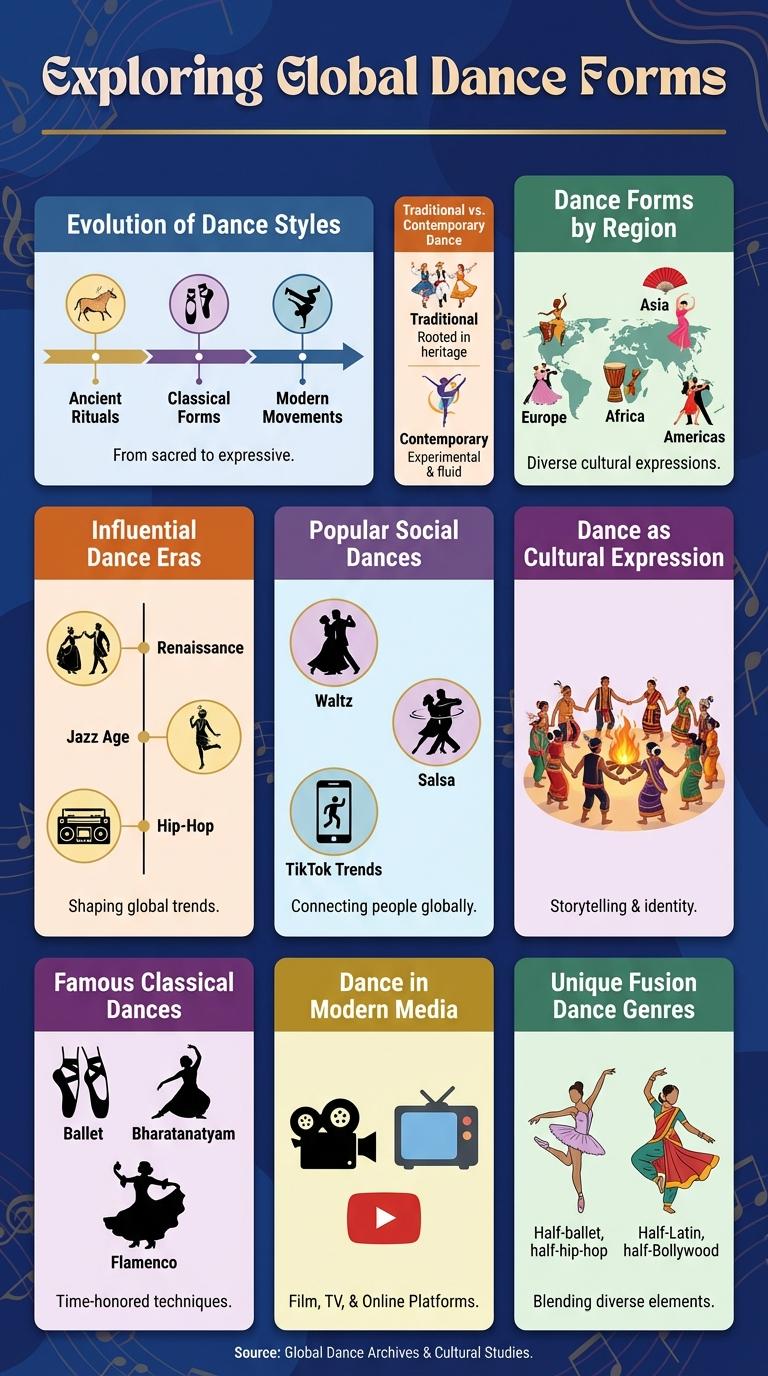
Dance forms showcase a rich tapestry of cultural expression and artistic movement. Each style embodies unique rhythms, techniques, and histories that reflect diverse traditions worldwide. Exploring these dance forms through infographics visually highlights their distinct characteristics and evolution.
Exploring Global Dance Forms
Dance is a universal language that reflects cultural heritage and artistic expression worldwide. Exploring diverse dance forms reveals unique styles, history, and movements intrinsic to each culture.
- Ballet - Originating from the Italian Renaissance, ballet emphasizes graceful movements and precise techniques rooted in European tradition.
- Samba - A vibrant Brazilian dance known for its rhythmic footwork and energetic hip movements, symbolizing Afro-Brazilian culture.
- Kathak - A classical Indian dance form characterized by intricate footwork and storytelling through expressive gestures and spins.
Evolution of Dance Styles
Dance styles have evolved significantly from traditional folk dances to contemporary and urban forms, reflecting cultural, social, and technological changes worldwide. Classical dance forms like ballet and Kathak laid the foundation, while modern dance introduced expressive freedom and innovation. Today, styles such as hip-hop, salsa, and fusion blends showcase the dynamic evolution of dance, influenced by globalization and multimedia.
Traditional vs. Contemporary Dance
What distinguishes traditional dance from contemporary dance?
Traditional dance is rooted in cultural heritage and passed down through generations, often reflecting rituals and historical narratives. Contemporary dance emphasizes innovation, personal expression, and blends various styles to create new movements.
| Aspect | Traditional Dance |
|---|---|
| Origin | Ancient cultural practices and ceremonies |
| Movement Style | Structured, symbolic, and repetitive |
| Costume | Traditional attire reflecting cultural identity |
| Purpose | Preservation of history and community values |
| Aspect | Contemporary Dance |
|---|---|
| Origin | 20th century innovation combining multiple genres |
| Movement Style | Fluid, improvisational, and experimental |
| Costume | Flexible, often minimalist to enhance movement |
| Purpose | Self-expression and exploration of new ideas |
Dance Forms by Region
Dance forms vary widely across different regions, reflecting unique cultural heritages and traditions. Each region offers distinct styles that showcase local history and artistic expression.
An infographic highlighting dance forms by region can visually represent the diversity and richness of global dance.
- Asia: Classical and Folk Dances - India's Bharatanatyam and Japan's Kabuki emphasize storytelling through intricate movements.
- Africa: Traditional and Ceremonial Dances - West African drum dances and Maasai jumping dances display rhythmic intensity and community bonding.
- Europe: Ballet and Folk Dancing - French ballet and Irish stepdance reflect refined technique and vibrant cultural identity.
Influential Dance Eras
Dance forms have evolved through distinct influential eras, each shaping the art with unique styles and cultural significance. The Renaissance period introduced courtly dances emphasizing grace and formality, while the 20th century saw the rise of modern and contemporary dance, breaking traditional boundaries. Hip-hop and street dance emerged in the late 20th century, reflecting urban culture and social movements worldwide.
Popular Social Dances
| Dance Form | Description |
|---|---|
| Salsa | Latin American partner dance with energetic steps and rhythmic hip movements, popular in clubs worldwide. |
| Swing | Originating from the 1920s, Swing dance features upbeat jazz rhythms and lively partner interactions. |
| Tango | Argentine dance characterized by dramatic poses and close partner connection emphasizing passion and precision. |
| Hip-Hop | Street dance style with complex rhythms, isolations, and freestyle movements often performed to rap and urban beats. |
| Foxtrot | Smooth progressive ballroom dance with long, flowing movements suited for big band music. |
Dance as Cultural Expression
Dance serves as a powerful medium for cultural expression, reflecting the history, values, and traditions of diverse communities worldwide. Each dance form embodies unique movements, costumes, and music that tell stories passed down through generations.
Classical dances like Bharatanatyam and Flamenco showcase spiritual and historical narratives, while folk dances such as the Irish Jig and African Kpanlogo celebrate communal identity and social rituals. These dance forms preserve cultural heritage and promote intercultural understanding across the globe.
Famous Classical Dances
Classical dance forms are a vital part of cultural heritage, each telling unique stories through intricate movements and expressions. Famous classical dances have deep historical roots and are performed worldwide, showcasing artistry and tradition.
The Bharatanatyam from India is known for its fixed upper torso and expressive hand gestures. Kathak emphasizes rhythm and footwork, telling tales from ancient epics. Odissi features fluid movements and sculpturesque poses reflecting temple art.
Dance in Modern Media
Dance in modern media has transformed the way audiences experience various dance forms, making them more accessible and engaging. Platforms like social media, music videos, and streaming services showcase diverse styles, reaching global audiences instantly.
Television shows and movies often feature dance as a central element, promoting popular styles such as hip-hop, contemporary, and ballet. This exposure has fueled interest in dance education and inspired new generations of performers worldwide.