
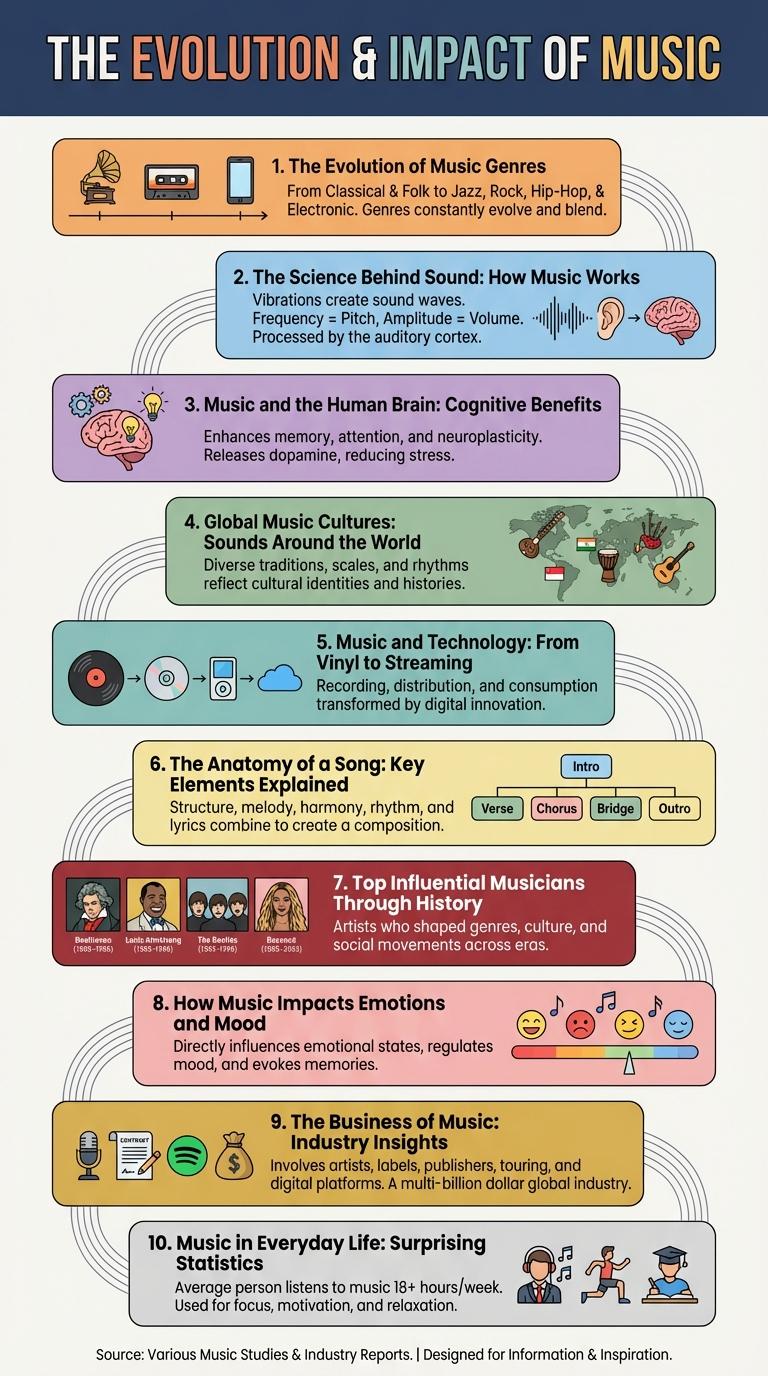
Infographics about music visually highlight key elements such as genres, history, and influential artists, making complex information easy to understand. They use vibrant graphics and data to engage viewers and convey trends in music consumption, production, and performance. These visual tools enhance learning and appreciation of music's cultural and technological impact worldwide.
The Evolution of Music Genres
How has music evolved across different genres over time? Music genres have continually transformed, reflecting cultural, technological, and social changes. From classical roots to modern electronic sounds, each genre tells a unique story of musical innovation.
| Era | Key Genres |
|---|---|
| Early 1900s | Classical, Blues, Jazz |
| 1950s-60s | Rock n' Roll, Rhythm & Blues, Soul |
| 1970s-80s | Disco, Punk, Hip Hop |
| 1990s-2000s | Grunge, Electronic, Pop |
| 2010s-Present | Trap, EDM, Indie |
The rise of digital production has dramatically influenced genre blending and accessibility. Streaming platforms enable diverse musical styles to reach global audiences instantly.
The Science Behind Sound: How Music Works
Sound is a vibration that travels through air or other mediums as waves, which are interpreted by our ears and brain as music. Music combines frequency, amplitude, and rhythm to create patterns that evoke emotions and cognitive responses.
- Frequency - Determines the pitch of a sound by the number of vibrations per second (measured in Hertz).
- Amplitude - Controls the loudness or volume of a sound wave based on wave height.
- Waveform - Shapes the timbre, making different instruments and voices uniquely recognizable.
The brain processes these sound waves, linking auditory signals with memory and emotion to create the rich experience of music.
Music and the Human Brain: Cognitive Benefits
Music profoundly influences the human brain, enhancing cognitive functions and emotional well-being. Listening to and playing music activates multiple brain regions involved in memory, attention, and motor skills.
Regular engagement with music improves neural plasticity, leading to better learning abilities and problem-solving skills. Studies show that music training enhances verbal memory, spatial reasoning, and IQ levels. Music also reduces stress by lowering cortisol levels, promoting mental clarity and focus.
Global Music Cultures: Sounds Around the World
Music reflects diverse global cultures, connecting people through unique sounds and rhythms. Each region showcases distinct instruments and styles that express local traditions.
From African drum patterns to Asian string melodies, global music represents intricate cultural narratives. Exploring these sounds reveals shared human creativity and rich heritage worldwide.
Music and Technology: From Vinyl to Streaming
Music technology has evolved dramatically from the analog era of vinyl records to the digital age of streaming platforms. Vinyl provided a tactile and warm listening experience, while streaming offers instant access to millions of songs worldwide. This transformation has reshaped how people discover, consume, and share music globally.
The Anatomy of a Song: Key Elements Explained
Music consists of various components that work together to create a complete and engaging experience. Understanding the anatomy of a song helps listeners appreciate its structure and emotional impact.
- Melody - The sequence of musical notes that forms the main tune of the song, often the most memorable part.
- Harmony - The combination of different musical notes played or sung simultaneously to support the melody.
- Rhythm - The pattern of beats and timing that drives the pace and flow of the song.
Top Influential Musicians Through History
Music has evolved through centuries, shaped by groundbreaking artists who defined genres and inspired generations. These influential musicians transcended their time, creating lasting cultural impacts worldwide.
- Ludwig van Beethoven - A pivotal composer bridging Classical and Romantic eras, renowned for symphonies that revolutionized orchestral music.
- Elvis Presley - The "King of Rock and Roll" who popularized rock music and transformed popular culture in the 20th century.
- The Beatles - Iconic British band whose innovative songwriting and recording techniques reshaped modern pop and rock music.
How Music Impacts Emotions and Mood
Music has a powerful effect on human emotions, influencing feelings such as happiness, sadness, and excitement. Different genres and tempos can trigger distinct emotional responses in listeners.
Research shows that listening to upbeat music boosts mood and increases energy levels. Slow, melodic tunes often induce relaxation and reduce stress.
The Business of Music: Industry Insights
| Aspect | Insight |
|---|---|
| Global Market Size | $26 billion in 2023, driven by streaming and live events |
| Revenue Streams | 35% Streaming, 30% Live Performances, 20% Physical Sales, 15% Licensing & Merchandising |
| Top Streaming Platforms | Spotify, Apple Music, Amazon Music |
| Artist Revenue Split | Typically 15-20% from streaming royalties, higher from live shows and merchandise |
| Industry Trends | Growth in direct-to-fan sales, AI music production, and blockchain for royalty tracking |