
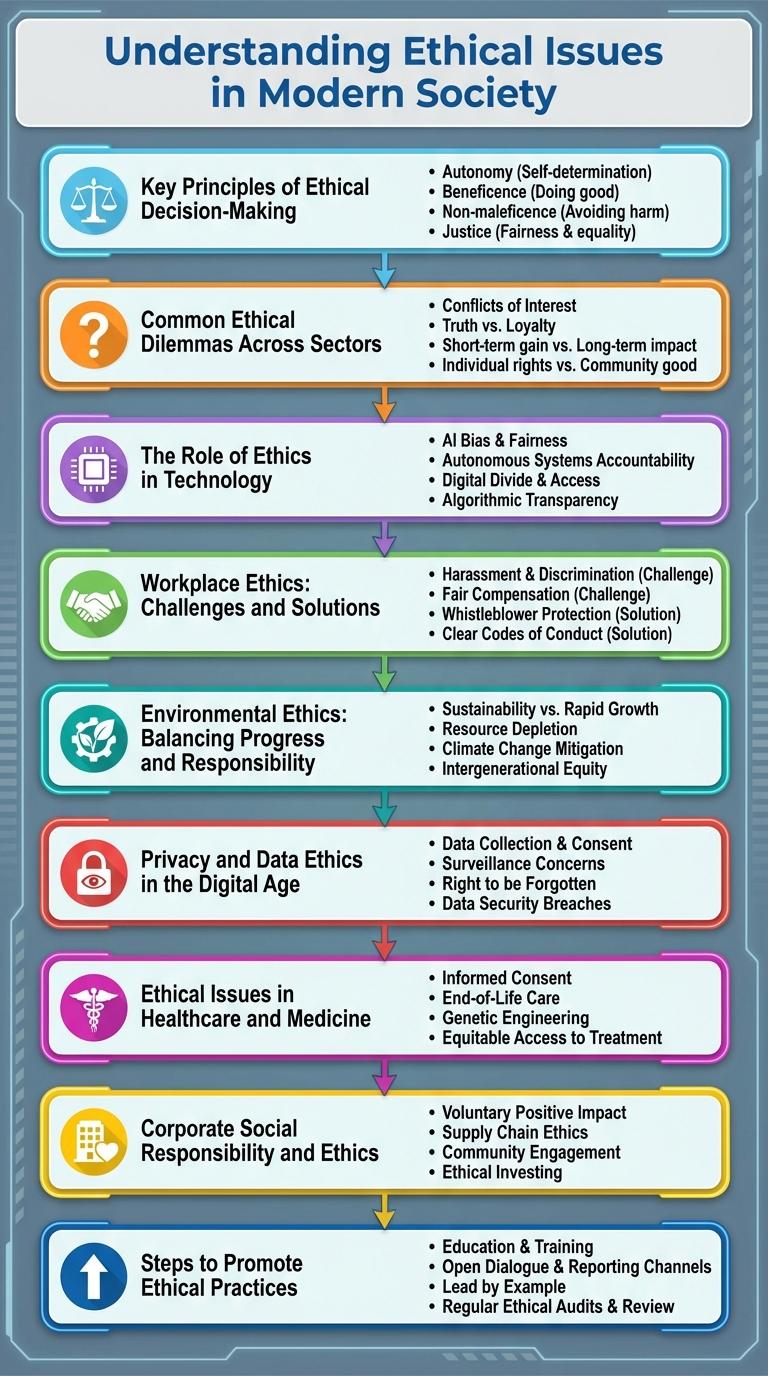
Exploring ethical issues through an infographic offers a clear and concise way to visualize complex moral dilemmas. This format highlights key concerns such as privacy, bias, and accountability, making them easier to understand and address. Ethical challenges impact industries across the board, emphasizing the need for informed decision-making and transparency.
Understanding Ethical Issues in Modern Society
Understanding ethical issues in modern society is crucial for navigating complex moral landscapes shaped by technology, culture, and governance. Ethical awareness helps individuals and organizations make responsible decisions that respect human rights and social values.
- Privacy Concerns - The increasing use of digital data raises questions about consent and surveillance.
- Artificial Intelligence Bias - AI systems can unintentionally perpetuate discrimination if not carefully designed and monitored.
- Environmental Responsibility - Ethical considerations involve sustainable practices to mitigate climate change impact.
- Workplace Ethics - Fair treatment and transparency are vital for fostering trust and integrity at work.
- Social Equity - Addressing disparities requires commitment to justice and inclusion in policies and practices.
Recognizing and addressing these ethical issues promotes a more just and accountable society.
Key Principles of Ethical Decision-Making
Ethical decision-making involves applying core principles that guide individuals and organizations toward morally sound choices. These principles help navigate complex situations by balancing values, rights, and responsibilities.
The key principles include autonomy, ensuring respect for individuals' decisions; beneficence, promoting well-being and preventing harm; justice, emphasizing fairness and equality; and fidelity, maintaining trust and commitment. Understanding and applying these principles fosters accountability and integrity in decision-making processes.
Common Ethical Dilemmas Across Sectors
| Sector | Common Ethical Dilemmas |
|---|---|
| Healthcare | Patient confidentiality breaches, informed consent challenges |
| Finance | Insider trading, conflict of interest, fraud |
| Technology | Data privacy concerns, AI bias, intellectual property violations |
| Education | Academic dishonesty, equitable access to resources |
| Corporate | Whistleblowing, discrimination, environmental accountability |
The Role of Ethics in Technology
What is the role of ethics in technology development? Ethics guides responsible innovation to ensure technology benefits society without causing harm. It addresses concerns like privacy, security, and fairness in technological advancements.
How does ethical decision-making impact technology companies? Companies that prioritize ethics build trust with users and avoid legal or reputational risks. Ethical frameworks help navigate dilemmas in AI, data use, and automation.
Why is transparency important in ethical technology use? Transparency allows users to understand how their data is collected and used. Clear communication fosters accountability and informed consent in digital services.
What ethical challenges arise from artificial intelligence? AI raises issues like bias, discrimination, and loss of human control. Ethical guidelines are necessary to ensure AI systems remain fair, safe, and aligned with human values.
How can regulatory policies enforce ethics in technology? Regulations set mandatory standards for privacy, security, and ethical AI deployment. They compel organizations to adopt practices that protect users and promote societal welfare.
Workplace Ethics: Challenges and Solutions
Workplace ethics involves principles guiding behavior and decision-making to maintain integrity and fairness. Ethical challenges in the workplace can lead to conflicts, reduced productivity, and damaged reputations.
Common ethical issues include discrimination, harassment, conflicts of interest, and misuse of company resources. Organizations implement training programs, clear policies, and anonymous reporting systems to address these challenges. Cultivating an ethical culture fosters trust, accountability, and long-term success.
Environmental Ethics: Balancing Progress and Responsibility
Environmental ethics explores the relationship between human progress and the responsibility to protect natural ecosystems. Key issues include resource depletion, pollution, and biodiversity loss caused by industrial growth. Striking a balance requires sustainable development practices that prioritize long-term ecological health alongside economic advancement.
Privacy and Data Ethics in the Digital Age
Privacy and data ethics have become critical concerns in the digital age, influencing how personal information is collected, stored, and used. Ethical practices in data management ensure the protection of individual rights and promote transparency in technology.
Addressing privacy challenges requires ongoing vigilance and responsible behavior from both organizations and users.
- Data Consent - Users must be fully informed and give explicit permission before personal data is collected or processed.
- Data Security - Robust security measures are essential to protect sensitive information from unauthorized access or breaches.
- Transparency - Organizations should clearly disclose data usage policies and practices to maintain user trust.
Ethical Issues in Healthcare and Medicine
Ethical issues in healthcare and medicine revolve around patient rights, informed consent, confidentiality, and equitable access to treatment. These concerns ensure that medical practices prioritize patient welfare and maintain trust within the healthcare system.
Key topics include end-of-life decisions, allocation of scarce resources, and the use of emerging technologies such as genetic testing and artificial intelligence. Addressing these ethical challenges requires balancing medical innovation with respect for human dignity and legal standards.
Corporate Social Responsibility and Ethics
Corporate Social Responsibility (CSR) and ethics are vital components of modern business practices, influencing reputation and stakeholder trust. Companies prioritizing ethical behavior contribute to sustainable development and social well-being.
- Transparency in Reporting - Companies disclose social and environmental impacts honestly to build credibility and accountability.
- Fair Labor Practices - Ensuring safe working conditions and fair wages protects employee rights and promotes ethical standards.
- Environmental Responsibility - Businesses adopt eco-friendly policies to minimize negative environmental effects and support sustainability.