
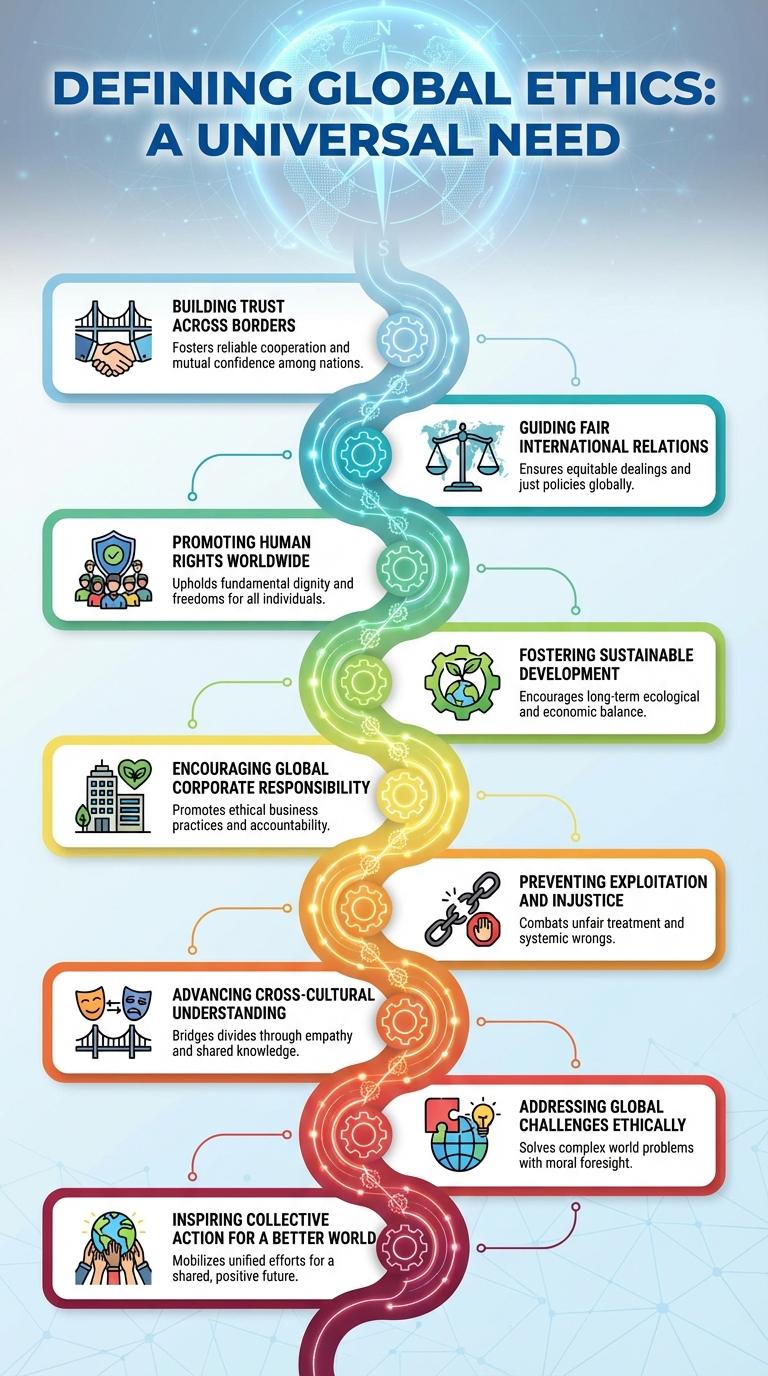
Global ethics guide decision-making by establishing shared values and principles that promote fairness, respect, and responsibility across cultures. They address complex challenges like human rights, environmental sustainability, and social justice on a worldwide scale. Understanding the purpose of global ethics fosters cooperation and ethical behavior in an interconnected world.
Defining Global Ethics: A Universal Need
Global ethics establish a framework for shared moral principles across diverse cultures and societies. This universal need promotes harmony and responsible decision-making worldwide.
- Promotes Cultural Respect - Encourages understanding and appreciation of different cultural values and beliefs.
- Guides International Cooperation - Provides ethical standards for collaboration between nations and organizations.
- Supports Human Rights - Upholds fundamental rights and dignity for all individuals globally.
Defining global ethics is essential for fostering a just and sustainable world community.
Building Trust Across Borders
Global ethics promote a shared framework of values that guide behaviors across different cultures and nations. Building trust across borders fosters cooperation, reduces conflicts, and supports sustainable development worldwide. Emphasizing transparency, respect, and accountability strengthens international relationships and economic partnerships.
Guiding Fair International Relations
Global ethics establish universal principles that promote justice, respect, and equality among nations. These principles help create a foundation for fair and peaceful international relations.
By guiding behavior in diplomacy, trade, and human rights, global ethics reduce conflicts and enhance cooperation between countries. They encourage transparency, mutual respect, and accountability on the global stage.
Promoting Human Rights Worldwide
| Purpose of Global Ethics | Promoting Human Rights Worldwide |
|---|---|
| Ensuring Equality | Global ethics advocate for equal treatment regardless of race, gender, nationality, or religion. |
| Protecting Fundamental Freedoms | Supports the right to freedom of expression, belief, and assembly across all nations. |
| Combating Discrimination | Works to eliminate systemic biases and social injustices on a global scale. |
| Encouraging Accountability | Promotes responsible governance and adherence to international human rights laws. |
| Fostering Global Solidarity | Builds cooperation among countries to address human rights challenges collectively. |
Fostering Sustainable Development
Global ethics guide responsible actions that prioritize environmental protection and social equity. Fostering sustainable development ensures resources meet current needs without compromising future generations. Ethical practices promote harmonious coexistence between people, economies, and the planet.
Encouraging Global Corporate Responsibility
Global ethics promote responsible behavior among corporations worldwide, ensuring business practices benefit society and the environment. Encouraging global corporate responsibility helps create sustainable economic growth and fosters trust across international markets.
Corporations guided by global ethics adopt transparent policies that respect human rights and environmental standards. Ethical global business practices reduce corruption and contribute to fair trade. This fosters collaboration and accountability, empowering companies to make positive social and environmental impacts worldwide.
Preventing Exploitation and Injustice
Global ethics serve as a universal framework that guides fair treatment and respect for all individuals. Preventing exploitation and injustice is a key goal that ensures equitable opportunities and human dignity worldwide.
Global ethics promote accountability and discourage harmful practices that exploit vulnerable populations.
- Protects Human Rights - Establishes standards to prevent abuse and uphold individual freedoms across nations.
- Ensures Fair Labor Practices - Advocates for safe working conditions and equitable wages to avoid exploitation.
- Promotes Social Justice - Supports policies that reduce inequality and prevent systemic discrimination.
Advancing Cross-Cultural Understanding
What is the primary goal of global ethics in advancing cross-cultural understanding? Global ethics seeks to establish shared moral principles that transcend cultural differences. This approach promotes respect and collaboration among diverse societies.
How does advancing cross-cultural understanding benefit global cooperation? Recognizing common ethical values helps reduce conflicts and fosters peaceful interactions. It enables nations and communities to work together effectively on global issues.
Why is embracing diversity essential in global ethics? Valuing different cultural perspectives enriches ethical discussions and leads to more inclusive solutions. This inclusivity strengthens trust and mutual respect worldwide.
What role does education play in promoting cross-cultural understanding? Educational programs focused on global ethics raise awareness of cultural differences and shared human values. These programs prepare individuals to engage respectfully in an interconnected world.
How do international organizations support ethical cross-cultural practices? Organizations develop frameworks and guidelines to encourage ethical behavior across cultures. These efforts help harmonize standards and facilitate international dialogue.
Addressing Global Challenges Ethically
Global ethics serves as a framework for addressing worldwide issues through moral principles that transcend national borders. It emphasizes responsible decision-making that respects human rights and environmental sustainability.
Addressing global challenges ethically ensures fair treatment of all individuals and communities affected by issues such as climate change, poverty, and conflict. It promotes collaboration among nations to achieve just and lasting solutions.