
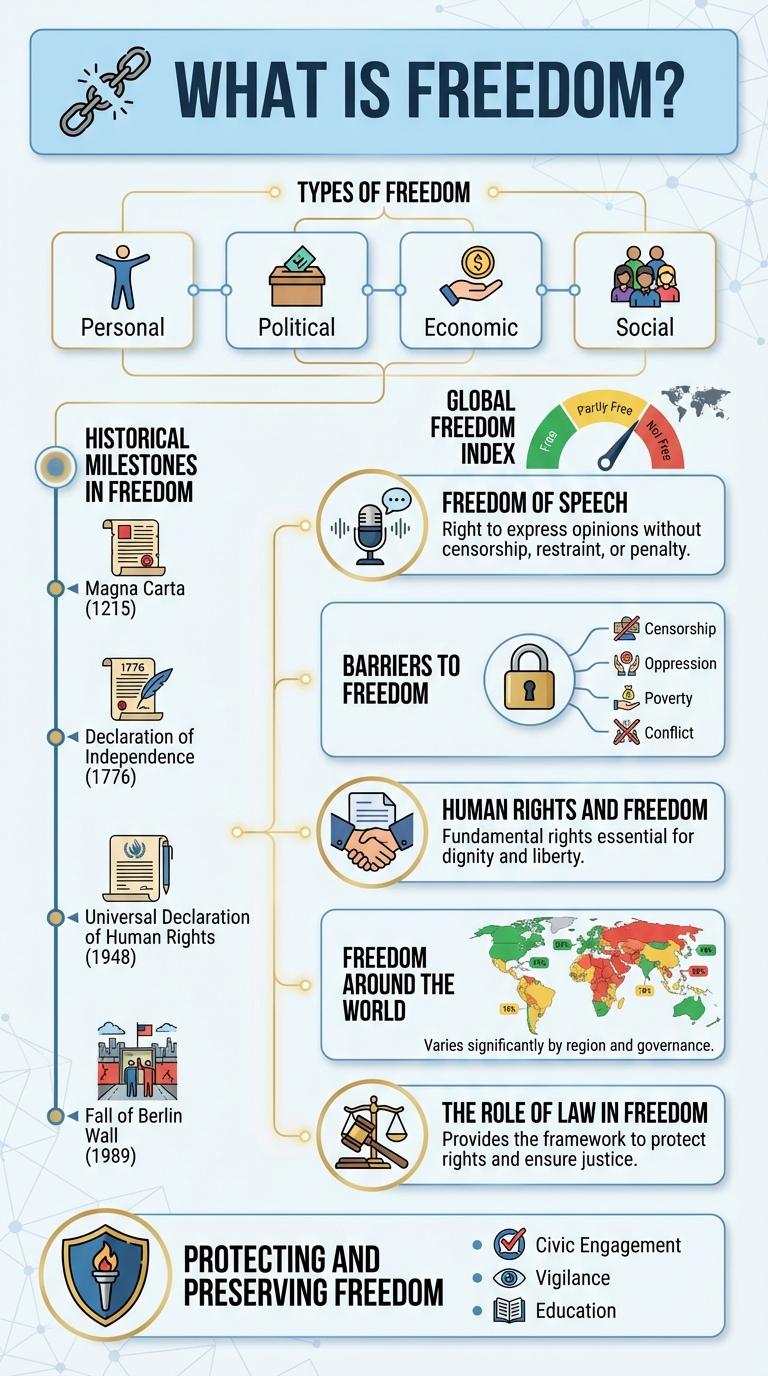
Exploring the concept of freedom reveals its vital role in shaping individual rights and societal values. This infographic highlights key dimensions of freedom, including political, social, and economic aspects, to provide a comprehensive understanding. Visual data demonstrates how freedom varies globally and impacts quality of life.
What is Freedom?
What is freedom?
Freedom is the power or right to act, speak, or think without hindrance or restraint. It embodies the ability to make choices independently and live according to one's own values.
Types of Freedom
Freedom encompasses various dimensions that define human rights and personal liberties. Understanding these types helps clarify the scope of individual and collective autonomy in society.
Political freedom involves the right to participate in government and express opinions without oppression. Economic freedom ensures access to resources and the ability to make independent financial choices.
Historical Milestones in Freedom
Freedom has evolved through key historical milestones that shaped modern societies. The Magna Carta of 1215 limited royal power and laid the foundation for constitutional law. The Declaration of Independence in 1776 asserted individual rights, while the Universal Declaration of Human Rights in 1948 established global standards for freedom and equality.
Global Freedom Index
The Global Freedom Index measures the level of political rights and civil liberties in countries worldwide. It offers a comprehensive ranking to evaluate the freedom enjoyed by citizens across political, social, and economic dimensions.
- Ranking System - Countries are rated on a scale from 0 to 100 based on their freedom scores.
- Key Indicators - The Index assesses freedom of expression, rule of law, and political participation.
- Annual Updates - The Index is published yearly to reflect global changes in freedom and human rights.
The Global Freedom Index provides essential insights for policymakers, researchers, and advocates seeking to understand and improve freedom worldwide.
Freedom of Speech
Freedom of Speech is a fundamental human right that allows individuals to express their opinions without fear of government censorship or punishment. This right is essential for a democratic society, promoting open dialogue and the exchange of ideas.
Protecting Freedom of Speech enables people to challenge injustice and advocate for social change. It supports transparency and accountability in governments and institutions.
- Legal Protection - Most democracies enshrine freedom of speech within their constitutions to safeguard individual expression.
- Limitations - Freedom of speech is subject to restrictions to prevent hate speech, incitement to violence, and defamation.
- Global Variations - The degree of freedom of speech varies worldwide, with some countries imposing strict controls.
Barriers to Freedom
Freedom is a fundamental human right essential for personal and societal growth. Various barriers can restrict the full realization of this freedom across different contexts.
- Legal Restrictions - Laws and regulations can limit individual freedoms by imposing control over actions and speech.
- Economic Inequality - Financial disparities often restrict access to opportunities, reducing freedom for disadvantaged groups.
- Social Discrimination - Prejudice based on race, gender, or other identities creates obstacles that hinder equal freedom.
Human Rights and Freedom
Freedom is a fundamental human right that ensures individuals can express themselves, practice their beliefs, and live without oppression. Human rights, such as freedom of speech, freedom of religion, and freedom from discrimination, are essential for a just and equitable society. Protecting these freedoms promotes dignity, equality, and peace worldwide.
Freedom Around the World
| Country | Freedom Score (2024) |
|---|---|
| Finland | 94/100 |
| New Zealand | 92/100 |
| Canada | 90/100 |
| Japan | 85/100 |
| South Africa | 78/100 |
Freedom scores reflect political rights, civil liberties, and press freedom. Regions with high scores emphasize democratic governance, individual rights, and freedom of expression. Lower scores often indicate restrictions due to authoritarian regimes or conflict. Tracking freedom worldwide helps understand global trends in human rights and governance.
The Role of Law in Freedom
Freedom is a fundamental human right that allows individuals to express themselves and make choices without undue restraint. The law defines the boundaries within which freedom operates to ensure social order and protect individual rights.
Legal frameworks establish clear limits to prevent harm and conflicts while promoting equality and justice. By balancing personal liberties with societal needs, the law plays a crucial role in sustaining true freedom for all citizens.