
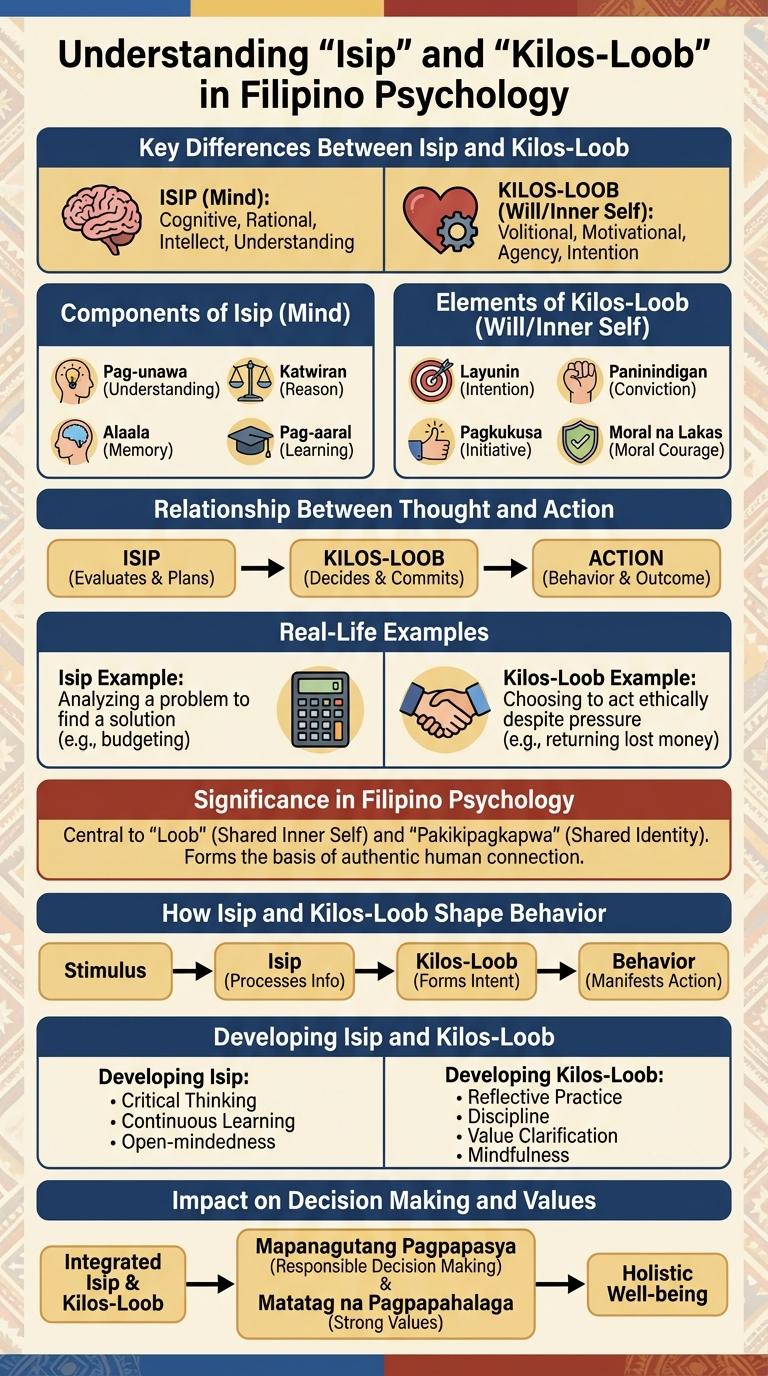
Isip at kilos loob, encompassing the mind and inner self, are key elements in understanding human behavior and decision-making. This infographic visually explores how thoughts and inner emotions influence actions, highlighting the interconnectedness between mental processes and personal will. By delving into these concepts, readers gain deeper insight into how internal factors shape external behavior.
Understanding “Isip” and “Kilos-Loob”
Isip refers to the mind or intellect, encompassing thoughts, reasoning, and awareness. It plays a crucial role in how individuals process information and make decisions.
Kilos-loob represents the inner will, character, or moral disposition guiding behavior and choices. It reflects the values, emotions, and intentions behind actions.
Key Differences Between Isip and Kilos-Loob
Isip and Kilos-Loob represent two distinct aspects of human cognition and behavior in Filipino psychology. Understanding their key differences enhances awareness of inner self and decision-making processes.
- Definition - Isip refers to the mind or intellect responsible for thinking, reasoning, and analysis.
- Definition - Kilos-Loob signifies the inner will or volition that drives decisions and actions based on values and emotions.
- Function - Isip processes logical information and formulates judgments while Kilos-Loob motivates behavior guided by conscience and moral choices.
- Nature - Isip is primarily cognitive and objective; Kilos-Loob is emotional and subjective, reflecting personal desires and intentions.
- Role in Decision-Making - Isip evaluates facts and options; Kilos-Loob determines commitment and the ultimate choice to act.
Recognizing the complementary roles of Isip and Kilos-Loob contributes to holistic self-understanding and ethical behavior.
Components of Isip (Mind)
What are the main components of Isip (Mind)? Isip consists of three primary components: thoughts, memory, and perception. These elements work together to process information and influence behavior.
Elements of Kilos-Loob (Will/Inner Self)
Kilos-Loob, or the will and inner self, comprises essential elements that shape human behavior and moral decisions. These elements include Pagpipilian (Choice), Pananagutan (Responsibility), Dahilan (Reason), Kaakibat na Damdamin (Accompanying Emotions), and Kagustuhan (Desire). Each component interacts to guide individuals in making ethical and purposeful actions reflective of their inner values.
| Element | Description |
|---|---|
| Pagpipilian | The conscious act of making a decision or selection. |
| Pananagutan | The acceptance of responsibility for one's decisions and actions. |
| Dahilan | The rational grounds or motivations behind a chosen action. |
| Kaakibat na Damdamin | The emotional responses linked to the decision-making process. |
| Kagustuhan | The inner desire that influences the will and intentions. |
Relationship Between Thought and Action
Isip at kilos loob embody the intricate connection between thought and action. Our decisions emerge from this dynamic interplay, shaping behavior and character.
Thoughts influence emotions, guiding intentional actions rooted in personal values. Conscious reflection allows individuals to evaluate motives before acting. This relationship affects moral judgment and behavioral consistency in daily life.
Real-Life Examples of Isip and Kilos-Loob
Isip at kilos-loob are crucial concepts in Filipino psychology that represent the mind and inner will or conscience. Real-life examples of isip include decision-making during crises, such as choosing to seek help during a flood. Kilos-loob manifests in acts like volunteering to aid neighbors, demonstrating compassion driven by inner values.
Significance in Filipino Psychology
Isip at kilos loob are central concepts in Filipino psychology, representing the intertwined nature of thought and inner self in guiding behavior. These elements highlight the holistic understanding of human experience in the Filipino cultural context.
- Isip (Mind) - Refers to the cognitive processes that influence perception, reasoning, and decision-making in Filipino psychology.
- Kilos Loob (Inner Self) - Denotes the moral and emotional core that drives voluntary actions and intentions within an individual.
- Interconnectedness - Isip and kilos loob work together to shape ethical behavior and social harmony in Filipino communities.
- Significance in Values - These concepts underpin Filipino values like pakikipagkapwa (shared identity) and utang na loob (debt of gratitude).
- Cultural Relevance - Recognizing isip at kilos loob fosters deeper respect for Filipino worldview and psychological resilience.
How Isip and Kilos-Loob Shape Behavior
Isip at kilos-loob are fundamental concepts in Filipino psychology that influence human behavior. Understanding their interaction offers insight into how individuals make decisions and act based on inner thoughts and moral will.
- Isip (Mind) as the Source of Thought - Isip processes external information and internal reflections that guide perception and reasoning.
- Kilos-Loob (Inner Will) Directs Decisions - Kilos-loob represents the internal force that governs choices, emphasizing moral and emotional commitment.
- Behavior Emerges from Isip-Kilos-Loob Interaction - The synergy between isip and kilos-loob shapes consistent actions rooted in both intellect and volition.
Developing Isip and Kilos-Loob
Isip at Kilos Loob represent the mind and will, essential components for personal growth and decision-making. Developing these aspects enhances self-awareness and emotional intelligence.
Isip involves critical thinking, reflection, and mindfulness to improve mental clarity. Kilos Loob pertains to voluntary actions guided by values and moral judgment.