
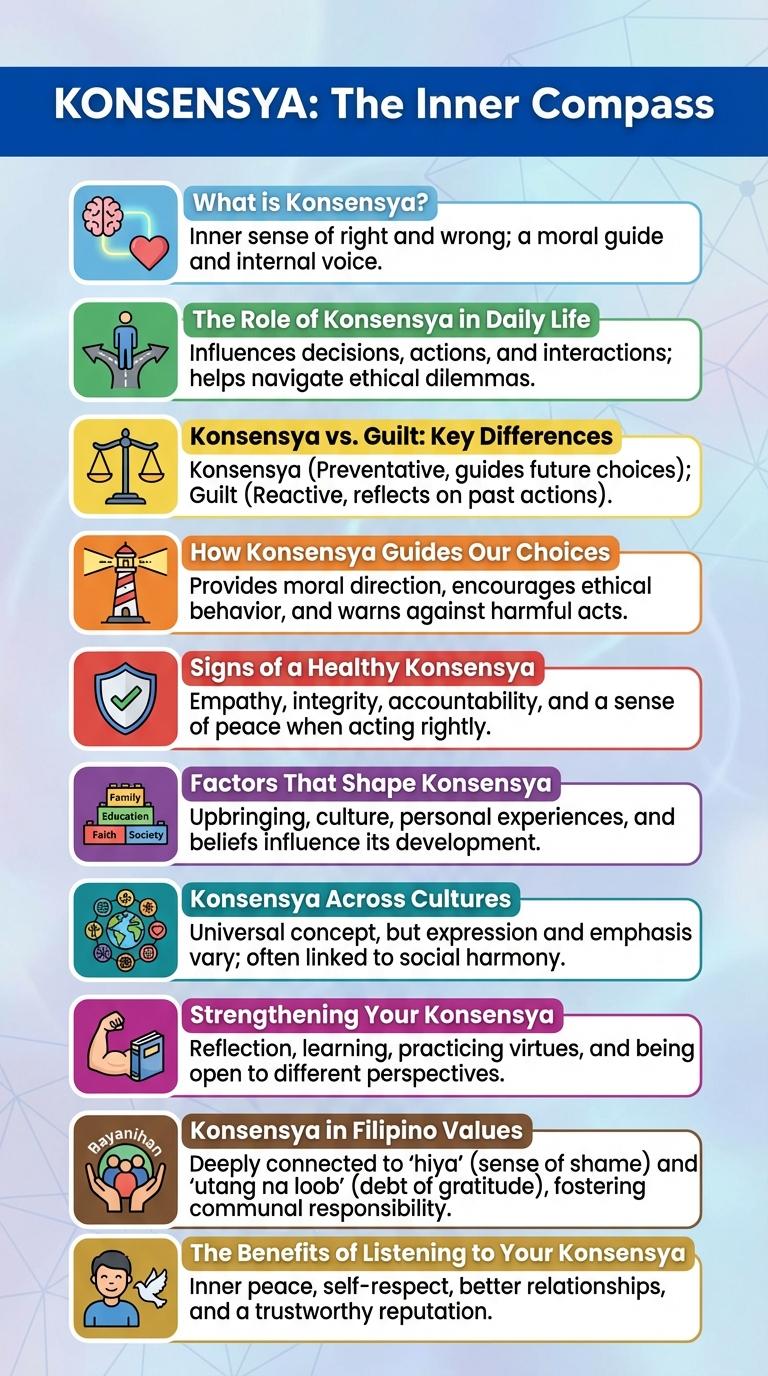
Konsensya serves as an inner guide that helps individuals distinguish right from wrong, influencing moral decisions and personal integrity. This infographic visually breaks down the components and functions of konsensya, highlighting its role in shaping ethical behavior. Key elements such as empathy, accountability, and self-reflection are illustrated to demonstrate how konsensya operates within the human mind.
What is Konsensya?
Konsensya is the Filipino term for conscience, the inner sense of right and wrong that guides a person's thoughts and actions. It acts as an ethical compass influencing moral decisions.
Konsensya helps individuals evaluate their behavior based on ethical principles and societal norms. It prompts feelings of guilt or remorse when actions conflict with one's values. This internal faculty fosters accountability and personal growth by encouraging reflection and correction.
The Role of Konsensya in Daily Life
Konsensya serves as an internal moral compass guiding individuals to distinguish right from wrong in everyday decisions. It influences behavior by encouraging ethical choices and fostering personal accountability. This inner voice helps maintain social harmony and promotes self-improvement through reflection on one's actions.
Konsensya vs. Guilt: Key Differences
What distinguishes konsensya from guilt? Konsensya refers to an inner sense of right and wrong guiding moral decisions. Guilt is an emotional response after believing one has done something wrong.
How does konsensya influence behavior differently than guilt? Konsensya motivates individuals to act ethically and align with personal values. Guilt often leads to feelings of regret and a desire to make amends.
Can konsensya exist without guilt? Yes, konsensya is ongoing moral awareness, while guilt arises after a specific action is perceived as wrong. One can have a healthy konsensya without overwhelming guilt.
Which is more constructive: konsensya or guilt? Konsensya encourages positive, consistent ethical behavior. Guilt may become destructive if it leads to excessive self-blame or anxiety.
How do kulturang Pilipino views konsensya versus guilt? Filipino culture emphasizes konsensya as essential for inner peace and social harmony. Guilt is recognized but ideally managed through reflection and forgiveness.
How Konsensya Guides Our Choices
Konsensya serves as an internal moral compass that helps individuals discern right from wrong. It influences decisions by reflecting personal values and societal norms.
- Awareness of Morality - Konsensya raises consciousness about ethical implications in everyday choices.
- Emotional Response - It triggers feelings such as guilt or pride, guiding behavior accordingly.
- Decision-Making Framework - Konsensya provides a foundation for evaluating options based on what is considered correct and just.
Signs of a Healthy Konsensya
Konsensya, or conscience, guides moral decisions and influences behavior. A healthy konsensya fosters integrity, empathy, and accountability.
- Self-awareness - Recognizes personal values and reflects on ethical choices consistently.
- Empathy - Understands and respects the feelings and rights of others in decision-making.
- Accountability - Takes responsibility for actions and learns from mistakes to improve character.
Factors That Shape Konsensya
Konsensya, or conscience, is an inner sense guiding individuals to distinguish right from wrong. It is shaped by various internal and external factors influencing moral judgment.
Family upbringing plays a crucial role in forming konsensya by instilling core values and ethical principles. Life experiences and social environment also significantly impact the development of one's moral compass.
Konsensya Across Cultures
| Culture | Understanding of Konsensya |
|---|---|
| Filipino | Viewed as an inner moral compass guiding right and wrong, often linked to guilt and personal responsibility. |
| Western | Considered a psychological mechanism that influences ethical decision-making and social behavior. |
| Japanese | Connected to social harmony and shame, konsensya emphasizes group expectations over individual feelings. |
| Indian | Aligned with Dharma and karma, konsensya is tied to spiritual duty and the consequences of actions. |
| Middle Eastern | Associated with religious teachings and moral accountability, konsensya reflects obedience to divine law. |
Strengthening Your Konsensya
Strengthening your konsensya builds a foundation for ethical decision-making and personal integrity. A well-developed konsensya guides individuals in distinguishing right from wrong consistently.
- Self-Reflection - Regularly evaluating your actions helps sharpen your moral awareness and accountability.
- Education - Learning about values and ethics enhances your ability to make just choices.
- Empathy - Understanding others' feelings deepens your sense of compassion and fairness.
Strengthening your konsensya empowers you to live with authenticity and moral clarity.
Konsensya in Filipino Values
Konsensya is a core Filipino value representing the inner voice guiding moral decisions and ethical behavior. It reflects the deep sense of responsibility and accountability ingrained in Filipino culture. This value fosters social harmony by encouraging individuals to act with integrity and consideration for others.