
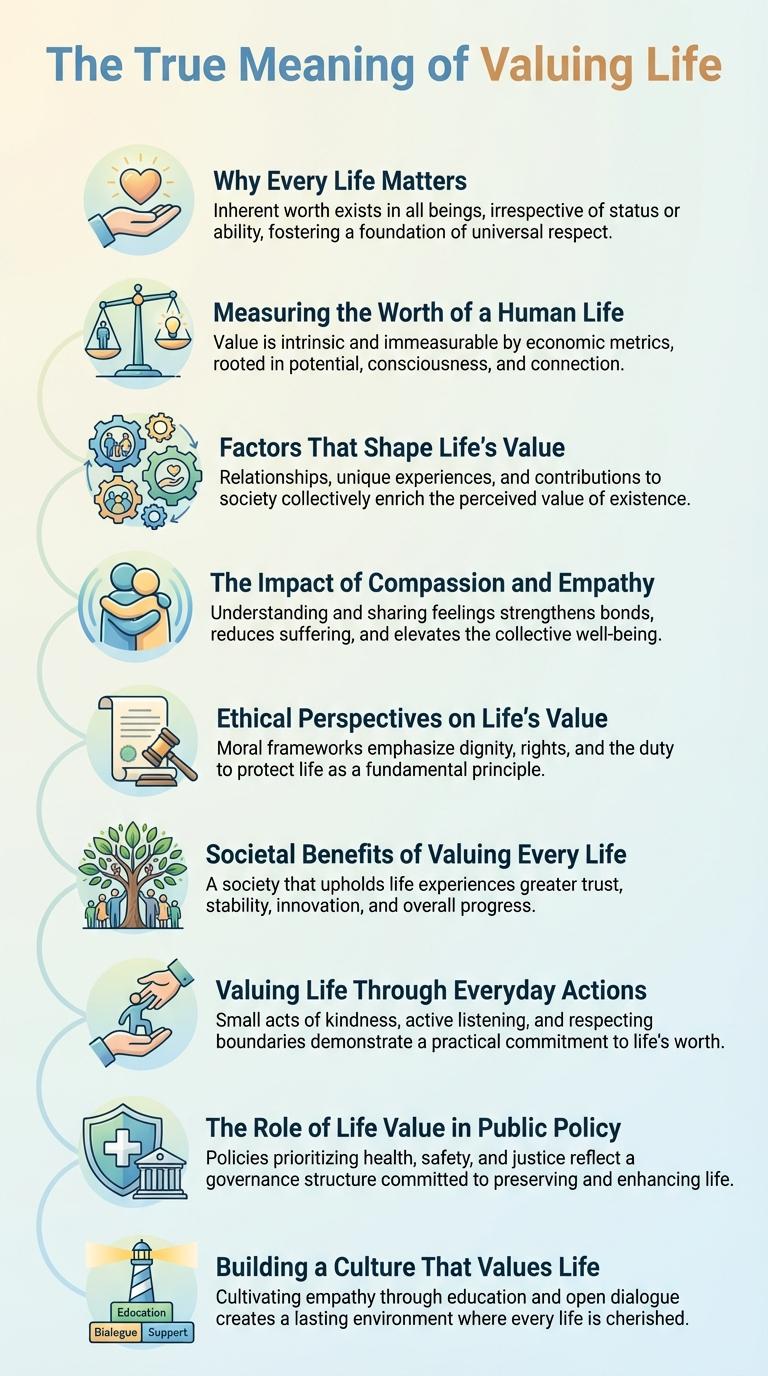
Valuing life emphasizes the importance of recognizing every moment's significance and cherishing relationships. It highlights how gratitude, mindfulness, and empathy contribute to a deeper sense of purpose and well-being. This infographic visually explores key elements that foster a meaningful and fulfilled existence.
The True Meaning of Valuing Life
Valuing life means recognizing its inherent worth beyond material achievements. It reflects a deep respect for existence, empathy, and purposeful living.
- Intrinsic Worth - Life's value is inherent and does not depend on external factors or possessions.
- Empathy and Connection - Valuing life encourages understanding and compassion towards others.
- Purpose and Growth - A meaningful life is cultivated through personal development and contributing to the greater good.
Why Every Life Matters
Valuing life is the foundation of a compassionate society. Recognizing the worth of every individual promotes respect and empathy worldwide.
- Intrinsic Worth - Every person possesses inherent value regardless of their background or circumstances.
- Impact on Community - Each life contributes uniquely to the social and cultural fabric of humanity.
- Human Rights - Respecting life safeguards fundamental freedoms and dignity for all individuals.
Protecting and honoring life strengthens peace and unity across nations.
Measuring the Worth of a Human Life
| Aspect | Value Description |
|---|---|
| Economic Value | Estimated through potential lifetime earnings and productivity, typically ranging from $1 million to $10 million per life in policy analyses. |
| Statistical Value of Life (VSL) | Used by governments for regulatory decisions, often set between $7 million and $10 million based on willingness-to-pay studies. |
| Quality-Adjusted Life Year (QALY) | Measures life value by combining quality and quantity of life, used to assess healthcare interventions, valued roughly at $50,000 to $150,000 per QALY. |
| Ethical Considerations | Human life is inherently valuable beyond monetary metrics, emphasizing dignity, rights, and moral equality. |
| Legal and Insurance Estimates | Compensation amounts in wrongful death cases vary, commonly reflecting economic loss, pain, suffering, and societal impact considerations. |
Factors That Shape Life's Value
Valuing life involves understanding diverse factors that contribute to its worth. These factors shape perspectives and influence decisions in personal and societal contexts.
Cultural background, personal experiences, and ethical beliefs significantly impact how individuals assess life's value. Economic stability and access to resources also play crucial roles. Recognizing these elements helps foster empathy and informed decision-making.
The Impact of Compassion and Empathy
Valuing life deeply connects to the power of compassion and empathy, which foster meaningful human connections. These qualities help create supportive communities and promote emotional well-being.
- Compassion Improves Mental Health - Expressing compassion reduces stress and enhances emotional resilience.
- Empathy Strengthens Relationships - Understanding others' feelings builds trust and social bonds.
- Compassion Drives Positive Social Change - Acts of kindness inspire collective efforts toward justice and equality.
Ethical Perspectives on Life's Value
Ethical perspectives on valuing life explore diverse beliefs about what makes life inherently valuable. Philosophical views range from intrinsic value, which considers life valuable in itself, to instrumental value, where life's worth depends on its utility or relationships. Key ethical frameworks include deontology, which emphasizes duties and rights, and utilitarianism, focusing on maximizing overall well-being.
Societal Benefits of Valuing Every Life
Valuing every life fosters a compassionate society where individuals feel respected and supported. This approach enhances social cohesion by promoting inclusivity and reducing discrimination.
Communities that prioritize the value of each person experience lower crime rates and better mental health outcomes. Economic growth also thrives as diverse talents contribute meaningfully to the workforce.
Valuing Life Through Everyday Actions
Valuing life means appreciating every moment and recognizing the impact of small actions on ourselves and others. Simple daily habits like showing kindness and practicing gratitude contribute to a deeper sense of well-being.
Engaging in mindful activities and nurturing connections enrich our experiences and build emotional resilience. These everyday choices reflect a commitment to honoring the inherent worth of life.
The Role of Life Value in Public Policy
Valuing life plays a critical role in shaping public policy by guiding resource allocation and risk management decisions. Policies on healthcare, safety regulations, and environmental protection often rely on quantifying the value of life to maximize societal well-being. Incorporating life value metrics ensures that ethical considerations are balanced with economic efficiency in policy-making.