
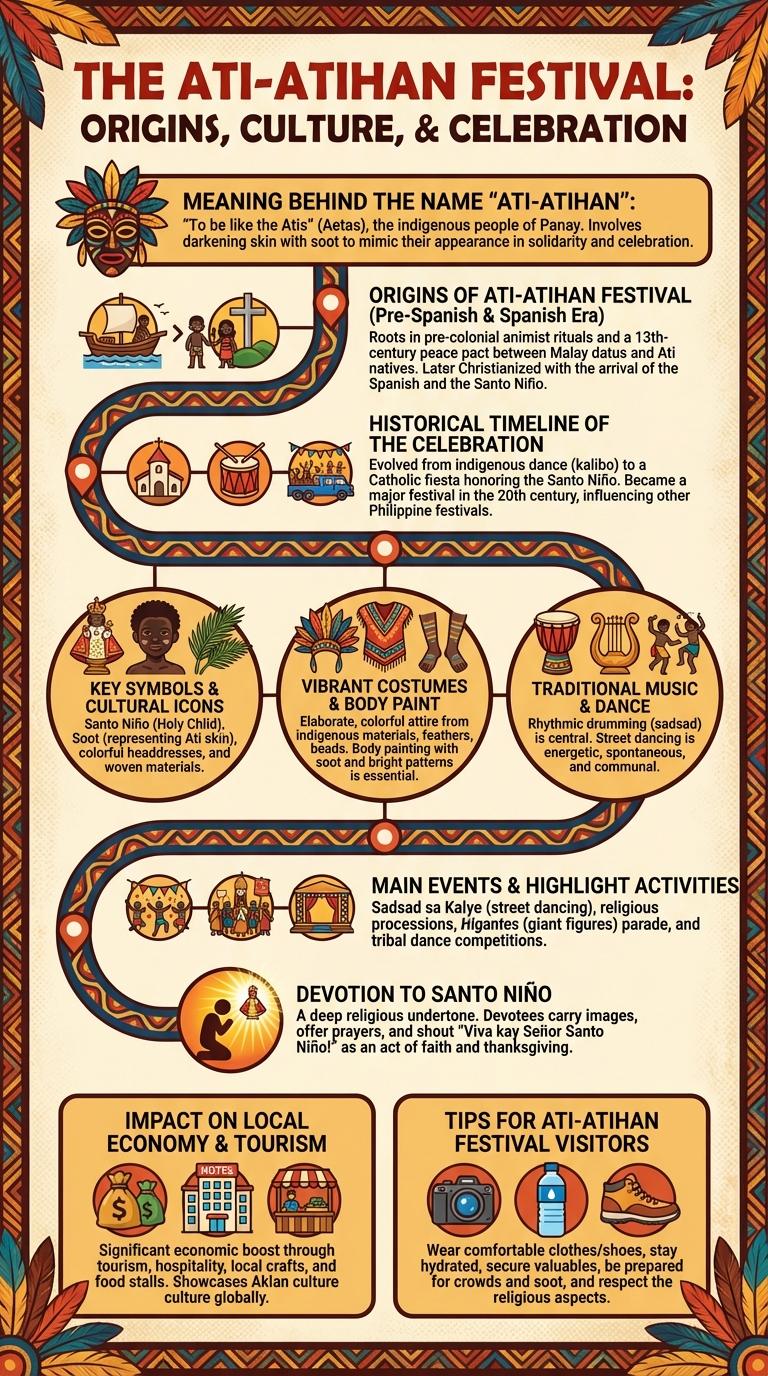
Ati Atihan Festival showcases vibrant Filipino culture through lively street dancing, colorful costumes, and rhythmic drum beats. Celebrated annually in Kalibo, Aklan, this festival honors the Santo Nino with deep-rooted indigenous and religious traditions. The event draws thousands of visitors eager to experience its unique blend of faith, history, and festive spirit.
Origins of Ati-Atihan Festival
The Ati-Atihan Festival, held annually in Kalibo, Aklan, originates from ancient indigenous rituals honoring the Ati people, the island's earliest settlers. The festival celebrates the arrival of Malay settlers who befriended the Ati tribe and shared their resources, fostering unity and gratitude. Over time, the festival evolved into a vibrant cultural and religious event honoring the Santo Nino, blending indigenous traditions with Catholic influences.
Meaning Behind the Name "Ati-Atihan
The name "Ati-Atihan" translates to "to imitate the Ati" in the local language, referencing the indigenous Ati people of the Philippines. This festival honors the Ati tribe through vibrant street dancing, tribal music, and colorful costumes. It celebrates the cultural heritage and historical connection between the Ati people and the island of Panay.
Historical Timeline of the Celebration
The Ati-Atihan Festival is an annual celebration held in Kalibo, Aklan, Philippines, known as the "Mother of All Philippine Festivals." It honors the Santo Nino and commemorates the arrival of Malay settlers to Panay Island in the 13th century.
The festival began in the early 1200s when indigenous Ati people welcomed the Malay settlers with feasting and dancing. Over the centuries, Ati-Atihan evolved from a tribal thanksgiving ritual into a vibrant cultural and religious event celebrated every January.
Key Symbols and Cultural Icons
Ati-Atihan Festival is a vibrant cultural celebration held annually in Kalibo, Aklan, Philippines. It honors the Santo Nino and showcases indigenous Ati heritage through colorful costumes and rhythmic street dancing.
- Santo Nino Statue - Central religious icon representing the Holy Child Jesus, revered during the festival.
- Blackened Faces and Indigenous Attire - Participants paint their faces black and wear tribal costumes symbolizing Ati warriors.
- Drums and Rhythmic Music - Traditional beats drive the energetic dances, reflecting the spirit of the Ati people.
Vibrant Costumes and Body Paint
The Ati Atihan Festival features vibrant costumes and body paint that capture the spirit of the celebration. These colorful elements highlight the rich cultural heritage and creativity of its participants.
- Colorful Feathers and Beads - Participants wear elaborate headdresses adorned with bright feathers and intricate beadwork to symbolize tribal identity.
- Black Body Paint - Traditional black body paint mimics the indigenous Ati people's skin tone, emphasizing unity and respect for ancestors.
- Handmade Accessories - Costumes often include handcrafted accessories like shells and bamboo, adding texture and authenticity to the attire.
The fusion of vibrant costumes and body paint plays a crucial role in expressing the Ati Atihan's festive and cultural significance.
Traditional Music and Dance
| Aspect | Description |
|---|---|
| Traditional Music | Ati-Atihan music features rhythmic drum beats, gong clangs, and indigenous percussion instruments creating an energetic and festive atmosphere. The drums represent the heartbeat of the festival, essential in maintaining the dance rhythm and engaging the crowd. |
| Instrumentation | Instruments include the irregular-shaped drums called "agung," large gongs, bamboo flutes, and native bamboo percussion, each contributing to the rich and dynamic festival soundscape. |
| Dance Style | Dancers wear vibrant tribal body paint and costumes, performing synchronized movements that mimic the Ati tribe's war dances and celebrations. The dance emphasizes lively footwork and swaying motions in time with the drum beats. |
| Cultural Significance | The traditional music and dance honor the Ati tribe's heritage, celebrating unity, tribal identity, and thanksgiving to the Santo Nino (Holy Child). The festival's roots date back over 800 years, blending indigenous rituals with Catholic faith. |
| Performance Setting | Ati-Atihan music and dance are performed in street parades, public plazas, and during religious ceremonies in Kalibo, Aklan. The interactive atmosphere encourages community participation and festivity. |
Main Events and Highlight Activities
The Ati-Atihan Festival is a vibrant celebration held annually in Kalibo, Aklan, honoring the Santo Nino (Holy Child). This event attracts thousands of visitors who immerse themselves in music, dance, and colorful street parades.
Main events include the Tribal Competition, where participants paint their faces and wear indigenous costumes to showcase tribal war dances. Highlight activities also feature street dancing, fluvial parades, and the Kalibo Ati-Atihan Festival Queen pageant, showcasing cultural pride and tradition.
Devotion to Santo Niño
The Ati Atihan Festival is a vibrant celebration held annually in Kalibo, Aklan, showcasing deep devotion to the Santo Nino. This festival honors the Holy Child Jesus with dance, music, and colorful tribal costumes, reflecting centuries-old religious and cultural traditions.
Participants paint their faces with black soot and wear indigenous attire, symbolizing unity and reverence for the Santo Nino. The festival's rituals and festivities emphasize faith, gratitude, and community spirit centered around this sacred devotion.
- Historical Roots - Ati Atihan originated as a tribute to the Santo Nino and the Ati indigenous people of Panay Island.
- Religious Significance - The festival celebrates the miraculous arrival and protection of the Santo Nino image in Aklan.
- Ritual Dance - Devotees perform rhythmic dances in honor of the Santo Nino, wearing traditional Ati costumes with painted faces.
- Fiesta Activities - The event includes processions, Masses, and prayers centered on the Santo Nino's spiritual blessings.
- Community Participation - Local residents and visitors join in expressing faith and thanksgiving through vibrant cultural celebrations.
Impact on Local Economy and Tourism
The Ati-Atihan Festival significantly boosts the local economy of Kalibo, Aklan by attracting thousands of tourists annually. This influx generates substantial revenue for local businesses including hotels, restaurants, and handicraft vendors.
The festival's vibrant cultural performances and street dancing create a unique tourist attraction that enhances visitor experience. Local entrepreneurs benefit from increased sales, while the hospitality sector experiences higher occupancy rates. The event also promotes sustainable tourism, encouraging repeat visits and long-term economic growth for the region.