
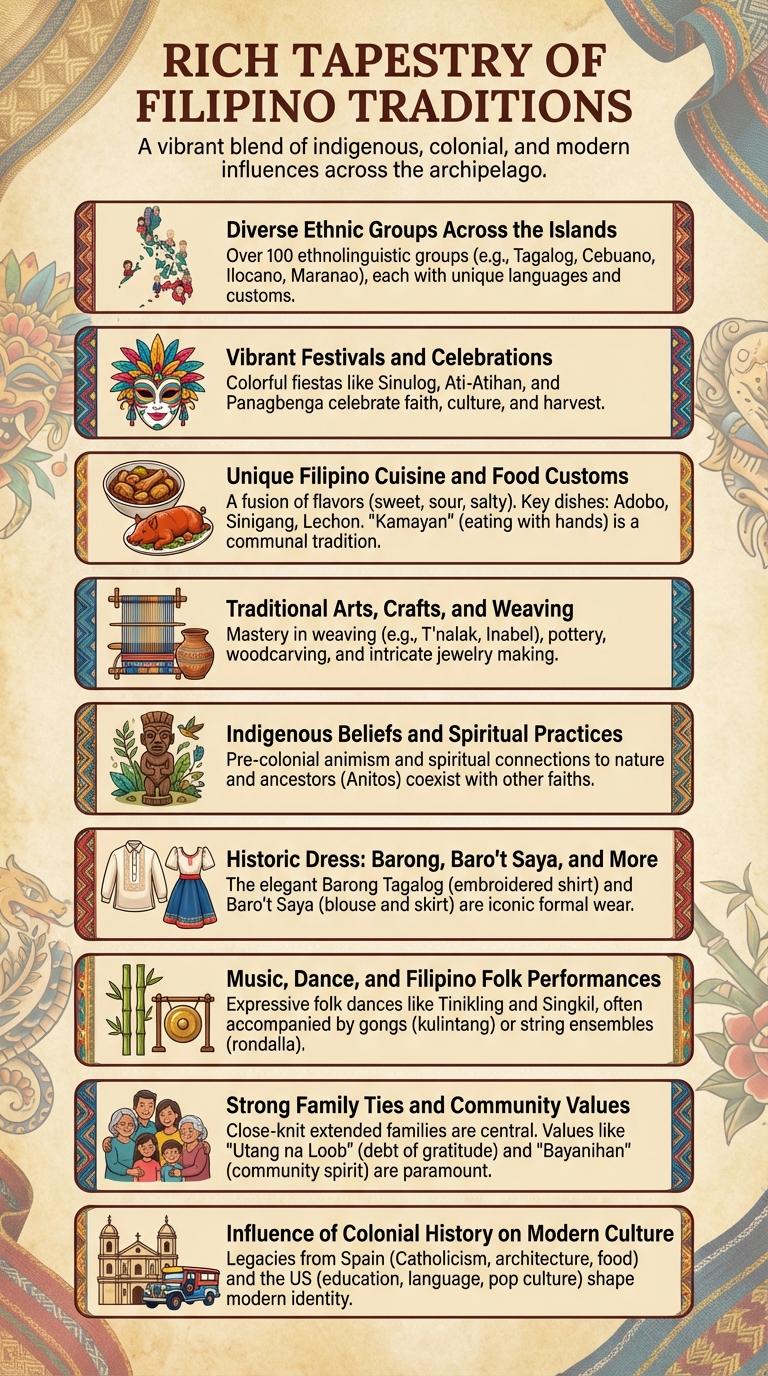
The Philippines boasts a rich tapestry of culture and tradition that reflects its diverse history and vibrant communities. This infographic highlights key aspects such as traditional festivals, indigenous arts, and regional customs that shape Filipino identity. Discover the unique practices and heritage that continue to thrive across the archipelago.
Rich Tapestry of Filipino Traditions
The Philippines boasts a rich tapestry of traditions that reflect its diverse cultural heritage. From indigenous rituals to Spanish influences, Filipino culture is a vibrant blend of history and community values.
Festivals such as Sinulog and Ati-Atihan showcase colorful dances and indigenous music, preserving ancient customs. Traditional crafts like weaving and pottery remain integral to Filipino identity. Family-oriented celebrations and strong religious faith further highlight the importance of cultural continuity in daily life.
Diverse Ethnic Groups Across the Islands
The Philippines is home to over 175 ethnolinguistic groups, each contributing unique traditions and cultural practices. These diverse ethnic groups span across more than 7,000 islands, shaping the nation's rich cultural mosaic.
Major ethnic groups include the Tagalog, Cebuano, Ilocano, and Igorot, each with distinct languages, festivals, and crafts. Indigenous communities preserve ancestral customs that continue to influence Filipino culture today.
Vibrant Festivals and Celebrations
The Philippines is renowned for its vibrant festivals and celebrations that showcase the rich cultural heritage of its many ethnic groups. Events like the Sinulog Festival in Cebu and the Ati-Atihan in Aklan highlight traditional music, dance, and colorful costumes. These festivals attract millions of visitors annually, preserving indigenous customs while fostering national pride.
Unique Filipino Cuisine and Food Customs
What makes Filipino cuisine uniquely rich and diverse?
Filipino cuisine blends indigenous, Spanish, Chinese, and American influences, creating a flavorful fusion unique to the Philippines. Signature dishes like adobo, sinigang, and lechon showcase distinctive cooking methods and bold tastes cherished nationwide.
How do food customs reflect Filipino hospitality?
Sharing meals is central to Filipino culture, emphasizing community and family bonding. Traditions like "Bayanihan" spirit manifest in communal feasts during festivals and celebrations, where food becomes a symbol of generosity and unity.
Which ingredients define Filipino food traditions?
Ingredients such as coconut, rice, vinegar, and native spices play critical roles in traditional recipes. These elements highlight the country's agricultural heritage and culinary creativity across regions.
How are Filipino celebrations enhanced by food?
Festive events feature elaborate spreads reinforcing cultural values and social harmony. Local delicacies and elaborate banquets demonstrate respect for guests and preserve ancestral culinary knowledge.
What role do street foods play in Filipino culture?
Street foods like balut, isaw, and taho offer affordable, flavorful snacks that represent everyday Filipino life. These vibrant food customs contribute to the dynamic, accessible nature of Filipino cuisine.
Traditional Arts, Crafts, and Weaving
The Philippines boasts a rich cultural heritage deeply rooted in traditional arts, crafts, and weaving. These practices reflect the diverse indigenous groups and their unique expressions of identity and history.
- Traditional Weaving - Indigenous communities create intricate textiles using backstrap looms, showcasing regional patterns and symbolism.
- Handmade Crafts - Artisans produce items like baskets, mats, and pottery using natural materials and age-old techniques.
- Folk Art - Visual storytelling is conveyed through vibrant paintings, sculptures, and decorated textiles representing Filipino myths and everyday life.
Preserving these traditional arts supports cultural continuity and strengthens community pride across the Philippines.
Indigenous Beliefs and Spiritual Practices
The Philippines is rich in indigenous beliefs and spiritual practices that have been preserved through generations. These traditions deeply influence community life, rituals, and the relationship with nature.
Many indigenous groups practice animism, worshipping spirits residing in natural elements like trees, rivers, and mountains. Rituals often involve offerings, chants, and dances to honor these spirits and seek protection or blessings.
Historic Dress: Barong, Baro't Saya, and More
The Philippines boasts a rich cultural heritage reflected in its traditional attire, including the iconic Barong Tagalog, Baro't Saya, and other historic garments. The Barong Tagalog, made from lightweight pina fabric, is a symbol of Filipino identity, often worn during formal events. The Baro't Saya, a traditional dress for Filipino women, showcases intricate embroidery and vibrant colors representing regional diversity.
Music, Dance, and Filipino Folk Performances
| Aspect | Description |
|---|---|
| Music | Traditional Filipino music includes indigenous instruments like the kulintang (gong ensemble), bamban (bamboo percussion), and kudyapi (two-stringed lute). It reflects regional influences from Luzon, Visayas, and Mindanao, blending indigenous, Spanish, and American elements. |
| Dance | Filipino folk dances often symbolize daily activities and celebrations. Popular dances include Tinikling (bamboo clapper dance), Carinosa (courtship dance), and Singkil (a royal dance from Mindanao featuring intricate footwork). |
| Filipino Folk Performances | Folk performances combine music, dance, and storytelling. Notable examples are the Ati-Atihan Festival, the Moro and Christian rituals, and the Pasyon, which dramatizes the life of Christ during Holy Week. |
Strong Family Ties and Community Values
The Philippines is renowned for its strong family ties and deeply rooted community values that shape daily life. These cultural aspects influence social behavior, support systems, and collective celebrations nationwide.
Family serves as the primary social unit, fostering close connections across generations through respect and mutual care.
- Extended Family Importance - Multiple generations often live together, reinforcing unity and shared responsibilities within households.
- Bayanihan Spirit - Communities actively collaborate to support neighbors, reflecting the tradition of communal unity and cooperation.
- Respect for Elders - Elders are highly respected and consulted in family and community decisions, emphasizing the value of wisdom and guidance.