
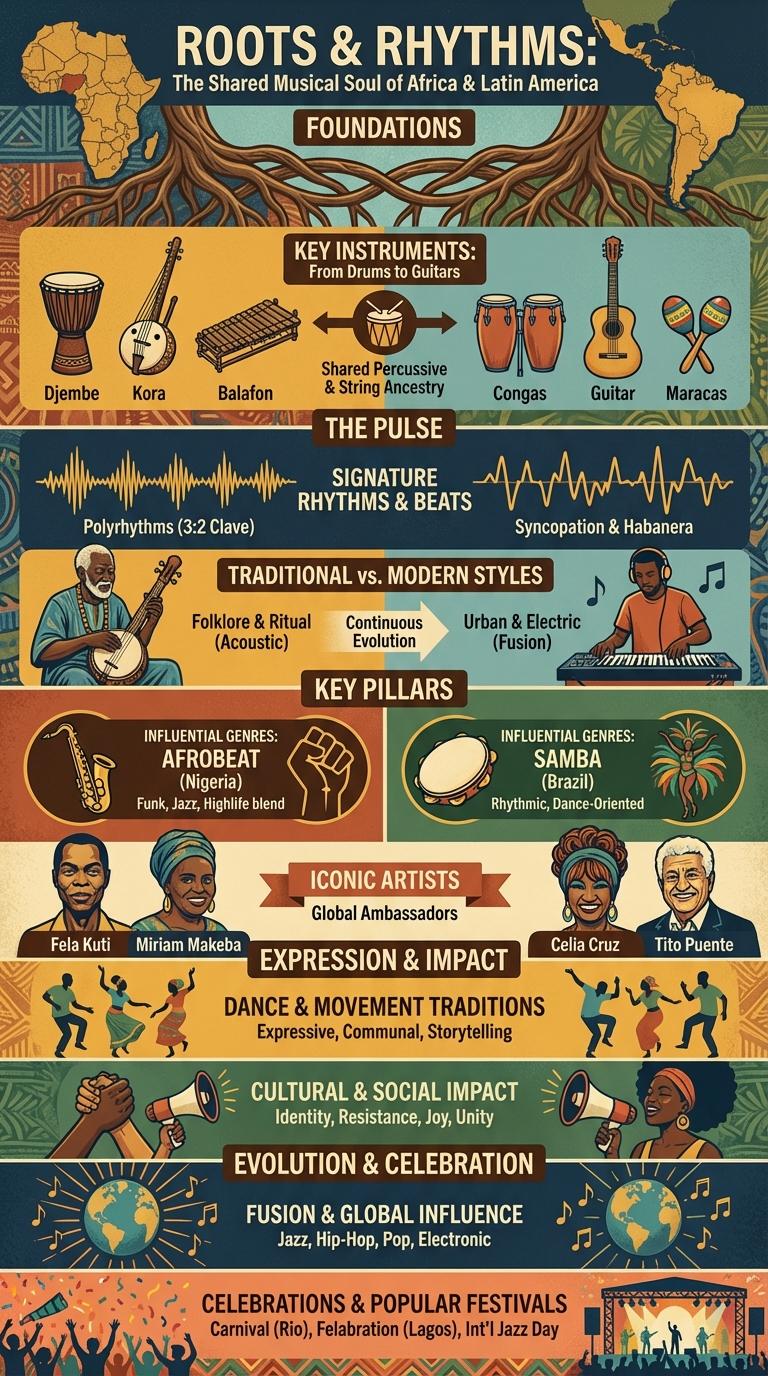
Africa and Latin America boast rich musical traditions that have profoundly shaped global soundscapes. African music features complex rhythms, diverse instruments, and deeply rooted cultural expressions, while Latin American music blends Indigenous, African, and European influences to create vibrant genres like salsa, samba, and tango. Exploring these regions through an infographic highlights their unique styles, instruments, and cultural significance.
Roots of African and Latin American Music
The roots of African and Latin American music reveal a rich cultural heritage shaped by history, geography, and social dynamics. These musical traditions have influenced countless genres worldwide through rhythms, instruments, and storytelling.
African music features complex polyrhythms and communal participation, while Latin American music blends Indigenous, African, and European elements to create diverse styles.
- African Rhythmic Foundations - African music is characterized by layered rhythms and call-and-response patterns that foster community engagement.
- Latin American Cultural Fusion - Latin American music integrates Indigenous melodies, African beats, and European harmonies reflecting colonial history.
- Instruments and Innovation - Traditional African drums and Latin percussion instruments like congas and bongos are fundamental to both music cultures.
Key Instruments: From Drums to Guitars
The music of Africa features a rich array of percussion instruments, with drums such as the djembe and talking drum playing central roles in traditional rhythms and ceremonies. In Latin America, the guitar is a foundational instrument, particularly the classical and Spanish guitar, shaping genres like salsa, samba, and mariachi. Both regions blend their unique instruments to create vibrant, culturally significant musical styles that reflect their histories and communities.
Signature Rhythms and Beats
The music of Africa is known for its complex polyrhythms, where multiple contrasting rhythms are played simultaneously, creating a rich and dynamic soundscape. Instruments like the djembe and talking drum prominently feature these signature beats that are integral to traditional ceremonies and storytelling.
In Latin America, music incorporates diverse rhythms such as the clave and syncopated patterns that form the foundation of genres like salsa, rumba, and samba. These rhythmic structures often blend African, Indigenous, and European influences, reflecting the region's cultural fusion and vibrant musical identity.
Traditional vs. Modern Styles
Africa and Latin America both boast rich musical traditions that have evolved over centuries. Their music combines deep cultural roots with vibrant modern influences.
African traditional music emphasizes rhythmic percussion, call-and-response vocals, and communal participation. Modern African styles incorporate electronic beats and fusion with global genres like hip-hop and Afrobeat. Latin American traditional music features instruments like the guitar, maracas, and accordion.
Modern Latin American music blends indigenous, African, and European sounds with pop, reggaeton, and salsa. Both regions keep their heritage alive while embracing contemporary innovations. This duality creates diverse and dynamic musical landscapes.
Influential Genres: Afrobeat & Samba
African music is deeply rooted in rhythmic complexity and diverse cultural expressions, with Afrobeat emerging as a powerful genre that combines traditional African rhythms with jazz, funk, and highlife influences. Latin American music thrives on vibrant melodies and dance rhythms, with Samba standing out as an iconic genre originating from Brazil, blending African percussion with Portuguese and indigenous sounds. Both genres have significantly influenced global music scenes, shaping popular music trends and inspiring artists worldwide.
Iconic Artists from Africa and Latin America
Africa and Latin America have produced some of the most influential music artists whose works have shaped global soundscapes. Their unique styles blend traditional rhythms with contemporary genres, creating a rich cultural legacy.
Iconic artists from both continents are celebrated for their innovation, cultural representation, and international impact.
- Fela Kuti (Africa) - The Nigerian pioneer of Afrobeat combined jazz, funk, and traditional African rhythms to create a powerful political and musical movement.
- Miriam Makeba (Africa) - Known as "Mama Africa," she used her music to promote African culture and fight apartheid through soulful voice and activism.
- Celia Cruz (Latin America) - The Cuban "Queen of Salsa" brought Afro-Cuban rhythms to worldwide audiences, with a career spanning over five decades.
- Caetano Veloso (Latin America) - A Brazilian singer-songwriter who revolutionized Latin American music by blending Tropicalia with international genres.
- Angelique Kidjo (Africa) - A Beninese artist combining traditional African music with funk, jazz, and pop, earning multiple Grammy Awards.
Cultural and Social Impact
The music of Africa and Latin America plays a vital role in reflecting cultural identities and social histories. African rhythms and Latin American melodies showcase the diversity and resilience of their communities.
African music often serves as a medium for storytelling, social ceremonies, and communal bonding. Latin American music blends indigenous, African, and European elements, promoting unity and cultural expression.
Dance and Movement Traditions
| Dance and Movement Traditions in African Music | Dance and Movement Traditions in Latin American Music |
|---|---|
| Rhythmic body movements strongly connected to drum patterns and polyrhythms | Expressive, vibrant movements inspired by Indigenous, African, and European influences |
| Traditional dances like the Agbekor of the Ewe people involve storytelling through movement | Samba from Brazil features rapid footwork and hip movements reflecting African heritage |
| Communal participation where dance serves social and spiritual functions during ceremonies | Tango in Argentina emphasizes intimate partner connection with sensual, dramatic steps |
| Use of call-and-response patterns encourages interactive dance performances | Cumbia incorporates circular group dances that trace back to African and Indigenous roots |
| Movement often mimics natural elements like animals and daily activities, reinforcing cultural identity | Folkloric dances reflect historical narratives and regional cultural diversity across Latin America |
Fusion and Global Influence
How do African and Latin American music fuse and influence global sounds?
African music's rhythms and instruments blend with Latin American styles, creating unique fusion genres like Afro-Cuban and Samba-reggae. These hybrid sounds have significantly shaped global music trends, inspiring artists worldwide.
| Aspect | Details |
|---|---|
| African Rhythms | Complex polyrhythms, djembe drums, call-and-response vocals. |
| Latin American Elements | Dance rhythms such as salsa, samba, and bossa nova; use of guitars and percussion. |
| Fusion Genres | Afro-Cuban jazz, Latin trap, Samba-reggae blending African beats with Latin melodies. |
| Global Influence | Impact on pop, hip-hop, and electronic music; integration into world music festivals. |