
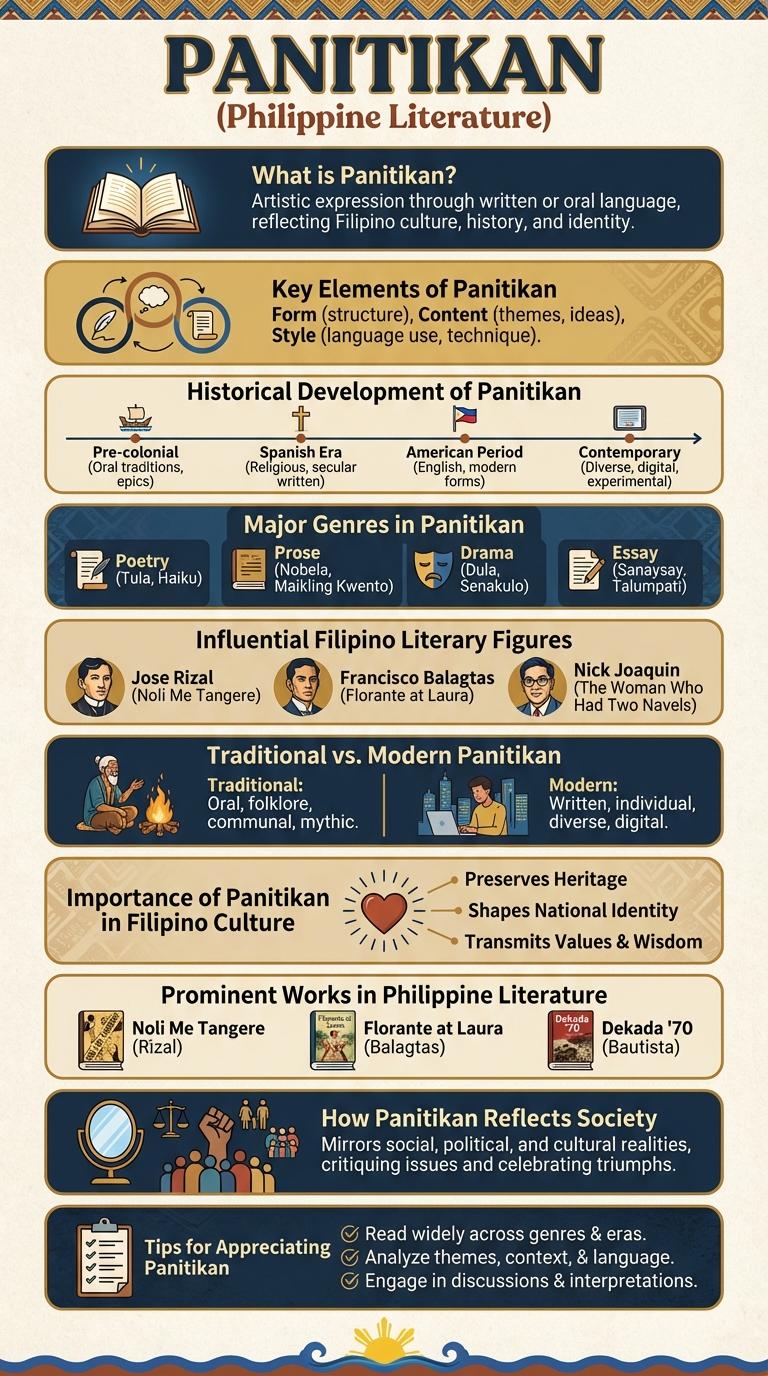
Panitikan showcases the rich literary heritage of the Philippines, highlighting classic and contemporary works that shape cultural identity. This infographic presents key genres, notable authors, and significant historical periods that contributed to Filipino literature. Explore the evolution of panitikan and its impact on society through visual representation of themes, styles, and milestones.
What is Panitikan?
Panitikan refers to the body of literary works created by a culture or nation, encompassing various genres such as poetry, prose, and drama. It serves as a reflection of a society's values, beliefs, and historical experiences, preserving cultural identity across generations. Panitikan includes both oral and written traditions, showcasing the richness and diversity of a people's creative expression.
Key Elements of Panitikan
Panitikan, or Filipino literature, encompasses various forms such as poetry, prose, and drama that express cultural identity and values. It reflects the history, beliefs, and emotions of the Filipino people through storytelling and artistic expression.
Key elements of Panitikan include theme, which conveys the central message or idea, and setting, the time and place where the story unfolds. Character development reveals personalities and motivations, while language style enhances the narrative's mood and tone.
Historical Development of Panitikan
| Period | Key Developments in Panitikan |
|---|---|
| Pre-Colonial Era | Oral literature such as epics, myths, and folk tales; emphasis on communal values and nature. |
| Spanish Colonization (1565-1898) | Introduction of religious and secular literature; printing press led to spread of written works like pasyon and corridos. |
| American Period (1898-1946) | Rise of novel, short story, and free press; English language became prominent; educational reforms promoted literacy. |
| Post-Independence Era (1946-Present) | Growth of Filipino identity in literature; emergence of various genres including modern poetry, drama, and essays in multiple languages. |
| Contemporary Period | Digital media influences; revival of indigenous themes and languages; use of social issues as literary themes. |
Major Genres in Panitikan
Panitikan refers to the body of literary works composed in the Filipino language and culture. It encompasses diverse forms that reflect the nation's rich historical and cultural heritage.
- Tula (Poetry) - Expresses emotions and ideas through rhythmic and often rhyming language.
- Kuwento (Short Story) - Narrates concise and engaging fictional tales with a clear beginning, middle, and end.
- Nobela (Novel) - Offers extended narratives that explore complex characters and social issues.
- Dula (Drama) - Portrays stories through dialogue and performance intended for theater.
- Sanaysay (Essay) - Presents personal reflections or arguments on various topics in prose form.
Understanding these major genres provides insight into the diversity and depth of Filipino literature.
Influential Filipino Literary Figures
Panitikan, or Filipino literature, reflects the rich cultural heritage and diverse history of the Philippines. It encompasses various forms such as poetry, prose, drama, and folk tales that have shaped the nation's identity.
Important Filipino literary figures include Jose Rizal, whose novels inspired the Philippine revolution. Nick Joaquin, a National Artist for Literature, contributed deeply through his works in English, capturing Filipino life and values.
Traditional vs. Modern Panitikan
Panitikan refers to Filipino literature, encompassing both traditional and modern forms that reflect the culture, values, and history of the Philippines. Traditional Panitikan includes oral literature such as folk tales, epics, and riddles passed down through generations, emphasizing community and moral lessons. Modern Panitikan incorporates contemporary themes and diverse genres, often using written and digital media to address social issues and individual experiences.
| Traditional Panitikan | Modern Panitikan |
|---|---|
| Oral literature: folk tales, epics | Written works: novels, short stories |
| Community-based, moral lessons | Individual perspectives, social issues |
| Passed down through generations | Published in print and digital formats |
| Simple language and structure | Complex themes and experimental styles |
| Examples: "Biag ni Lam-ang," "Alamat ng Pinya" | Examples: works by Jose Garcia Villa, Lualhati Bautista |
Importance of Panitikan in Filipino Culture
Panitikan, or Filipino literature, is a vital expression of the nation's identity and cultural heritage. It preserves the rich history, traditions, and values of the Filipino people through oral and written forms.
- Cultural Preservation - Panitikan safeguards Filipino traditions and stories passed down through generations, maintaining a strong cultural identity.
- Language Development - It enriches the Filipino language through creative expression, expanding vocabulary and literary forms.
- National Identity - Panitikan fosters pride and unity by reflecting the experiences, struggles, and aspirations of the Filipino people.
Prominent Works in Philippine Literature
What are some of the most prominent works in Philippine literature? Philippine literature features a rich collection of influential texts that highlight the country's diverse cultural heritage. These works span various languages and genres, reflecting historical, social, and political themes.
| Title | Author / Description |
|---|---|
| Florante at Laura | Written by Francisco Balagtas, this epic poem remains a cornerstone of Filipino literary tradition, blending romance and political allegory. |
| Noli Me Tangere | Jose Rizal's seminal novel that exposed social injustices during the Spanish colonial period, sparking Filipino nationalism. |
| Ibong Adarna | A traditional Filipino epic story, famous for its magical bird and moral lessons, widely studied in Philippine schools. |
| Banaag at Sikat | Written by Lope K. Santos, this novel is known as the first socialist-oriented novel in the Philippines. |
| Mga Ibong Mandaragit | Amado V. Hernandez's novel addressing oppression and resistance during the Japanese occupation in World War II. |
How Panitikan Reflects Society
Panitikan, or Philippine literature, serves as a mirror reflecting the values, struggles, and aspirations of Filipino society. Through its diverse forms, it captures the essence of culture, history, and social realities.
By portraying everyday life, traditions, and collective experiences, Panitikan reveals the complexities and richness of Philippine society. It highlights social issues such as colonialism, identity, and justice, fostering empathy and awareness. Writers use Panitikan to document change and inspire progress within communities.