
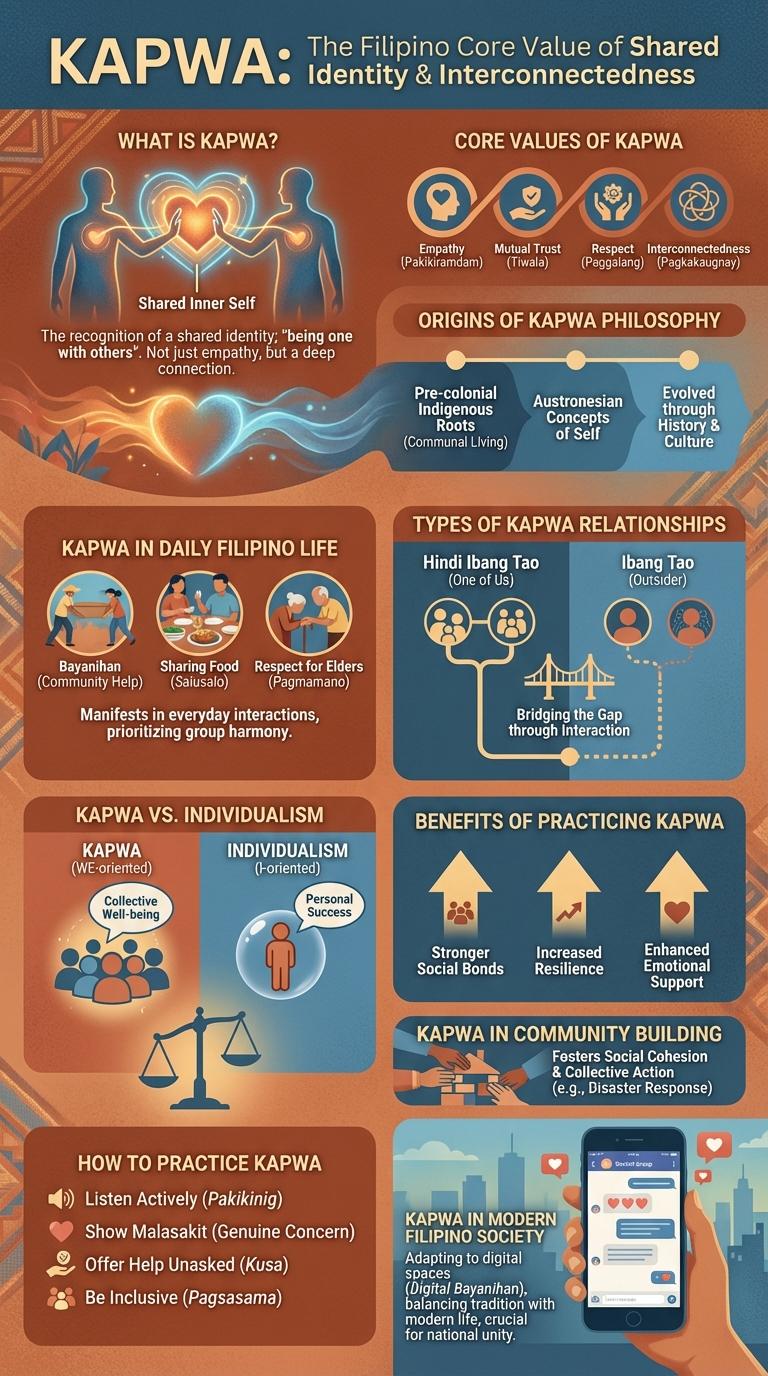
Kapwa represents a core Filipino value emphasizing interconnectedness and shared identity within the community. This infographic visually explores the cultural significance and key dimensions of kapwa, illustrating how it fosters empathy, cooperation, and social harmony. Understanding kapwa enhances appreciation for collective well-being and communal responsibility in Filipino society.
What is Kapwa?
Kapwa is a Filipino value that embodies the spirit of shared identity and interconnectedness. It represents the recognition that others are an extension of oneself, creating a deep sense of community and mutual respect.
Rooted in indigenous Filipino psychology, Kapwa emphasizes empathy, compassion, and social harmony. This value guides interpersonal relationships and encourages collective well-being over individualism.
Core Values of Kapwa
Kapwa is a Filipino core value representing a shared identity and interconnectedness among people. It emphasizes the importance of community, empathy, and mutual respect.
The core values of Kapwa include pakikipagkapwa-tao (treating others as equals), bayanihan (communal unity), and malasakit (deep compassion). These values foster harmonious relationships and collective responsibility. Kapwa encourages seeing oneself in others to build social cohesion and understanding.
Origins of Kapwa Philosophy
Kapwa is a core concept in Filipino psychology representing shared identity and interconnectedness among people. It embodies the idea that individuals see themselves as part of a collective whole rather than isolated entities.
The origins of Kapwa philosophy trace back to pre-colonial indigenous Filipino communities who emphasized communal harmony and mutual respect. This worldview shaped social relationships grounded in empathy, cooperation, and shared responsibility.
Kapwa in Daily Filipino Life
What is Kapwa and how does it shape Filipino daily life?
Kapwa is a core Filipino value meaning shared identity or togetherness. It fosters empathy, cooperation, and community bonding among Filipinos in everyday interactions.
How does Kapwa influence Filipino social behavior?
Filipinos practice Kapwa by showing respect, hospitality, and helping others. This value strengthens family ties and community support systems.
In what ways is Kapwa evident in Filipino family life?
Kapwa encourages mutual care and respect among family members. Filipinos prioritize collective well-being over individualism within households.
How does Kapwa affect workplace dynamics in the Philippines?
Kapwa promotes teamwork, harmony, and bayanihan (communal unity) at work. Shared goals and mutual respect enhance productivity and morale.
What role does Kapwa play in Filipino community celebrations?
Festivals and gatherings highlight Kapwa through shared joy and cooperation. This strengthens cultural identity and social cohesion.
Types of Kapwa Relationships
Kapwa is a Filipino concept emphasizing shared identity and togetherness. It fosters deep interpersonal connections based on mutual respect and empathy.
- Kapwa Sa Loob - Represents an inner circle of close relationships where trust and emotional bonds are strongest.
- Kapwa Sa Labas - Refers to relationships with acquaintances or strangers, emphasizing courtesy and respect.
- Pakikisama - Means maintaining smooth interpersonal relationships through cooperation and social harmony.
Kapwa vs. Individualism
| Kapwa | Individualism |
|---|---|
| Rooted in Filipino culture emphasizing shared identity and interconnectedness | Centered on personal autonomy and self-reliance |
| Promotes collective well-being and community harmony | Prioritizes personal goals and individual achievement |
| Values empathy, social relationships, and mutual support | Focuses on independence, privacy, and self-expression |
| Encourages cooperation and social responsibility | Encourages competition and personal freedom |
| Defines self through connection with others ("shared self") | Defines self as a separate, independent entity |
Benefits of Practicing Kapwa
Kapwa is a Filipino concept emphasizing shared identity and interconnectedness among people. Practicing kapwa strengthens community bonds and fosters empathy.
- Enhances Social Harmony - Kapwa promotes understanding and respect, reducing conflicts within communities.
- Builds Trust - Shared experiences and mutual support create a reliable network among individuals.
- Encourages Collective Responsibility - People become more aware of their roles in sustaining group welfare.
- Improves Mental Well-being - Feeling connected to others boosts emotional health and reduces loneliness.
- Supports Cooperative Problem Solving - Collaboration grounded in kapwa leads to effective community solutions.
Embracing kapwa nurtures compassionate relationships and a stronger sense of belonging.
Kapwa in Community Building
Kapwa is a central Filipino value emphasizing shared identity and interconnectedness within communities. It fosters empathy and collective responsibility, essential for community building.
- Shared Identity - Kapwa reflects the recognition of others as part of a collective self, strengthening social bonds.
- Empathy and Respect - It promotes understanding and respect for each member's dignity and well-being.
- Collective Responsibility - Kapwa encourages mutual support, enhancing cooperation and solidarity in community development.
How to Practice Kapwa
Kapwa is a Filipino value emphasizing shared identity and interconnectedness among people. Practicing kapwa involves showing empathy, respecting others, and fostering community unity. Engaging in acts of kindness, active listening, and collaborative efforts strengthens social harmony.