
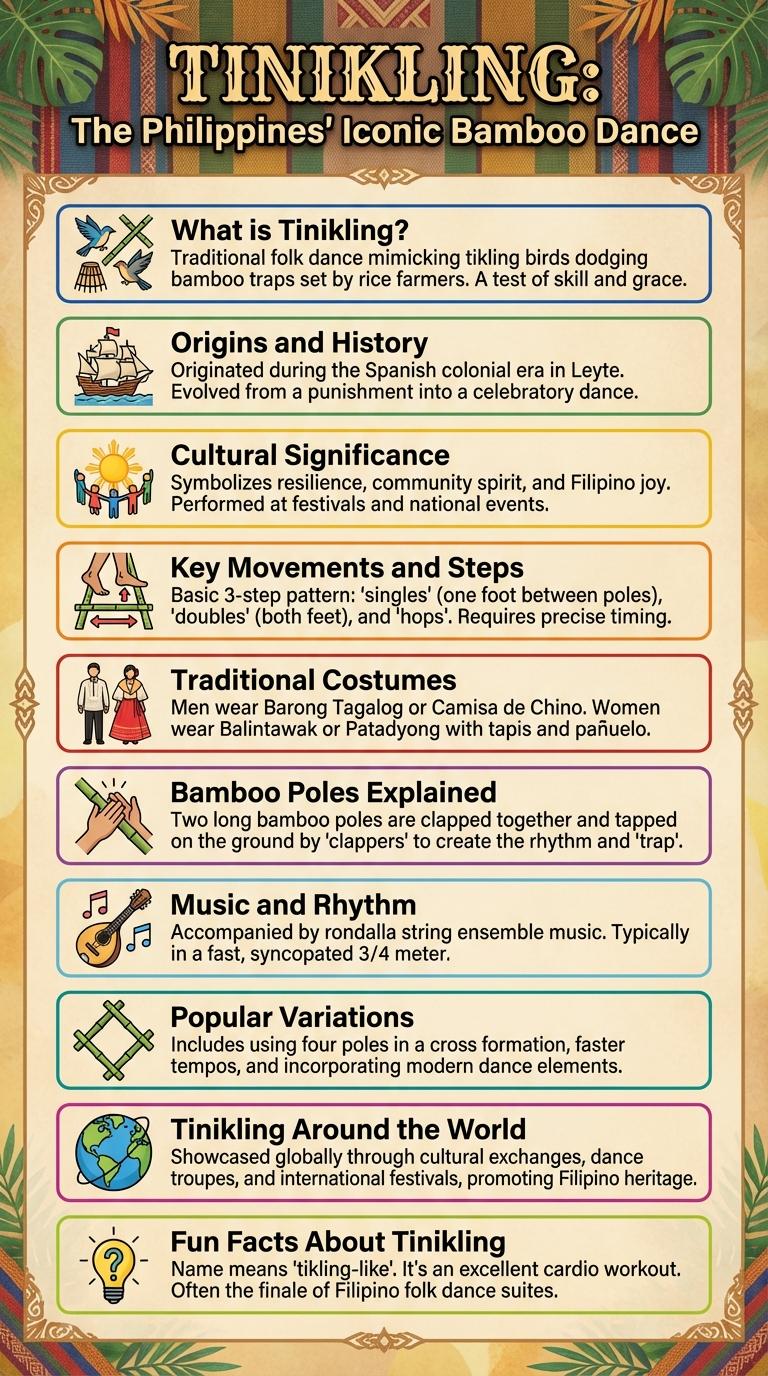
Tinikling is a traditional Filipino dance that showcases the rhythmic agility of dancers as they skillfully maneuver between bamboo poles. This infographic highlights the history, cultural significance, and basic steps of tinikling, offering a detailed visual guide to understanding and appreciating the dance. Explore how tinikling represents Filipino heritage through its energetic and precise movements.
What is Tinikling?
Tinikling is a traditional Philippine folk dance that mimics the movements of the tikling bird. This dance involves skillfully stepping between rapidly clapping bamboo poles.
- Origin - Tinikling originated in the Philippines during the Spanish colonial era as a cultural expression.
- Instruments - The dance features bamboo poles clapped rhythmically by two people on the ground.
- Purpose - Tinikling showcases agility, coordination, and rhythm through intricate footwork.
The dance remains a vibrant symbol of Filipino heritage and is performed during cultural celebrations worldwide.
Origins and History
Tinikling is a traditional Philippine folk dance known for its lively bamboo pole movements. It originated during the Spanish colonial era, symbolizing the agility and grace of the native Filipinos.
- Pre-colonial roots - Tinikling dance traces back to indigenous Filipino tribes before Spanish colonization.
- Spanish influence - The dance evolved under Spanish rule, incorporating symbolic movements reflecting Filipino resilience.
- Rural beginnings - Originally performed in the rice paddies to mimic the movement of the tikling bird avoiding traps.
- Community celebration - Often performed during town fiestas and harvest festivals, promoting social unity.
- Cultural preservation - Recognized as a national dance, it embodies Filipino heritage and identity.
Cultural Significance
The tinikling dance is a traditional Filipino folk dance that symbolizes the grace and agility of the tikling bird. It plays a vital role in preserving Philippine cultural heritage and is often performed during festivals and celebrations. The dance represents community spirit and unity, showcasing coordination and rhythm among participants.
Key Movements and Steps
Tinikling is a traditional Filipino folk dance involving rapid footwork between bamboo poles. Key movements include quick stepping, hopping, and sliding in rhythm with the clapping bamboo poles. Dancers must time their steps precisely to avoid getting caught between the poles, showcasing agility and coordination.
Traditional Costumes
Tinikling is a traditional Filipino dance that features bamboo poles rhythmically clapped together while dancers skillfully step in and out of the moving poles. The dance showcases vibrant cultural heritage and is often performed during festivals and celebrations.
Traditional costumes worn during Tinikling include the Barong Tagalog for men, a lightweight embroidered shirt made from pineapple fiber, and the Maria Clara dress for women, characterized by its elegant butterfly sleeves and flowing skirt. These garments reflect Filipino identity and complement the graceful movements of the dance.
Bamboo Poles Explained
| Aspect | Details |
|---|---|
| Material | Bamboo, a fast-growing grass known for its strength and flexibility |
| Length | Typically ranges from 6 to 10 feet per pole, adjusted based on dancers' height |
| Diameter | Approximately 1 to 2 inches, allowing easy clapping and sliding during the dance |
| Purpose | Used to create rhythmic sounds and define dance steps in Tinikling, a traditional Filipino folk dance |
| Handling | Pole handlers hold and tap poles on the ground and each other's movements, coordinating with dancers |
Music and Rhythm
What role does music play in the traditional Tinikling dance? Music sets the pace and energizes the dancers, guiding their movements through rhythmic patterns. The instruments typically used include bamboo clappers and native drums, creating a lively and syncopated beat.
How is rhythm essential in Tinikling's execution? Precise timing between the bamboo poles and dancers' steps is crucial to avoid getting caught. The rhythm dictates the speed and complexity of the dance, making the coordination between musicians and performers vital.
Popular Variations
Tinikling is a traditional Filipino folk dance that involves rhythmic bamboo pole movements. It mimics the swift movements of the tikling bird as it steps between grass stems and avoids bamboo traps set by rice farmers.
Popular variations of Tinikling include adaptations with faster rhythms and more complex footwork, showcasing the dancer's agility. Some versions incorporate multiple pairs of bamboo poles for increased difficulty. Regional styles also introduce unique costumes and music, reflecting local cultural influences.
Tinikling Around the World
Tinikling is a traditional Filipino folk dance that involves skillful footwork as dancers step between rapidly clapping bamboo poles. The dance represents the movement of the tikling bird evading traps set by farmers.
Tinikling has gained international recognition and is practiced in cultural festivals across the United States, Canada, Australia, and parts of Europe. Schools and cultural groups worldwide use tinikling to teach Filipino heritage and promote cross-cultural understanding.