
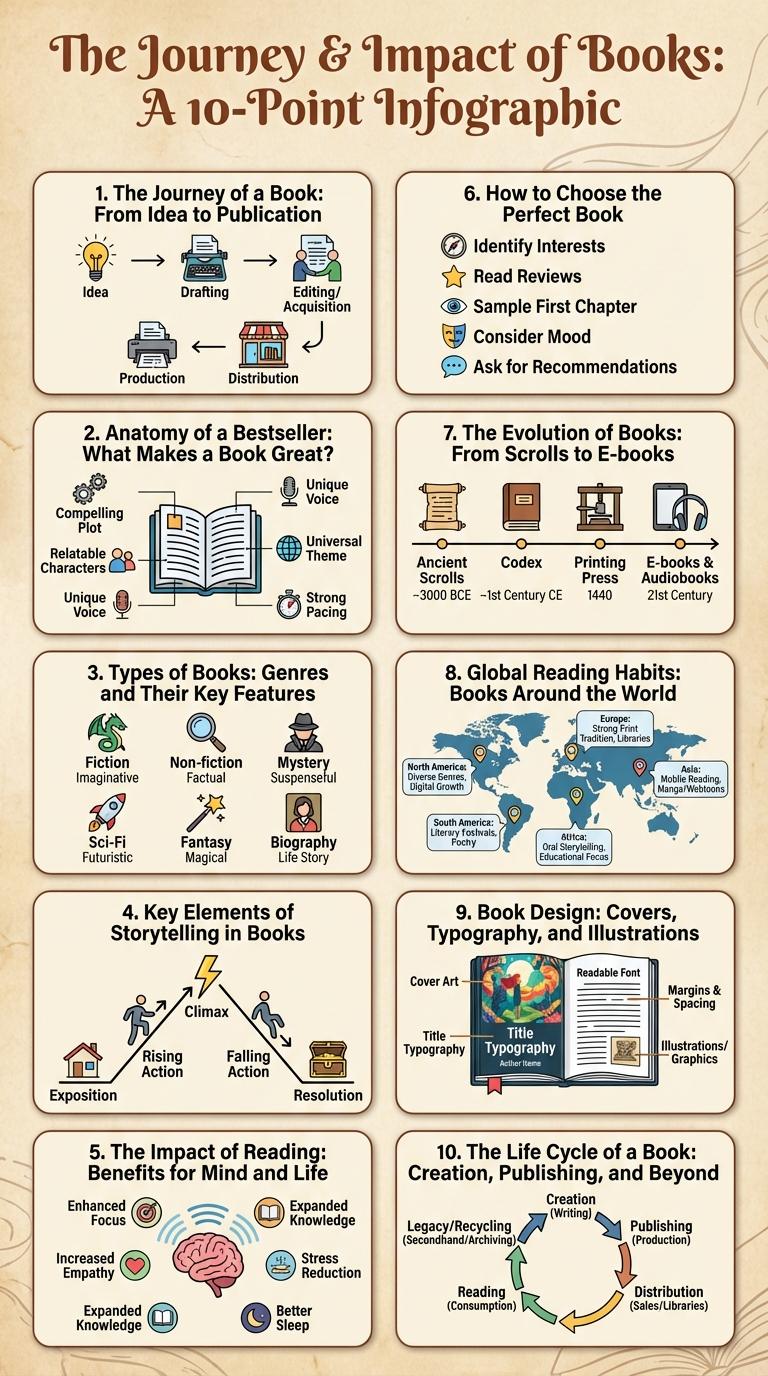
A well-designed infographic about a book visually condenses key themes, characters, and plot points into an engaging format. It enhances comprehension by combining text and visuals, making complex information accessible and memorable. This approach supports readers in quickly grasping the essence of the book.
The Journey of a Book: From Idea to Publication
How does a book evolve from a simple idea to a published work? The journey of a book involves several key stages starting with the initial concept and ending with distribution to readers. Each phase requires careful planning, creativity, and collaboration among authors, editors, designers, and publishers.
What are the essential steps in the book creation process? It begins with brainstorming and writing, followed by editing and proofreading to enhance clarity and quality. Design and formatting prepare the manuscript for printing or digital release, culminating in marketing and distribution to reach the target audience.
Anatomy of a Bestseller: What Makes a Book Great?
A bestseller captures readers with compelling storytelling, memorable characters, and a strong emotional connection. Sales figures, reviews, and cultural impact are key indicators of a book's success.
Effective marketing, eye-catching cover design, and positive word-of-mouth amplify a book's reach. Timing of release and audience targeting also play crucial roles in making a book great.
Types of Books: Genres and Their Key Features
Books come in various genres, each offering unique themes and storytelling styles. Popular genres include fiction, non-fiction, mystery, fantasy, and biography, catering to diverse reader interests. Understanding key features of each genre helps readers select books that match their preferences and enriches the reading experience.
| Genre | Key Features |
|---|---|
| Fiction | Imaginary stories, character-driven plots, creative settings |
| Non-Fiction | Factual information, real events, educational content |
| Mystery | Suspense, problem-solving, plot twists |
| Fantasy | Magic, mythical creatures, otherworldly realms |
| Biography | Life stories, personal achievements, historical context |
Key Elements of Storytelling in Books
Books captivate readers through compelling storytelling, blending characters, plot, and setting into a cohesive narrative. Key elements shape the emotional and intellectual journey, making stories memorable and impactful.
Characters drive the story by experiencing growth or conflict, engaging readers on a personal level. The plot outlines the sequence of events, creating tension and resolution that maintain interest throughout the book.
The Impact of Reading: Benefits for Mind and Life
Reading stimulates cognitive functions, enhancing memory, focus, and critical thinking skills. It reduces stress, promotes empathy, and improves emotional intelligence by exposing readers to diverse perspectives. Consistent reading fosters lifelong learning, boosts creativity, and supports mental health improvement.
How to Choose the Perfect Book
| Step | How to Choose the Perfect Book |
|---|---|
| Identify Interests | Determine genres or topics you enjoy such as fiction, non-fiction, mystery, romance, or self-help. |
| Check Reviews | Read reader reviews and ratings on platforms like Goodreads or Amazon to gauge book quality. |
| Read Synopses | Examine book summaries and blurbs to understand the plot and themes before purchasing. |
| Consider Author | Research authors with a writing style you prefer or those highly recommended in your chosen genre. |
| Sample Content | Preview first chapters or sample pages through digital bookstores to assess writing style and engagement. |
The Evolution of Books: From Scrolls to E-books
The evolution of books highlights the transformation from ancient scrolls to modern e-books. This journey reflects changes in technology, culture, and information accessibility.
Originally, books were hand-written scrolls made from papyrus or parchment, used in ancient civilizations like Egypt and Greece. The invention of the printing press in the 15th century revolutionized book production, making books widely accessible. Today, digital technology enables e-books, allowing instant access to vast libraries through smartphones and e-readers.
Global Reading Habits: Books Around the World
Exploring global reading habits reveals diverse preferences and trends in book consumption across continents. These patterns highlight cultural, technological, and economic influences on how people engage with literature worldwide.
- Highest Reading Rates - Countries like India and China report the highest average reading times, reflecting strong cultural value placed on education.
- Popular Genres - Fiction dominates in North America and Europe, while self-help and educational books are more favored in Asia and Latin America.
- Digital vs. Print - E-book consumption grows rapidly in developed countries, whereas print books remain prevalent in regions with limited digital access.
Understanding these global reading habits can inform publishers, educators, and policymakers aiming to promote literacy and access to books worldwide.
Book Design: Covers, Typography, and Illustrations
Book design is a crucial element that enhances reader engagement and reflects the book's content and tone. Effective covers, typography, and illustrations contribute to a book's aesthetic appeal and readability.
- Book Covers - Serve as the first impression by combining visual elements to attract and inform potential readers.
- Typography - Involves choosing fonts and layout that ensure readability while expressing the book's mood and genre.
- Illustrations - Provide visual storytelling that complements the text, making complex ideas more accessible and engaging.