
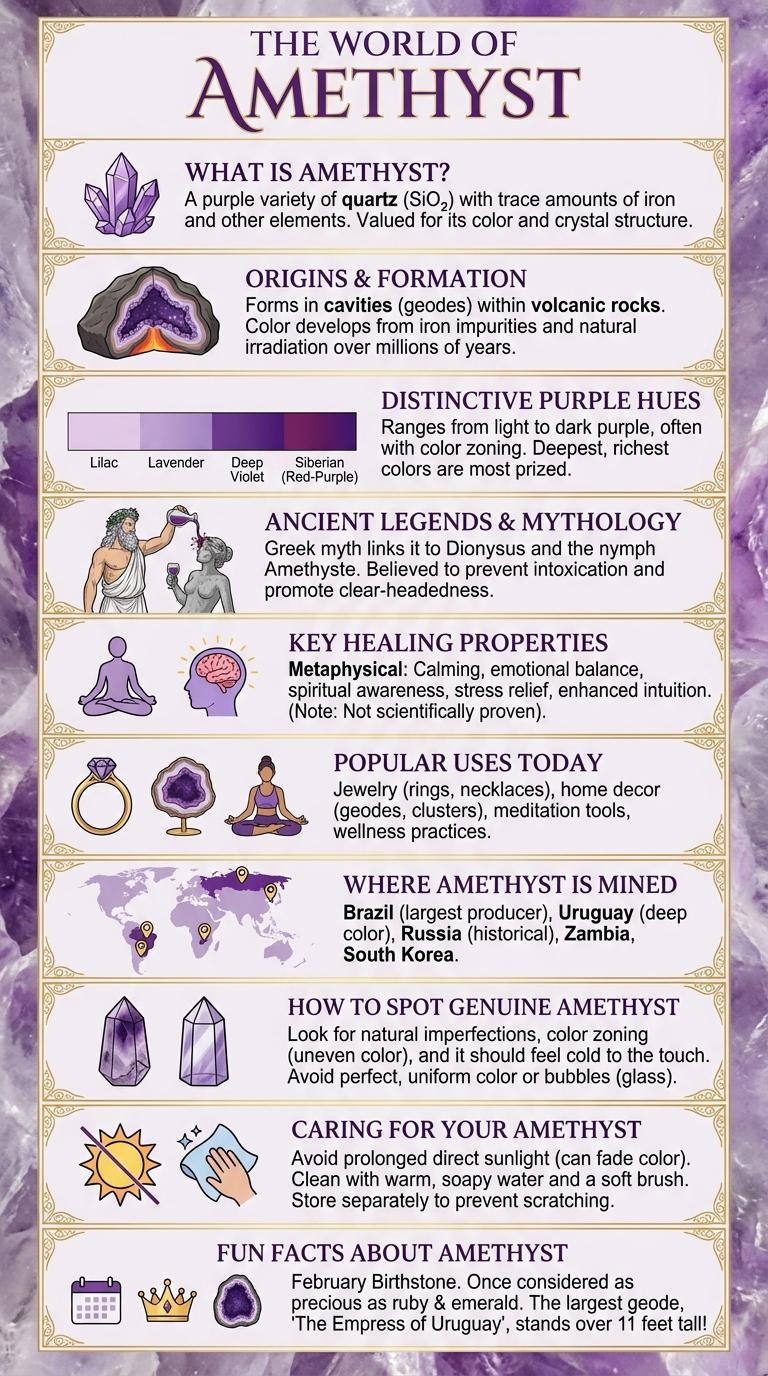
Amethyst is a captivating purple gemstone known for its stunning beauty and rich history. Its unique color ranges from light lavender to deep violet, making it a favorite in jewelry and decorative arts. This infographic explores amethyst's geological formation, cultural significance, and healing properties.
What is Amethyst?
Amethyst is a purple variety of quartz known for its vibrant color and crystal clarity. It forms in geodes and volcanic rocks, often found in regions like Brazil, Uruguay, and Zambia. Historically, amethyst has been valued for its supposed healing properties and use in jewelry.
Origins & Formation
Amethyst is a purple variety of quartz renowned for its striking color and crystal clarity. It forms in volcanic rocks through processes involving silica-rich solutions and iron impurities.
- Geological Origins - Amethyst typically forms in geodes within volcanic basalt, where mineral-rich fluids crystallize over millions of years.
- Color Formation - Its characteristic purple hue results from iron ions and natural irradiation interacting within quartz.
- Global Sources - Major deposits are found in Brazil, Uruguay, Zambia, and Russia, each producing varying shades and qualities.
Distinctive Purple Hues
Amethyst is renowned for its distinctive purple hues, ranging from pale lilac to deep violet. These vibrant colors result from trace amounts of iron and natural irradiation within the quartz crystal structure.
The intensity of purple varies depending on the geographic origin of the amethyst, with Siberian and Brazilian specimens often exhibiting the richest tones. This unique coloration makes amethyst a highly sought-after gemstone in jewelry and decorative art.
Ancient Legends & Mythology
Amethyst, a violet variety of quartz, holds a rich history steeped in ancient legends and mythology. Known for its stunning purple hue, it was highly prized by civilizations such as the Greeks and Egyptians.
In Greek mythology, amethyst was believed to protect against intoxication, as the name derives from the Greek word "amethystos," meaning "not drunken." The stone was thought to bring clarity to the mind and calm to the spirit. Egyptian pharaohs used amethyst in their jewelry and amulets to symbolize power and divine connection.
Key Healing Properties
Amethyst is a powerful crystal known for its calming and soothing properties. It is widely used to reduce stress and promote emotional balance.
This gemstone enhances spiritual awareness and intuition, making it a favorite among practitioners of meditation and energy healing. Amethyst also supports restful sleep and helps alleviate nightmares.
Popular Uses Today
| Popular Uses of Amethyst | Description |
|---|---|
| Jewelry | Amethyst is widely used in rings, necklaces, earrings, and bracelets due to its vibrant purple hue and durability. |
| Decorative Items | Commonly crafted into ornamental objects such as geodes, carved figurines, and crystal clusters for home decor. |
| Healing and Meditation | Believed to promote calm and clarity, amethyst is favored in spiritual practices and wellness rituals. |
| Feng Shui | Used to attract positive energy and harmony, often placed in living or workspaces. |
| Birthstone Jewelry | Recognized as the birthstone of February, amethyst is popular for personalized and birthstone-centered designs. |
Where Amethyst is Mined
Amethyst, a popular violet variety of quartz, is primarily mined in several key locations around the world. Its rich purple color has made it a favored gemstone for centuries, with deposits found on multiple continents.
- Brazil - The largest supplier of amethyst, Brazil's Minas Gerais and Rio Grande do Sul regions produce high-quality crystals.
- Uruguay - Known for deep purple amethyst, Uruguay's Artigas province offers some of the finest specimens.
- Zambia - Zambia is a major African source, producing stones noted for their intense color and clarity.
These mining locations contribute significantly to the global trade and availability of amethyst gemstones.
How to Spot Genuine Amethyst
Genuine amethyst displays a consistent violet to deep purple color without visible color zoning or uneven patches. Look for natural inclusions or slight imperfections inside the stone, which indicate authenticity, unlike flawless synthetic counterparts. Test the stone's hardness; real amethyst rates 7 on the Mohs scale, making it resistant to scratches from everyday materials.
Caring for Your Amethyst
How should you care for your amethyst to maintain its beauty? Amethyst is a durable gemstone but requires gentle care to preserve its vibrant color and clarity. Avoid exposing it to prolonged direct sunlight or harsh chemicals.
What is the best way to clean an amethyst? Use warm soapy water and a soft brush to clean your amethyst. Rinse thoroughly and dry with a soft cloth to avoid scratches and dullness.
Can amethyst be safely stored with other jewelry? Store amethyst separately or wrapped in a soft cloth to prevent scratching from harder gemstones. Keeping it in a padded jewelry box is ideal.
Is it necessary to avoid extreme temperatures for amethyst? Yes, sudden temperature changes can cause fractures in the amethyst. Keep it away from intense heat sources and sudden cold exposure.
How often should amethyst jewelry be checked for damage? Regularly inspect your amethyst jewelry for loose settings or chips. Prompt repairs help maintain the stone's security and appearance.