
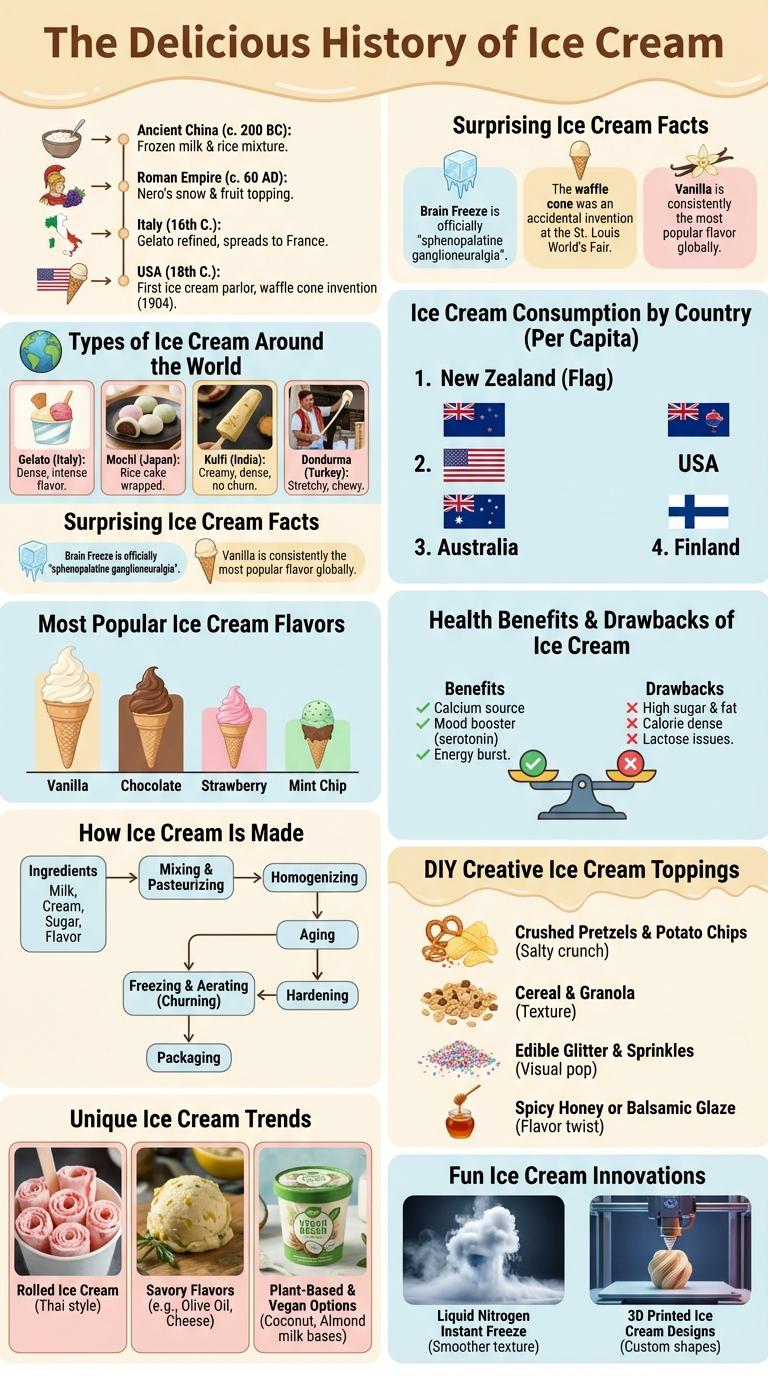
Ice cream combines rich flavors and creamy textures, captivating dessert lovers worldwide. This infographic explores fascinating facts, popular varieties, and intriguing statistics about this beloved treat. Discover how ice cream continues to evolve while maintaining its timeless appeal.
The Delicious History of Ice Cream
Ice cream dates back to ancient China, where a frozen mixture of milk and rice was enjoyed around 200 BC. The dessert evolved through the centuries, reaching Europe via the Arabs who introduced flavored ice preparations. By the 17th century, ice cream became a popular treat in aristocratic circles, leading to its widespread commercial availability in the 18th century.
Types of Ice Cream Around the World
Ice cream is a beloved dessert enjoyed globally, with unique variations reflecting local flavors and traditions. Each region offers a distinct twist, showcasing diverse ingredients and preparation methods.
In Italy, gelato stands out for its dense texture and intense flavors, made with less air and more milk than traditional ice cream. Japan features mochi ice cream, combining creamy ice cream with sweet rice dough for a chewy texture. India's kulfi is a rich, frozen dairy dessert often flavored with cardamom, saffron, and pistachios.
Surprising Ice Cream Facts
Ice cream is a beloved dessert enjoyed worldwide with fascinating secrets behind its creamy texture and flavors. Exploring surprising facts about ice cream reveals its rich history and unique characteristics.
- The first ice cream recipe dates back to 1665 - Early recipes combined cream and flavors without modern freezing techniques.
- Vanilla is the most popular ice cream flavor globally - It accounts for over 20% of all ice cream sales in the United States.
- Ice cream was once a luxury for royalty - In ancient China and Rome, frozen desserts were exclusively made for emperors and nobility.
Ice cream continues to evolve with innovative ingredients and global influences enriching this classic treat.
Most Popular Ice Cream Flavors
Ice cream is a beloved dessert enjoyed worldwide, with a variety of flavors catering to every taste. Understanding the popularity of certain flavors helps ice cream makers create products that customers love.
Vanilla continues to be the most popular ice cream flavor due to its versatility and classic taste. Chocolate, strawberry, and cookies and cream also rank high in popularity, appealing to a wide audience with their rich and familiar flavors.
Ice Cream Consumption by Country
Ice cream consumption varies significantly across countries, reflecting diverse cultural preferences and climate influences. The United States, Australia, and New Zealand rank among the highest consumers, with annual per capita consumption exceeding 20 liters. European countries like Italy and Sweden also show strong passion for ice cream, highlighting its global popularity as a treat.
How Ice Cream Is Made
Ice cream is a frozen dessert made from dairy products combined with sweeteners and flavorings. The process involves mixing, pasteurization, homogenization, aging, freezing, and packaging to create a smooth, creamy texture.
- Mixing Ingredients - Milk, cream, sugar, and flavorings are blended to form a uniform base mixture.
- Pasteurization - The mixture is heated to kill harmful bacteria and ensure food safety.
- Homogenization - The mixture is processed to break down fat molecules and improve texture.
- Aging - The mixture is cooled and rested to allow fat to crystallize and proteins to hydrate.
- Freezing and Packaging - Air is incorporated into the mixture as it freezes, then it is packed and stored at low temperatures.
Health Benefits & Drawbacks of Ice Cream
Ice cream is a popular treat enjoyed worldwide, known for its creamy texture and sweet flavor. It offers certain health benefits but also comes with some nutritional drawbacks that should be considered.
- Rich Source of Calcium - Ice cream contains dairy, providing essential calcium that supports bone health and dental strength.
- High in Sugar and Fat - Many ice cream varieties have elevated sugar and saturated fat levels, which can contribute to weight gain and increased cholesterol.
- Contains Protein - The milk content in ice cream supplies protein, which helps with muscle repair and immune function.
- Potential for Lactose Intolerance Issues - Ice cream may cause digestive discomfort for individuals sensitive to lactose.
- Includes Vitamins A and D - Fortified ice cream offers fat-soluble vitamins that promote vision, skin health, and immune support.
Unique Ice Cream Trends
Ice cream continues to evolve with innovative flavors and presentation styles capturing global attention. Unique trends include savory ice creams, such as cheese and herbs, appealing to adventurous palates.
Visual appeal plays a significant role, with rolled ice cream and vibrant color combinations enhancing the eating experience. Plant-based and allergen-free ice creams have surged in popularity, catering to diverse dietary needs.
DIY Creative Ice Cream Toppings
Looking for unique ways to enhance your ice cream experience? Creative DIY ice cream toppings add fun textures and flavors that transform simple scoops into gourmet treats. Experimenting with homemade toppings like spicy candied nuts, flavored whipped cream, and fruit compotes elevates every bite. Try mixing crushed cookies or drizzling infused honey to customize your dessert perfectly. These easy-to-make toppings provide endless possibilities for personalizing ice cream with delicious creativity.