
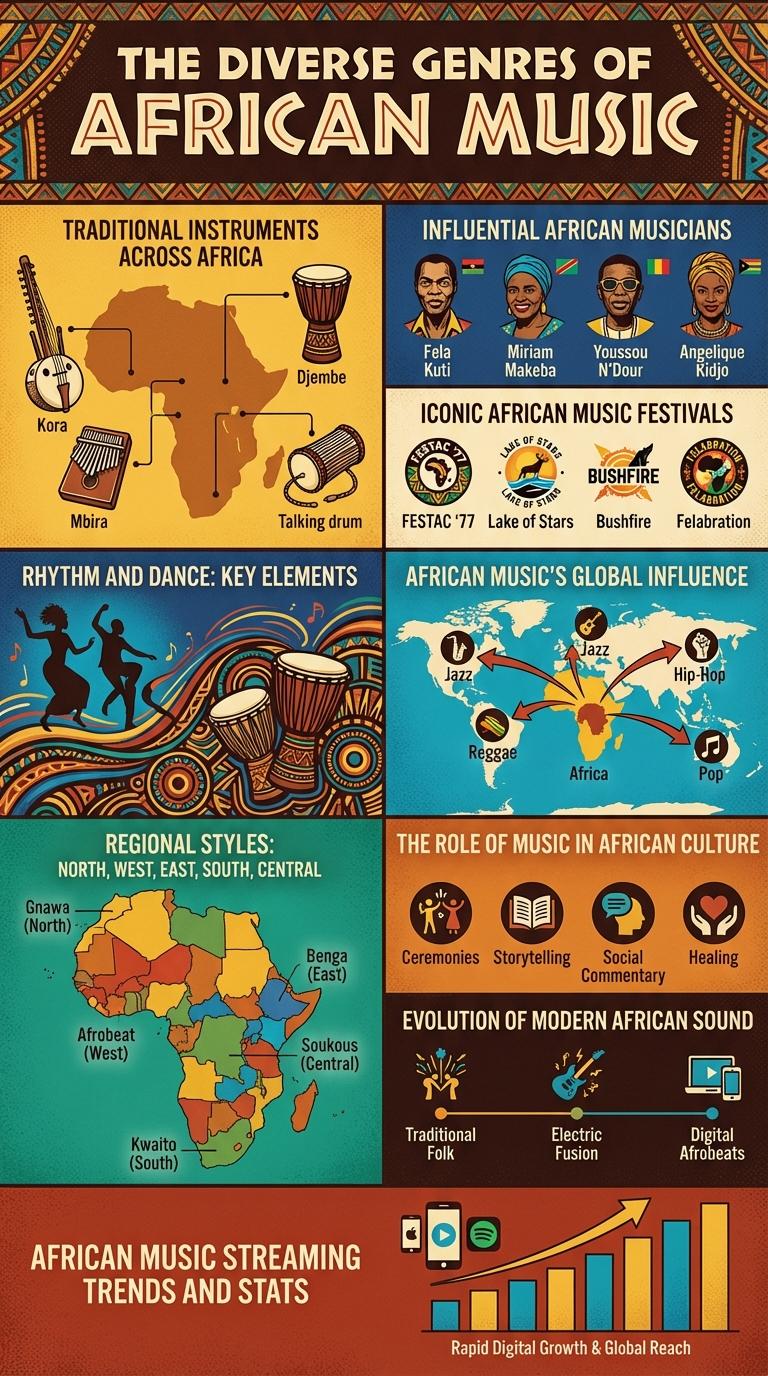
African music reflects a rich tapestry of cultural diversity and historical depth, characterized by complex rhythms and unique instruments. This infographic highlights key genres, influential artists, and traditional styles that have shaped the continent's vibrant musical heritage. Explore the evolution of African music and its global impact through vivid visuals and insightful data.
The Diverse Genres of African Music
African music is a rich tapestry of sounds, rhythms, and instruments that reflect the continent's diverse cultures and histories. It spans a wide array of genres, each with unique characteristics influenced by regional traditions and languages.
Genres such as Afrobeat, Highlife, and Soukous blend traditional rhythms with modern instrumentation, creating vibrant and energetic sounds. In contrast, genres like Gnawa and Tuareg music emphasize spiritual and storytelling elements through repetitive patterns and strong vocal performances.
Traditional Instruments Across Africa
African music features a rich variety of traditional instruments that play a vital role in cultural expression and storytelling. These instruments often use natural materials like wood, animal skins, and gourds, reflecting the continent's diverse environments.
Drums are central to many African musical traditions, with types such as the djembe and talking drum producing distinct rhythms and sounds. String instruments like the kora and ngoni combine melodic and harmonic elements, creating unique auditory experiences. Wind instruments, including flutes and horns, add vibrant layers to musical compositions, often used in ceremonies and celebrations.
Influential African Musicians
African music has profoundly influenced global soundscapes through its rich diversity and rhythmic complexity. Many African musicians have garnered international acclaim, shaping genres from jazz to hip-hop.
Fela Kuti, the Nigerian pioneer of Afrobeat, combined traditional African rhythms with funk and jazz to create a powerful political message. Miriam Makeba, known as "Mama Africa," brought African music to worldwide attention and championed civil rights.
Iconic African Music Festivals
African music festivals celebrate the continent's rich and diverse musical heritage, attracting fans from around the world. These events showcase traditional rhythms alongside contemporary sounds, highlighting Africa's vibrant cultural scene.
- Lake of Stars Festival - Held in Malawi, this festival features a blend of local and international artists performing on the shores of Lake Malawi.
- Festival au Desert - Located in Mali, this desert festival brings Tuareg music to the global stage, celebrating nomadic culture and Saharan sounds.
- Bushfire Festival - Taking place in Eswatini, it is a multicultural event known for its diverse lineup and commitment to social causes.
Rhythm and Dance: Key Elements
African music is deeply rooted in rhythm and dance, forming the foundation of its cultural expression. These elements create a powerful connection between performers and audiences in traditional and contemporary settings.
- Polyrhythm - Multiple contrasting rhythms are layered to create complex and engaging sound patterns.
- Call and Response - A musical dialogue between a lead singer and a chorus drives communal participation.
- Dance Integration - Dance movements are synchronized with rhythmic patterns, enhancing the storytelling experience.
Rhythm and dance together shape the dynamic and vibrant character of African music traditions.
African Music's Global Influence
How has African music influenced global music cultures? African rhythms, instruments, and vocal styles have shaped numerous music genres worldwide. From jazz to hip-hop, African musical elements continue to inspire and innovate the global soundscape.
Which African instruments are commonly found in international music? Instruments like the djembe, kora, and mbira have been incorporated into various music styles across continents. These instruments enhance musical diversity and highlight African craftsmanship and tradition.
What role do African music genres play in the worldwide music scene? Genres such as Afrobeat, Highlife, and soukous have gained international popularity and fused with other musical forms. Their infectious rhythms and vibrant melodies attract global audiences and artists alike.
How have African music artists contributed to global music? Artists like Fela Kuti, Miriam Makeba, and Burna Boy have brought African music to the forefront. Their work promotes cultural exchange and elevates African musical identity on the world stage.
Can you see African music's impact in global music trends? Yes, African music influences dance styles, production techniques, and songwriting worldwide. Its integration fosters creativity and strengthens cultural connections across the globe.
Regional Styles: North, West, East, South, Central
African music is richly diverse, with distinct regional styles reflecting cultural heritage and history. North African music typically features Arabic and Berber influences with instruments like the oud and darbuka. West African music is known for its complex rhythms and use of drums such as the djembe and talking drum.
East African music incorporates Swahili, Arab, and indigenous sounds, often using instruments like the krar and nyatiti. Southern African music highlights genres such as mbira and maskandi, blending traditional melodies with modern influences. Central African music is characterized by polyphonic vocals and percussion instruments including the likembe and ngoma drums.
The Role of Music in African Culture
African music serves as a vital medium for storytelling, preserving history, and strengthening community bonds across diverse cultures. It plays a crucial role in ceremonies, rituals, and social events, reflecting the continent's rich heritage and values. Traditional instruments like the djembe, kora, and mbira highlight the unique soundscapes that define African musical identity.
Evolution of Modern African Sound
The evolution of modern African music reflects a rich tapestry of traditional rhythms fused with contemporary genres. This dynamic progression has shaped global music trends and continues to influence artists worldwide.
- Traditional Roots - African music has deep foundations in indigenous rhythms, tribal chants, and percussion instruments like the djembe and talking drum.
- Influence of Colonialism - The introduction of new instruments and musical styles during colonial times led to hybrid genres blending African and Western elements.
- Rise of Afrobeat - Pioneered by Fela Kuti in the 1960s, Afrobeat combines jazz, funk, and traditional Nigerian sounds to create a powerful, politically charged genre.
- Global Popularity - Modern African artists like Burna Boy and Wizkid have propelled Afrobeat and Afropop onto international charts and festivals.
- Technological Impact - Access to digital production tools and social media has enabled African musicians to innovate and distribute their sounds globally.