
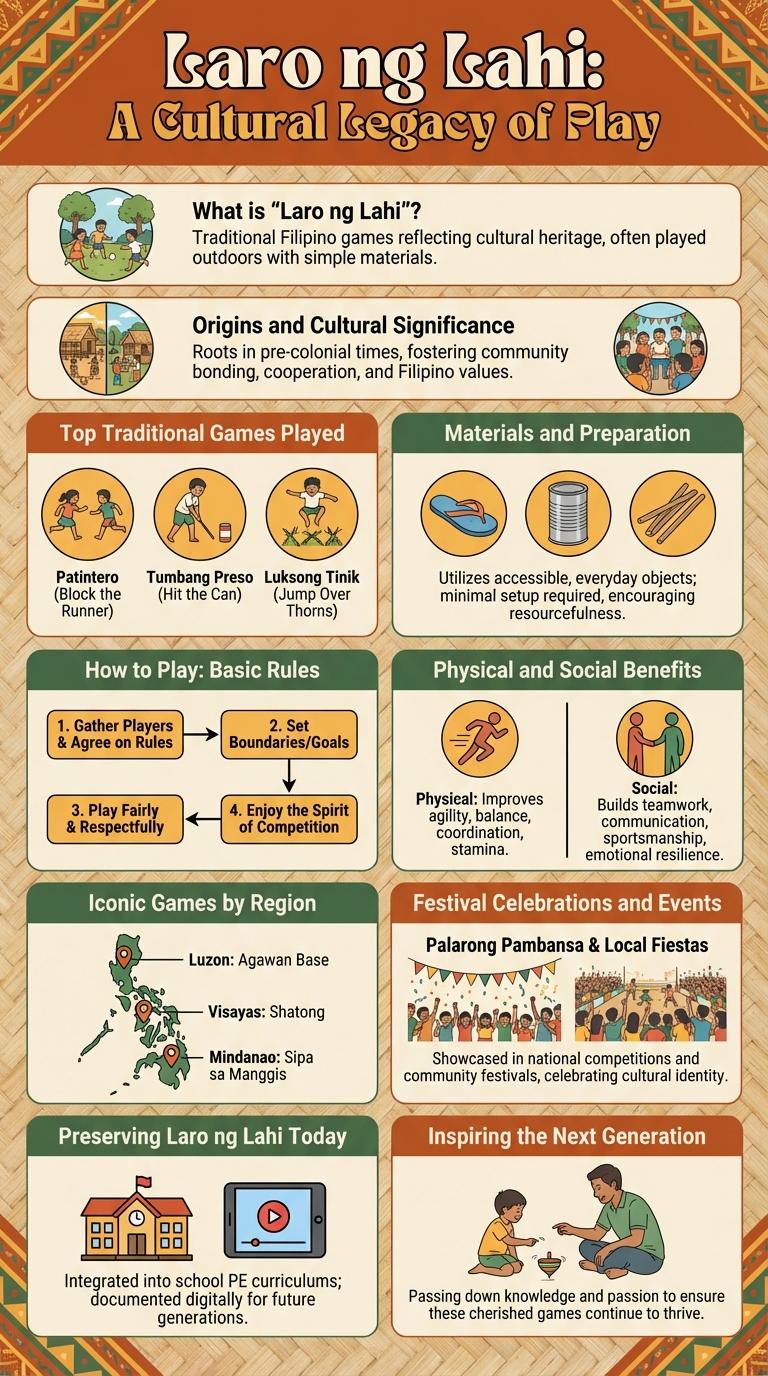
Laro ng Lahi highlights traditional Filipino games that celebrate cultural heritage and community bonding. These activities, such as Tumbang Preso and Patintero, showcase teamwork, agility, and fun passed down through generations. Preserving these games fosters Filipino identity while promoting active outdoor play.
What is "Laro ng Lahi"?
Laro ng Lahi refers to traditional Filipino games that highlight cultural heritage and social interaction. These games are an integral part of community gatherings and celebrations in the Philippines.
- Traditional Filipino Games - Laro ng Lahi consists of age-old games passed down through generations in the Philippines.
- Cultural Preservation - These games preserve Filipino customs, values, and stories embedded in each activity.
- Social Bonding - Participation in Laro ng Lahi promotes teamwork, camaraderie, and physical activity among players.
Origins and Cultural Significance
Laro ng Lahi are traditional Filipino games rooted in indigenous culture and communal life. These games reflect the values, history, and social bonds of Filipino communities across generations.
- Pre-colonial Origins - Laro ng Lahi games date back to pre-colonial Philippines, played by early Filipinos for recreation and socializing.
- Cultural Identity - These games express Filipino heritage, customs, and community spirit preserved through oral tradition.
- Educational Role - Laro ng Lahi promote physical fitness, teamwork, and moral lessons integral to Filipino upbringing.
Understanding the origins and significance of laro ng lahi highlights their importance in preserving Filipino cultural identity today.
Top Traditional Games Played
Laro ng Lahi encompasses a variety of traditional Filipino games that have been played for generations. These games reflect the rich cultural heritage and communal spirit of the Philippines.
Popular traditional games include Tumbang Preso, where players try to knock down a can guarded by a "it" player. Patintero involves marking lines on the ground and racing across them without being tagged. Sipa requires players to keep a small ball aloft using only their feet, showcasing agility and coordination.
Materials and Preparation
Laro ng Lahi features traditional Filipino games that require simple materials easily found at home or in the community. Common materials include rubber bands, stones, sticks, and homemade balls crafted from cloth or woven leaves.
Preparation involves setting up a safe play area such as an open field or a quiet street. Players often mark boundaries with chalk or stones and gather at specific times, usually during community events or school physical education classes.
How to Play: Basic Rules
| Game Name | How to Play: Basic Rules |
|---|---|
| Tumbang Preso | Players aim to knock down a tin can by throwing a slipper. One player guards the can while others take turns throwing. Once the can is knocked down, players retrieve their slippers and run to stand guard without being tagged. |
| Patintero | Two teams compete to cross lines drawn on the ground without being tagged by the opposing team's players. The tagging team guards the lines, while the runners try to reach the end. |
| Sungka | Players take turns distributing shells or stones in the pits on a wooden board, aiming to capture the most pieces by landing the last shell in an opponent's pit with shells to collect. |
| Luksong Tinik | Players jump over a progressively higher row of hands and feet placed by others. The jumper must clear the "thorns" without touching them. Failure results in elimination or role change. |
| Agawan Base | Two teams try to capture the opponent's base while protecting their own. Players tag opponents within their territory to send them to a "jailed" state before rescuing teammates or claiming the base. |
Physical and Social Benefits
Laro ng Lahi are traditional Filipino games that promote physical fitness and social interaction. These games enhance coordination, endurance, and teamwork among players of all ages. Participating in these activities strengthens community bonds while preserving cultural heritage.
Iconic Games by Region
Laro ng Lahi represents traditional Filipino games that vary across regions, showcasing rich cultural heritage. Iconic games like Sipa in Luzon, Tumbang Preso in Visayas, and Patintero in Mindanao highlight regional diversity. These games promote community bonding, physical activity, and Filipino values nationwide.
| Region | Iconic Game |
|---|---|
| Luzon | Sipa |
| Visayas | Tumbang Preso |
| Mindanao | Patintero |
| Palawan | Syatong |
| Bicol Region | Holen |
Festival Celebrations and Events
Laro ng Lahi highlights traditional Filipino games showcased during vibrant festival celebrations and community events. These festivities celebrate cultural heritage while promoting unity and physical activity among participants of all ages.
- Sangkailan Festival - Features traditional games like patintero and luksong tinik during street parades and competitions.
- Kabataan Festival - Empowers youth by organizing laro ng lahi tournaments emphasizing teamwork and Filipino culture.
- Pahiyas Festival - Integrates fun, folk games into agricultural celebrations, attracting locals and tourists alike.
Preserving Laro ng Lahi Today
Preserving Laro ng Lahi is essential in maintaining Filipino cultural identity and heritage. These traditional games connect generations and promote community bonding across the Philippines.
Efforts to revive and sustain Laro ng Lahi include school programs, community events, and government initiatives. Digital platforms and social media also play a vital role in raising awareness and encouraging participation.