
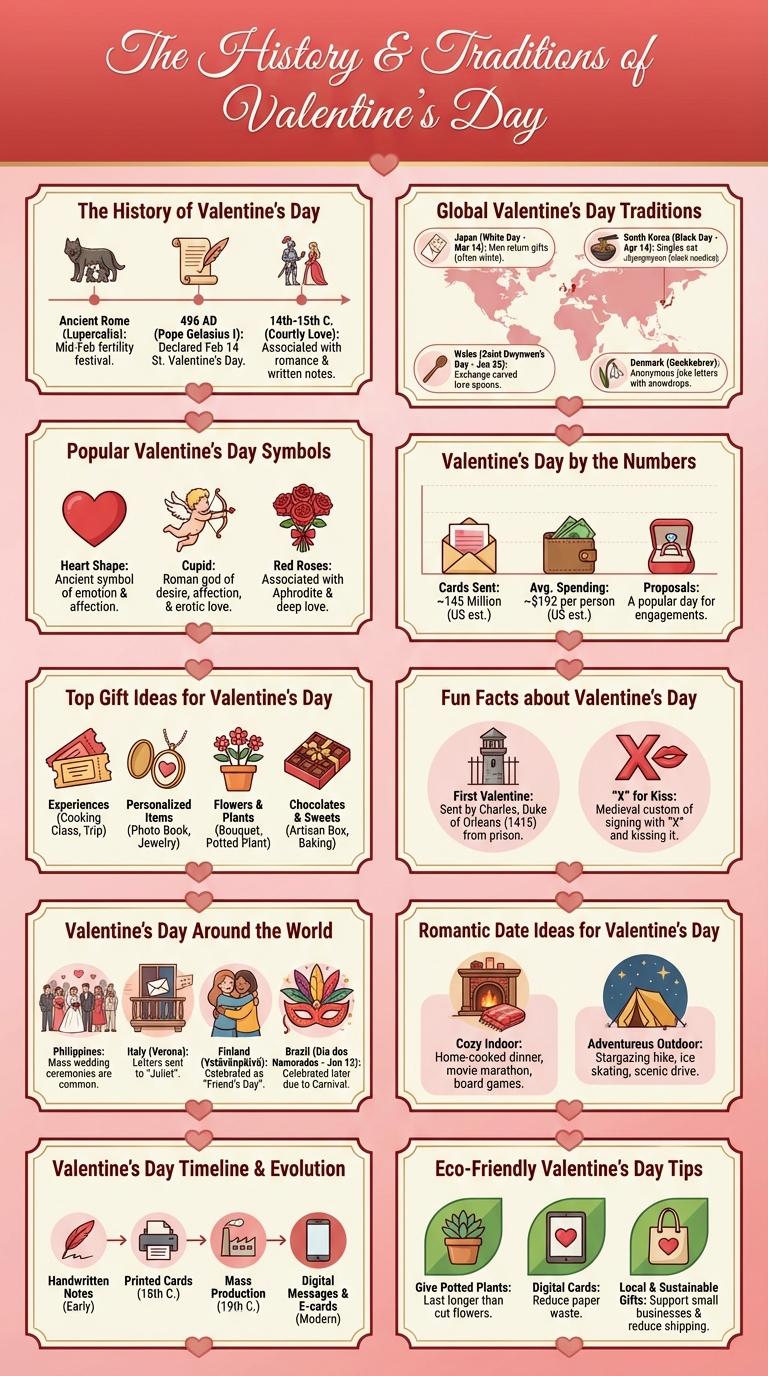
Valentine's Day infographics visually capture the essence of love, romance, and gift-giving trends. They highlight popular symbols, traditions, and the emotional significance behind this annual celebration. These visual guides offer quick insights into spending patterns, favorite gifts, and cultural variations that make Valentine's Day unique worldwide.
The History of Valentine's Day
Valentine's Day traces its origins to the Roman festival of Lupercalia, celebrated in mid-February to honor fertility and love. The day became associated with Saint Valentine, a Christian martyr who secretly married couples during Roman persecution. Over centuries, Valentine's Day evolved into a global celebration of romantic love, marked by exchanging cards, gifts, and messages of affection.
Global Valentine's Day Traditions
Valentine's Day is celebrated worldwide with unique customs reflecting diverse cultures. These traditions often symbolize love, affection, and appreciation for partners, family, and friends.
In Japan, women give chocolates to men, and men reciprocate a month later on White Day. In Brazil, Dia dos Namorados on June 12th features romantic celebrations similar to Valentine's Day.
Europe has varied Valentine's customs, such as the exchange of handwritten love letters in Italy and courting songs in Wales. In South Korea, the holiday extends through the 14th of each month, celebrating love and friendship.
The United States popularized commercial Valentine's gifts including cards, flowers, and sweets. Countries like Finland emphasize friendship over romance, celebrating Ystavanpaiva on February 14th.
Popular Valentine's Day Symbols
Valentine's Day is celebrated worldwide with various symbols expressing love and affection. These symbols carry rich meanings that enhance the festive spirit of the holiday.
- Heart - The heart represents love and deep emotional connection.
- Red Roses - Red roses symbolize passion and romantic desire.
- Cupid - Cupid is the mythological figure associated with love and attraction.
- Love Letters - Love letters convey heartfelt emotions and personal affection.
- Chocolate - Chocolate is a sweet gift symbolizing indulgence and care.
These iconic symbols continue to define the essence of Valentine's Day celebrations around the world.
Valentine's Day by the Numbers
| Statistic | Value |
|---|---|
| Annual Spending on Valentine's Day (US) | $23.9 billion |
| Average Amount Spent per Person | $164.76 |
| Number of Valentine's Day Cards Exchanged | 145 million |
| Percentage of People Who Buy Flowers | 73% |
| Most Popular Gift | Chocolate |
Top Gift Ideas for Valentine's Day
Valentine's Day is the perfect occasion to express love and appreciation through thoughtful gifts. Popular choices range from classic to modern, catering to different tastes and preferences.
Top gift ideas include flowers, chocolates, personalized jewelry, and romantic experiences such as dinner dates or weekend getaways. Technology enthusiasts may prefer gadgets like smartwatches or wireless earbuds. Handmade gifts also add a personal touch, making the celebration memorable.
Fun Facts about Valentine's Day
Valentine's Day, celebrated on February 14th, honors Saint Valentine and has evolved into a global celebration of love and affection. Around 145 million Valentine's Day cards are exchanged annually, making it the second largest card-sending holiday after Christmas.
The tradition of sending handwritten love notes dates back to the 15th century, with the oldest known Valentine letter penned in 1415 by Charles, Duke of Orleans. Chocolate sales surge by nearly 58% during the week leading up to Valentine's Day, highlighting its association with sweet treats and romance.
Valentine's Day Around the World
How do different countries celebrate Valentine's Day around the world?
Valentine's Day is observed with unique customs and traditions globally, reflecting diverse cultural expressions of love. From romantic dinners in France to gift exchanges in Japan, the day holds special significance everywhere.
| Country | Celebration Style |
|---|---|
| Japan | Women give chocolates to men, with men returning gifts on White Day. |
| France | Couples exchange flowers and enjoy romantic meals together. |
| Brazil | Dia dos Namorados on June 12, with parties and gift-giving. |
| South Korea | Unique tradition where singles eat black noodles on Black Day. |
| Italy | Couples gift chocolates and attend music festivals celebrating love. |
Romantic Date Ideas for Valentine's Day
Valentine's Day is the perfect occasion to celebrate love with thoughtful and memorable romantic dates. Exploring creative and personalized experiences can make this day unforgettable for couples.
- Candlelit Dinner - Enjoy an intimate meal with soft lighting and your partner's favorite dishes to create a warm and romantic atmosphere.
- Outdoor Picnic - Choose a scenic park or beach and share a meal surrounded by nature for a relaxed and charming date.
- Couples' Spa Day - Indulge in a day of relaxation and pampering together with massages and wellness treatments.
- Stargazing Night - Find a quiet location to watch stars and share dreams under the night sky, perfect for deep conversations.
- Cooking Class - Learn to prepare a new dish together, combining teamwork and fun to strengthen your bond.
Valentine's Day Timeline & Evolution
Valentine's Day has evolved from ancient Roman festivals to a modern celebration of love and affection. Its timeline reveals significant cultural and commercial transformations over centuries.
- Origins in Roman Festival - The holiday traces back to Lupercalia, a fertility festival held in mid-February during ancient Rome.
- Saint Valentine's Martyrdom - Valentine of Rome was martyred in the 3rd century, inspiring the association with love and courtship.
- Medieval Love Tradition - By the Middle Ages, Valentine's Day became linked to romantic gestures and poetry in Europe.
- Commercial Expansion 19th Century - The introduction of printed Valentine cards in the 1800s popularized the celebration globally.
- Modern Celebrations - Today, Valentine's Day includes digital greetings, gifts, and widespread cultural expressions of love.