
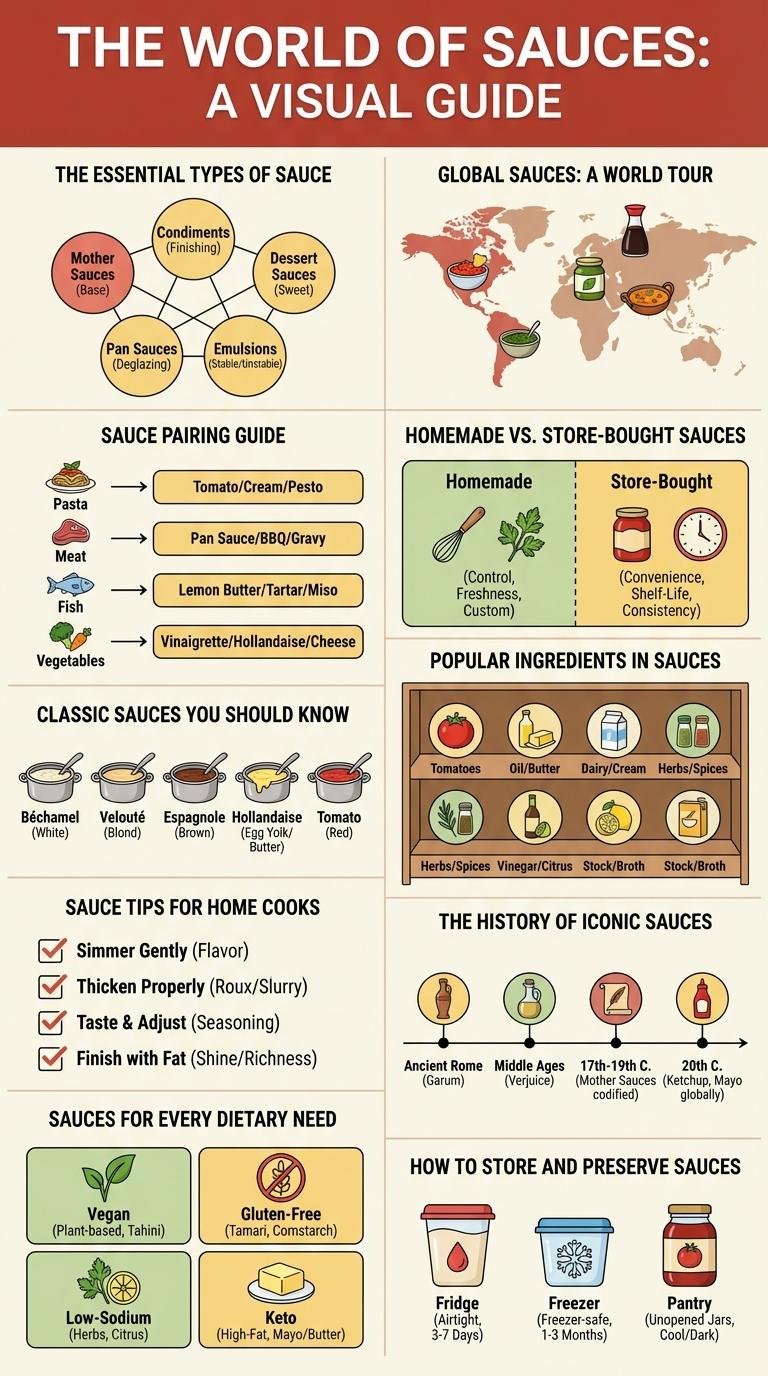
Sauces enhance dishes by adding flavor, texture, and visual appeal, transforming simple meals into culinary experiences. This infographic breaks down popular sauce types, their origins, and best pairings to elevate your cooking. Understanding the fundamentals of sauce preparation can inspire creativity and improve flavor profiles in everyday recipes.
The Essential Types of Sauce
Sauces are fundamental in culinary arts, enhancing flavor and texture in dishes worldwide. Essential sauce types include bechamel, veloute, espagnole, hollandaise, and tomato, each serving as a base for numerous derivative sauces. Understanding these classic sauces allows chefs to create diverse and complex flavors by combining key ingredients and techniques.
Global Sauces: A World Tour
Sauces play a vital role in global cuisines, enhancing flavors and defining dishes across cultures. Exploring popular sauces around the world reveals the diversity and culinary traditions unique to each region.
Global Sauces: A World Tour highlights iconic sauces representing different countries and their culinary heritage.
- Salsa Roja (Mexico) - A spicy tomato-based sauce commonly used in Mexican dishes like tacos and enchiladas.
- Soy Sauce (China) - A fermented condiment essential in Chinese cuisine, offering a salty and umami flavor.
- Pesto (Italy) - Made from basil, pine nuts, garlic, olive oil, and Parmesan cheese, pesto is a staple in Italian cooking.
- Curry Sauce (India) - A blend of spices creating rich and aromatic sauces used in diverse Indian dishes.
- Mayonnaise (France) - A creamy emulsion of egg yolk, oil, and vinegar, vital in French culinary preparations.
Sauce Pairing Guide
Sauces enhance the flavor profile of dishes by complementing their main ingredients. Choosing the right sauce can elevate the overall dining experience and balance the taste.
Rich, creamy sauces pair well with grilled meats and roasted vegetables. Light, acidic sauces are perfect for seafood and fresh salads.
Homemade vs. Store-Bought Sauces
Sauces play a crucial role in enhancing the flavor of dishes, with options ranging from homemade to store-bought varieties. Understanding the differences can help in choosing the best sauce for taste, health, and convenience.
- Flavor Control - Homemade sauces allow precise adjustment of ingredients for personalized taste and freshness.
- Ingredient Quality - Store-bought sauces often contain preservatives and additives, while homemade versions use fresh, natural ingredients.
- Convenience and Time - Store-bought sauces provide quick and easy use, whereas homemade sauces require preparation time but offer greater customization.
Choosing between homemade and store-bought sauces depends on priorities such as flavor preference, ingredient quality, and preparation time.
Classic Sauces You Should Know
| Classic Sauce | Description |
|---|---|
| Bechamel | White sauce made from butter, flour, and milk. Base for cheese sauces and creamy dishes. |
| Espagnole | Rich brown sauce made from brown stock, tomato paste, and roux. Foundation for demi-glace. |
| Hollandaise | Emulsified sauce of egg yolk, butter, and lemon juice. Served with eggs and vegetables. |
| Veloute | Light sauce prepared from white stock and roux. Used as a base for many derivatives. |
| Tomato Sauce | Classic red sauce from tomatoes, garlic, onions, and herbs. Central to Mediterranean cuisine. |
Popular Ingredients in Sauces
Sauces are essential in enhancing the flavor profile of dishes worldwide. Popular ingredients in sauces include tomatoes, garlic, onions, herbs, and various spices. These components create diverse textures and tastes, making sauces versatile in culinary applications.
Sauce Tips for Home Cooks
Sauces elevate the flavor and texture of any dish, making meals more enjoyable and visually appealing. Mastering basic sauce techniques allows home cooks to enhance their culinary skills effortlessly.
Always taste and adjust seasoning gradually to balance flavors perfectly. Use fresh herbs and quality ingredients to boost aroma and depth. Experiment with sauce thickness by controlling cooking time and adding thickeners like cornstarch or flour for ideal consistency.
The History of Iconic Sauces
What are the origins of some of the world's most iconic sauces? Sauces like ketchup, soy sauce, and bechamel each have rich histories rooted in specific cultures, evolving over centuries to become global staples. Understanding their origins reveals the cultural exchanges and culinary innovations that shaped modern cuisine.
Sauces for Every Dietary Need
Sauces can enhance the flavor of any dish while accommodating various dietary needs. Choosing the right sauce ensures both taste and nutritional requirements are met.
Gluten-free sauces like tamari and coconut aminos cater to those with gluten intolerance. Vegan options often use plant-based ingredients such as tahini or cashew cream to replace dairy or eggs.