
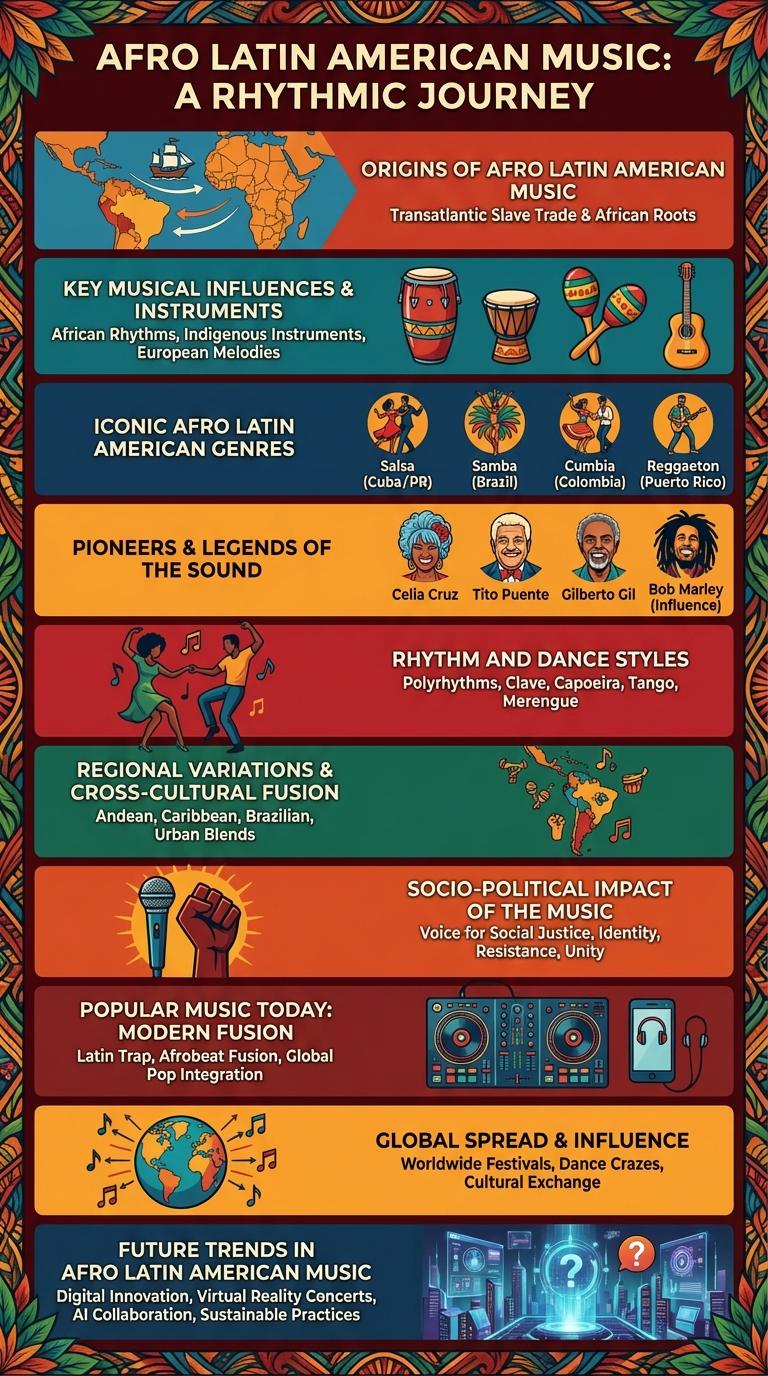
Afro Latin American music has profoundly shaped the rhythm and soul of popular music genres worldwide. This infographic explores the rich cultural heritage and diverse sounds that Afro Latin American artists have contributed to genres like salsa, reggaeton, and samba. Discover how these musical traditions continue to influence contemporary music and celebrate their enduring legacy.
Origins of Afro Latin American Music
Afro Latin American music blends African, Indigenous, and European elements, forming a rich and dynamic cultural expression. Its origins trace back to the transatlantic slave trade, where African rhythms and instruments merged with local traditions across Latin America.
- African Rhythms - African percussion and call-and-response vocals established the fundamental rhythmic patterns in Afro Latin American music.
- Colonial Influence - European instruments like the guitar and brass were incorporated, adding melodic and harmonic complexity.
- Indigenous Roots - Native American musical traditions fused with African and European styles, enriching the genre's diversity.
These intertwined cultural influences gave rise to popular Afro Latin American music genres such as salsa, cumbia, and samba.
Key Musical Influences & Instruments
Afro Latin American music blends African rhythms with Latin American melodies, creating rich cultural soundscapes. Popular music from this tradition features unique instruments and distinctive musical influences.
- African Rhythms - Complex percussion patterns from African drumming form the foundation of Afro Latin American music.
- Indigenous Melodies - Native Latin American musical scales and tunes meld with African influences.
- Instruments - Traditional instruments like congas, bongos, maracas, and the clave drive rhythm sections.
Iconic Afro Latin American Genres
Afro Latin American music blends African rhythms with Latin American melodies, creating vibrant and influential genres. These styles have shaped popular music worldwide, reflecting rich cultural heritage and history.
Iconic Afro Latin American genres include Samba, Salsa, Cumbia, Rumba, and Merengue. Each genre features unique percussion instruments, syncopated beats, and dance traditions that highlight African cultural roots.
Pioneers & Legends of the Sound
| Pioneer / Legend | Contribution to Afro Latin American and Popular Music |
|---|---|
| Celia Cruz | Known as the "Queen of Salsa," Celia Cruz popularized Afro-Cuban rhythms globally, blending traditional son and mambo with contemporary salsa music. |
| Chico Buarque | Brazilian singer-songwriter and poet, instrumental in integrating Afro-Brazilian rhythms like samba and bossa nova into popular music culture. |
| Miriam Makeba | South African-born vocalist who influenced Afro Latin American music through collaborations and fusion of traditional African sounds with Latin styles. |
| Johnny Pacheco | Dominican musician and founder of Fania Records, key in developing salsa music and promoting Afro Caribbean musical heritage in the Americas. |
| Gilberto Gil | Brazilian artist and former Minister of Culture, notable for mixing Afro-Brazilian music with popular genres, advancing Afro Latin American musical identity. |
Rhythm and Dance Styles
What defines the rhythm and dance styles of Afro-Latin American popular music?
Afro-Latin American popular music is characterized by complex polyrhythms derived from African traditions intertwined with Latin American beats. Dance styles such as salsa, merengue, and cumbia reflect these vibrant rhythmic patterns, emphasizing syncopation and body movement.
How do African rhythms influence popular dance music in Latin America?
African rhythms contribute foundational beats like the clave and tumbao, which shape genres such as rumba and samba. These rhythms drive dynamic dance styles that celebrate cultural heritage and communal expression.
| Rhythm Type | Examples of Dance Styles |
|---|---|
| Clave | Salsa, Rumba |
| Tumbao | Son Cubano, Mambo |
| Samba Beat | Samba, Pagode |
| Merengue Rhythm | Merengue, Bachata |
| Cumbia Beat | Cumbia, Champeta |
What role does dance play in Afro-Latin American popular music culture?
Dance acts as a social and cultural connector, preserving African ancestral roots while evolving with contemporary influences. It creates a shared experience that celebrates identity and community through movement and music.
Regional Variations & Cross-Cultural Fusion
Afro Latin American music reflects a rich tapestry of regional variations, deeply rooted in African rhythms merged with indigenous and European influences. Popular music genres like salsa, cumbia, and samba showcase this cultural diversity and regional identity.
Cross-cultural fusion in Afro Latin American music creates dynamic sounds that resonate globally, blending traditional instruments such as the conga, maracas, and cuatro with modern electronic beats. Cities like Havana, Rio de Janeiro, and Buenos Aires serve as cultural hubs where Afro Latin rhythms meet jazz, hip-hop, and reggaeton. This fusion highlights the enduring influence of African heritage in shaping contemporary popular music.
Socio-Political Impact of the Music
Afro Latin American music profoundly influences popular culture and drives socio-political change. Its rhythms and lyrics serve as powerful tools for identity expression and social activism.
- Voice of Resistance - Afro Latin American music historically challenged colonialism and racism, empowering marginalized communities through storytelling and protest.
- Cultural Identity - The music cultivates pride and preserves African heritage within Latin American societies, reinforcing cultural continuity.
- Political Mobilization - Artists use popular music to raise awareness about social injustice, motivating collective action and policy change.
Popular Music Today: Modern Fusion
Afro-Latin American music today thrives through modern fusion, blending traditional rhythms like salsa, cumbia, and samba with contemporary genres such as hip-hop, reggaeton, and trap. This dynamic hybridization reflects the rich cultural heritage and evolving identities within Afro-Latin communities.
Artists like Rosalia, J Balvin, and Bad Bunny incorporate African-inspired beats and percussion into their chart-topping hits, showcasing global appeal. The fusion of electronic production techniques with Afro-Latin sounds drives innovation and propels popular music onto international stages.
Global Spread & Influence
Afro Latin American music, rooted in African rhythms and Latin American cultures, has profoundly influenced global music scenes. Genres like salsa, samba, and reggaeton showcase the fusion of African beats with Latin melodies, gaining worldwide popularity. This musical blend shapes contemporary pop, hip-hop, and electronic music, reflecting its enduring global impact.