
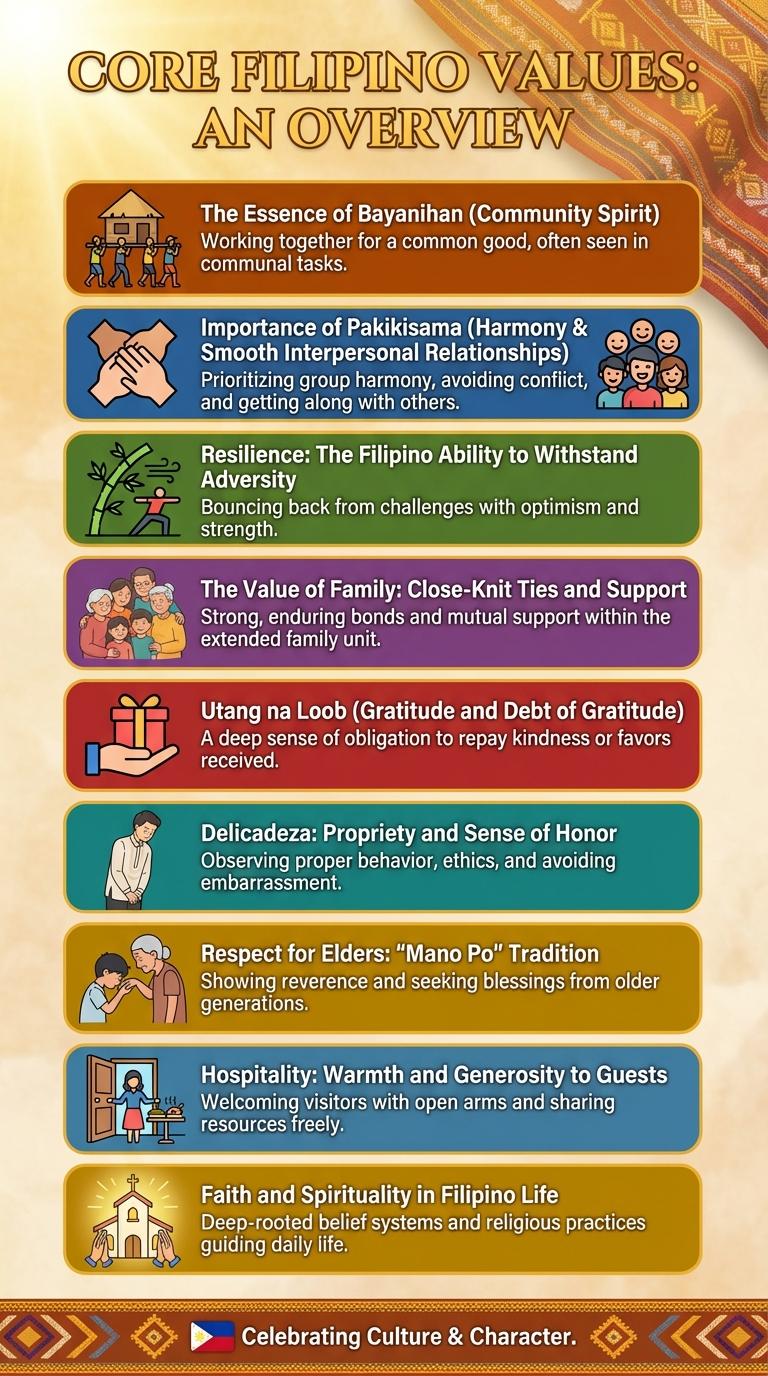
Filipino values deeply influence daily life, shaping relationships and community dynamics. Core principles such as hospitality, respect for elders, and the spirit of bayanihan foster unity and harmony. These cultural traits highlight the richness of Filipino identity and social cohesion.
Core Filipino Values: An Overview
| Core Filipino Value | Description |
|---|---|
| Kapwa (Shared Identity) | Emphasizes interconnectedness and community, recognizing others as part of the self. |
| Bayanihan (Community Spirit) | Promotes cooperation and collective effort for the common good. |
| Hiya (Sense of Shame) | Encourages moral conduct by keeping social harmony and avoiding embarrassment. |
| Pakikisama (Smooth Interpersonal Relationships) | Values harmony in relationships, stressing empathy and social acceptance. |
| Paggalang (Respect) | Highlights deep respect for elders, authority, and cultural traditions. |
The Essence of Bayanihan (Community Spirit)
Bayanihan represents the core Filipino value of communal unity and cooperation. It embodies the spirit of helping one another without expecting anything in return.
This tradition showcases how Filipinos come together to support neighbors in times of need. Bayanihan strengthens social bonds and fosters a sense of collective responsibility within communities.
Importance of Pakikisama (Harmony & Smooth Interpersonal Relationships)
Why is Pakikisama vital in Filipino culture? Pakikisama emphasizes harmony and smooth interpersonal relationships, fostering unity and cooperation among Filipinos. This value helps maintain social peace and strengthens community bonds.
Resilience: The Filipino Ability to Withstand Adversity
Filipino resilience represents an enduring strength to face challenges and recover from hardships. This core value enables Filipinos to maintain hope and unity despite adversity.
- Bayanihan Spirit - Community cooperation helps Filipinos overcome difficulties by sharing support and resources.
- Optimism - Maintaining a positive outlook drives Filipinos to find solutions and keep moving forward.
- Faith and Spirituality - Belief systems reinforce emotional strength and provide comfort during tough times.
The Value of Family: Close-Knit Ties and Support
Filipino culture places immense importance on family, fostering close-knit ties and unwavering support among members. This value shapes social interactions and community life across generations.
- Strong Intergenerational Bonds - Families often live together or nearby, ensuring constant support and shared responsibilities.
- Collective Decision-Making - Family members consult each other on major life choices, emphasizing unity and mutual respect.
- Emotional and Financial Support - Extended families provide both emotional care and financial assistance during crises and celebrations.
The value of family remains the cornerstone of Filipino identity, promoting resilience and compassion within communities.
Utang na Loob (Gratitude and Debt of Gratitude)
Utang na Loob, a core Filipino value, embodies deep gratitude and a lifelong sense of obligation to those who have offered help or kindness. This cultural concept reinforces strong family ties and community solidarity by fostering reciprocal support and loyalty. Rooted in respect and mutual aid, Utang na Loob shapes social interactions and emphasizes the importance of honoring debts of gratitude.
Delicadeza: Propriety and Sense of Honor
Delicadeza is a core Filipino value emphasizing propriety and a deep sense of honor. It reflects an individual's awareness of moral boundaries and sensitivity to social norms.
This value encourages Filipinos to act with dignity and avoid behaviors that may cause embarrassment or shame. Practicing delicadeza fosters respect in personal and community relationships, reinforcing trust and harmony.
Respect for Elders: "Mano Po" Tradition
The Filipino value of respecting elders is deeply embedded in cultural practices. One prominent tradition expressing this respect is the "Mano Po," a gesture symbolizing honor and blessing.
- Mano Po Gesture - Younger individuals take the hand of an elder and gently touch it to their forehead as a sign of respect.
- Intergenerational Bond - This custom strengthens family ties by showing reverence to ancestors and elders.
- Cultural Significance - Practicing "Mano Po" reflects Filipino values of humility, respect, and politeness toward senior members of society.
Hospitality: Warmth and Generosity to Guests
Filipino hospitality is renowned for its warmth and generosity, making guests feel like family. Visitors often experience heartfelt welcomes, with hosts offering abundant food and comfortable accommodations. This cultural value reflects the deep-rooted respect and kindness Filipinos extend to everyone who enters their homes.