
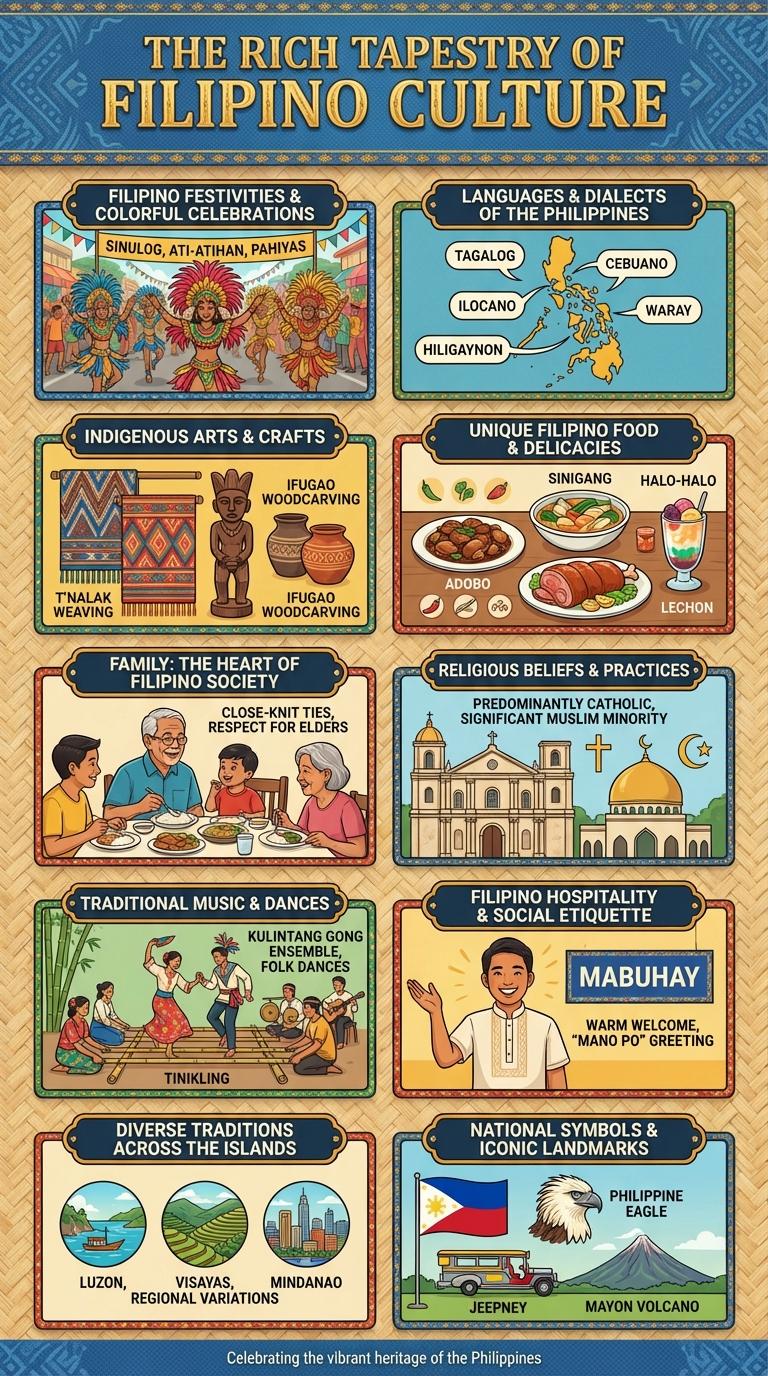
Philippine culture showcases a vibrant blend of traditions, languages, and festivals reflecting its rich history and diverse regional influences. This infographic highlights key elements such as indigenous customs, popular folk dances, and unique culinary practices. Understanding these cultural facets offers a deeper appreciation of the Philippines' dynamic identity and heritage.
Diverse Traditions Across the Islands
The culture of the Philippines is a vibrant mosaic shaped by over 7,000 islands, each with unique traditions and customs. Diverse languages, festivals, and practices reflect the deep heritage of indigenous, Asian, and Western influences.
- Festivals Celebrate Local Heritage - Events like the Ati-Atihan in Aklan and Sinulog in Cebu highlight the rich spiritual and cultural identity of various ethnic groups.
- Traditional Attire Varies by Region - Indigenous groups wear distinctive clothing such as the T'boli t'nalak and the Ifugao ikat, showcasing local craftsmanship.
- Culinary Diversity Reflects Island Resources - Dishes like adobo and kinilaw incorporate native ingredients and regional cooking methods across the islands.
Filipino Festivities and Colorful Celebrations
The Philippines is renowned for its vibrant Filipino festivities and colorful celebrations that showcase the nation's rich cultural heritage. These events bring communities together, highlighting traditions passed down through generations.
Festivals such as Sinulog, Ati-Atihan, and Pahiyas feature lively street dances, elaborate costumes, and grand parades. Many celebrations honor religious devotion, local legends, and agricultural bounty. These vivid traditions attract both local participants and international visitors, reflecting the warmth and spirit of Filipino culture.
Languages and Dialects of the Philippines
The Philippines is a linguistically diverse country with over 180 languages and dialects spoken across its islands. These languages belong mainly to the Austronesian language family, reflecting the rich cultural heritage of the Filipino people.
- Tagalog - The basis of the national language Filipino, spoken by nearly a quarter of the population as a first language.
- Cebuano - Widely spoken in the Visayas and Mindanao, it is the second most spoken native language in the Philippines.
- Ilocano - Predominantly used in Northern Luzon, it is one of the major regional languages with millions of native speakers.
Many Filipino languages incorporate Spanish, English, and indigenous influences, showcasing the country's complex linguistic landscape.
Indigenous Arts and Crafts
| Indigenous Arts and Crafts | Description |
|---|---|
| Weaving | Traditional handwoven textiles like the T'nalak in Mindanao and the Inabel in Luzon, crafted using backstrap looms. |
| Wood Carving | Intricate carvings on furniture, religious icons, and ritual objects, especially by the Ifugao and Kalinga tribes. |
| Basketry | Handcrafted baskets made from rattan, bamboo, and other natural fibers used for daily life and ceremonial purposes. |
| Pottery | Traditional clay pots and vessels shaped by indigenous communities for utilitarian and artistic use. |
| Beadwork | Colorful bead decorations used in clothing and accessories, reflecting tribal identity and status. |
Unique Filipino Food and Delicacies
The Philippines boasts a rich culinary heritage with unique Filipino food and delicacies that reflect its diverse culture. These dishes are characterized by a blend of indigenous, Spanish, Chinese, and American influences, resulting in bold and distinct flavors.
Popular Filipino foods include Adobo, a savory marinated meat dish, and Sinigang, a tangy tamarind soup. Delicacies like Leche Flan and Bibingka offer sweet traditions enjoyed during festivals and celebrations.
Family: The Heart of Filipino Society
The family remains the cornerstone of Philippine culture, embodying strong bonds and mutual support across generations. Filipino households often include extended family members, highlighting the value placed on collective welfare and respect for elders. Celebrations and daily life revolve around close-knit family ties, reinforcing unity and cultural identity.
Religious Beliefs and Practices
The Philippines is predominantly a Christian country with a rich tapestry of religious beliefs and practices. Religious faith deeply influences daily life, festivals, and community values across the archipelago.
- Predominance of Catholicism - About 80% of Filipinos identify as Roman Catholic, shaping major cultural events and rituals.
- Fiestas and Religious Festivals - Local fiestas celebrate patron saints through processions, dances, and prayers demonstrating communal devotion.
- Indigenous Beliefs Integration - Traditional animist practices coexist with Christianity, influencing rituals and folk healing methods.
Traditional Music and Dances
What are the key elements of traditional Filipino music and dances? Traditional Philippine music features indigenous instruments like the kulintang and bandurria, creating distinct regional sounds. Popular dances such as Tinikling and Singkil showcase the country's rich cultural heritage through vibrant movements and costumes.
Filipino Hospitality and Social Etiquette
Filipino hospitality is renowned worldwide, characterized by warmth, generosity, and a welcoming spirit that makes guests feel at home. Social etiquette in the Philippines emphasizes respect, especially towards elders, through gestures like "mano" (a respectful hand gesture). Sharing meals and offering food are integral parts of Filipino social interactions, reflecting a deep-rooted culture of kindness and community.