
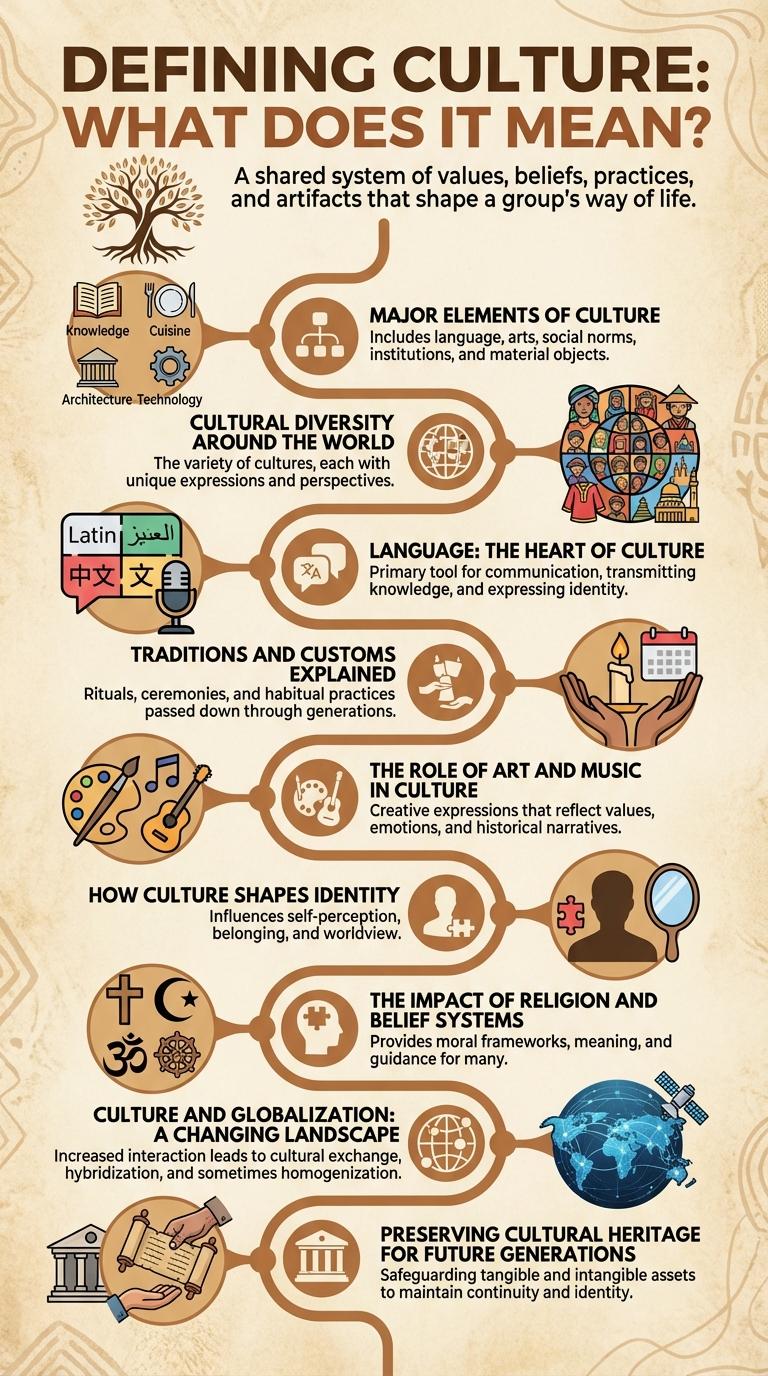
Visual representations of culture succinctly capture diverse traditions, values, and social behaviors across communities. Infographics break down complex cultural concepts into engaging and easily digestible formats, enhancing understanding and appreciation. They serve as powerful tools to educate audiences about cultural heritage, diversity, and global interconnectedness.
Defining Culture: What Does It Mean?
Culture encompasses the shared beliefs, customs, arts, and social behaviors of a particular group or society. It shapes identity and influences how individuals perceive and interact with the world.
Defining culture involves understanding both tangible elements like language, traditions, and clothing, as well as intangible aspects such as values, norms, and worldviews. It is dynamic, evolving through social interaction and historical context. Culture serves as a framework for communication and community cohesion across generations and regions.
Major Elements of Culture
Culture encompasses the shared beliefs, customs, and behaviors of a group, shaping their identity and worldview. Major elements of culture include language, which enables communication and the transmission of knowledge. Other key components are norms, values, rituals, and symbols that guide social interactions and preserve heritage.
Cultural Diversity Around the World
Cultural diversity enriches societies by blending unique traditions, languages, and customs. It fosters mutual respect and global understanding across different communities.
- Languages - Over 7,000 languages are spoken worldwide, reflecting diverse communication methods and heritage.
- Religions - Major world religions include Christianity, Islam, Hinduism, Buddhism, and numerous indigenous beliefs, shaping distinct cultural practices.
- Traditions - Cultural traditions vary widely, from festivals and music to cuisine and clothing, illustrating humanity's rich mosaic.
Language: The Heart of Culture
Language serves as the primary vessel for expressing cultural identity and heritage. It shapes traditions, values, and social practices unique to each community.
- Foundation of Communication - Language enables individuals within a culture to share ideas, emotions, and knowledge effectively.
- Preservation of History - Oral and written languages carry stories, myths, and historical records that define a culture's past.
- Reflection of Worldview - The structure and vocabulary of a language reflect the unique perspectives and priorities of its speakers.
Traditions and Customs Explained
Culture encompasses the traditions and customs that define the social behaviors and practices of a group. These elements shape identity and influence daily life across generations.
Traditions often include rituals, celebrations, and ceremonies passed down through family and community. Customs reflect habitual ways of living, such as food preparation, dress, and communication styles.
The Role of Art and Music in Culture
| Aspect | Impact on Culture |
|---|---|
| Expression | Art and music communicate cultural values, beliefs, and emotions, serving as a universal language across communities. |
| Identity | Both art and music shape cultural identity by preserving traditions and reflecting unique cultural stories. |
| Social Cohesion | Shared artistic and musical experiences strengthen community bonds and promote cultural unity. |
| Innovation | Art and music inspire creativity and innovation, influencing cultural evolution and modernization. |
| Education | Artistic and musical heritage supports cultural education, transmitting knowledge from generation to generation. |
How Culture Shapes Identity
Culture plays a vital role in shaping individual and collective identities by influencing beliefs, values, and behaviors. It provides the framework through which people understand themselves and their place in society.
- Cultural Traditions - Passed down through generations, traditions create a sense of belonging and continuity within communities.
- Language - Language shapes thought patterns and communication styles, fundamentally affecting identity formation.
- Social Norms - Norms guide acceptable behavior, reinforcing group identity and social cohesion.
Understanding how culture shapes identity helps appreciate the diversity and complexity of human experiences worldwide.
The Impact of Religion and Belief Systems
Religion and belief systems profoundly shape cultural identity by influencing values, traditions, and social norms. These foundational elements guide moral behavior and communal practices across diverse societies.
Religious festivals, rituals, and ceremonies reinforce community bonds and preserve historical heritage. Belief systems also impact art, music, and architecture, reflecting the spiritual worldview of cultures worldwide.
Culture and Globalization: A Changing Landscape
Culture and globalization are deeply interconnected, shaping how societies evolve and interact. The spread of technology and media accelerates cultural exchange, blending traditions and creating new hybrid identities. This dynamic landscape challenges cultural preservation while fostering global understanding and diversity.