
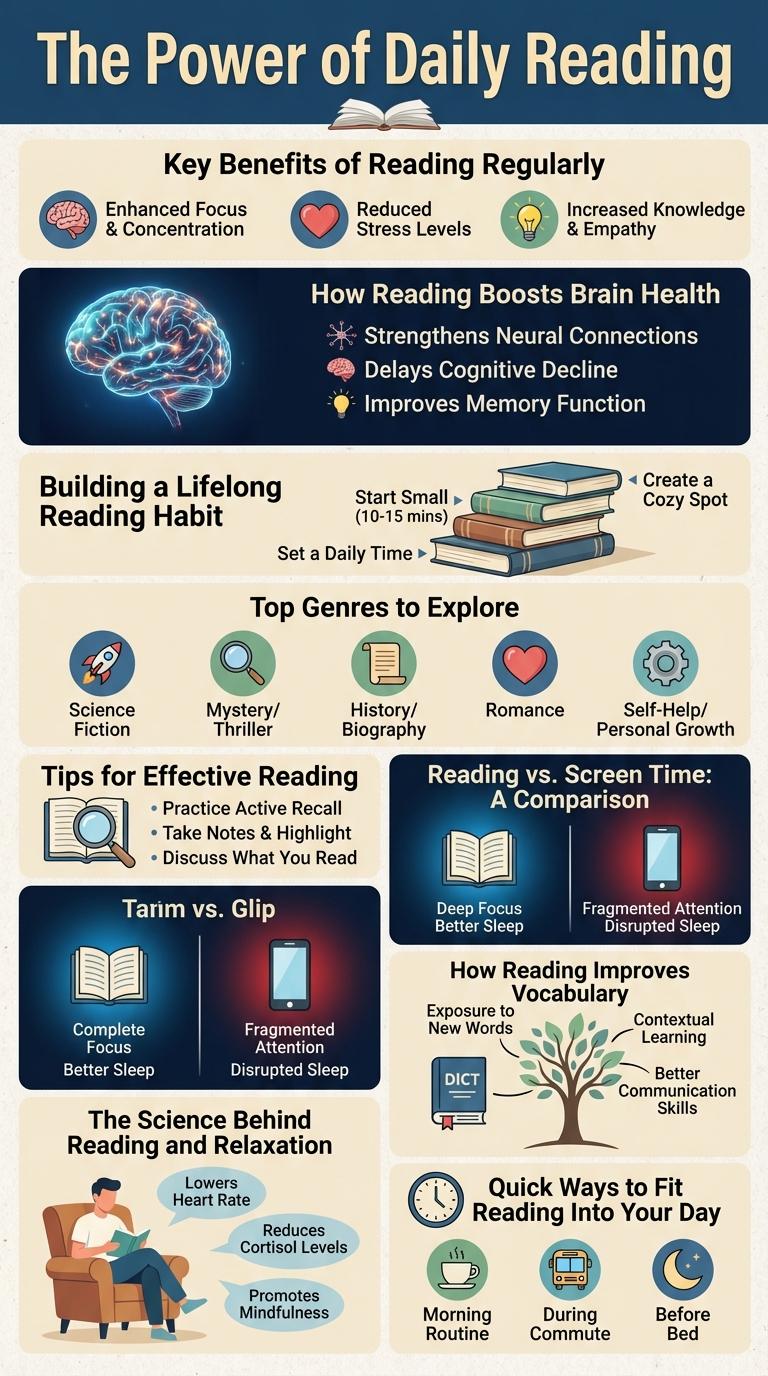
Reading enhances cognitive skills by improving vocabulary, concentration, and critical thinking. Infographics visually present data on reading habits, benefits, and trends, making complex information easily digestible. This format helps readers quickly grasp key insights on the importance and impact of reading.
The Power of Daily Reading
Daily reading enhances cognitive function by improving vocabulary, concentration, and critical thinking skills. It reduces stress levels and fosters a lifelong habit of learning and curiosity. Consistent reading habit significantly contributes to personal and professional growth.
Key Benefits of Reading Regularly
Why should you read regularly? Reading regularly enhances cognitive skills and expands your knowledge base. It also improves focus and reduces stress, making it a vital habit for personal growth.
What mental benefits come from frequent reading? Regular reading strengthens brain connectivity and increases vocabulary. This mental stimulation can delay cognitive decline and improve memory retention.
How does reading affect emotional well-being? Engaging with books promotes empathy and emotional intelligence. It allows readers to explore diverse perspectives and improves overall emotional health.
Can reading improve professional skills? Yes, reading develops critical thinking and communication abilities. These skills are crucial for career advancement and effective problem-solving.
Is there a physical health impact linked to reading? Reading reduces stress levels significantly, lowering heart rate and easing muscle tension. This calming effect contributes positively to overall physical health.
How Reading Boosts Brain Health
Reading engages multiple brain regions simultaneously, enhancing neural connectivity and cognitive function. This mental exercise helps to maintain and improve brain health over time.
Studies show that regular reading can slow cognitive decline and reduce the risk of neurodegenerative diseases. It stimulates memory, vocabulary, and critical thinking skills, contributing to overall mental agility.
Building a Lifelong Reading Habit
Creating a lifelong reading habit enriches knowledge and nurtures imagination. Consistent reading promotes mental health and lifelong learning skills.
- Start Small - Begin with short, engaging texts to build reading confidence gradually.
- Set a Routine - Dedicate a specific time each day for reading to develop consistency.
- Choose Diverse Genres - Explore various topics and styles to maintain interest and broaden perspectives.
Top Genres to Explore
| Genre | Key Characteristics |
|---|---|
| Fiction | Imaginative storytelling with characters, settings, and plots created by the author. |
| Non-Fiction | Fact-based content including biographies, history, science, and self-help. |
| Mystery | Suspenseful narratives focused on solving crimes or uncovering secrets. |
| Fantasy | Stories with magical elements, mythical creatures, and imaginary worlds. |
| Science Fiction | Exploration of futuristic concepts, space travel, and advanced technology. |
Tips for Effective Reading
Effective reading transforms information into knowledge. Using proven strategies enhances comprehension and retention.
Set clear reading goals to stay focused. Highlight key points and take concise notes. Regularly review material to reinforce understanding and memory.
Reading vs. Screen Time: A Comparison
Reading and screen time each offer distinct cognitive and emotional effects. Understanding their differences helps to optimize daily habits for better mental health and productivity.
- Cognitive Engagement - Reading enhances deep comprehension and critical thinking, while screen time often promotes quick information processing.
- Eye Health Impact - Extended screen use can cause digital eye strain, whereas reading printed text typically reduces eye fatigue.
- Emotional Response - Reading fosters empathy and imagination through narrative absorption, while screen time, especially on social media, may increase stress levels.
How Reading Improves Vocabulary
Reading exposes individuals to a wide range of words in various contexts, enhancing their vocabulary knowledge. Encountering new words promotes better understanding and retention over time.
Frequent reading helps recognize patterns in word usage, making it easier to infer meanings of unfamiliar words. Improved vocabulary through reading strengthens communication skills and cognitive abilities.
The Science Behind Reading and Relaxation
Reading activates multiple areas of the brain, including those responsible for language, comprehension, and visual processing. Neuroscientific studies reveal that engaging with text reduces cortisol levels, promoting relaxation and stress relief. The rhythmic nature of reading fosters mindfulness, enhancing cognitive function and emotional well-being.