
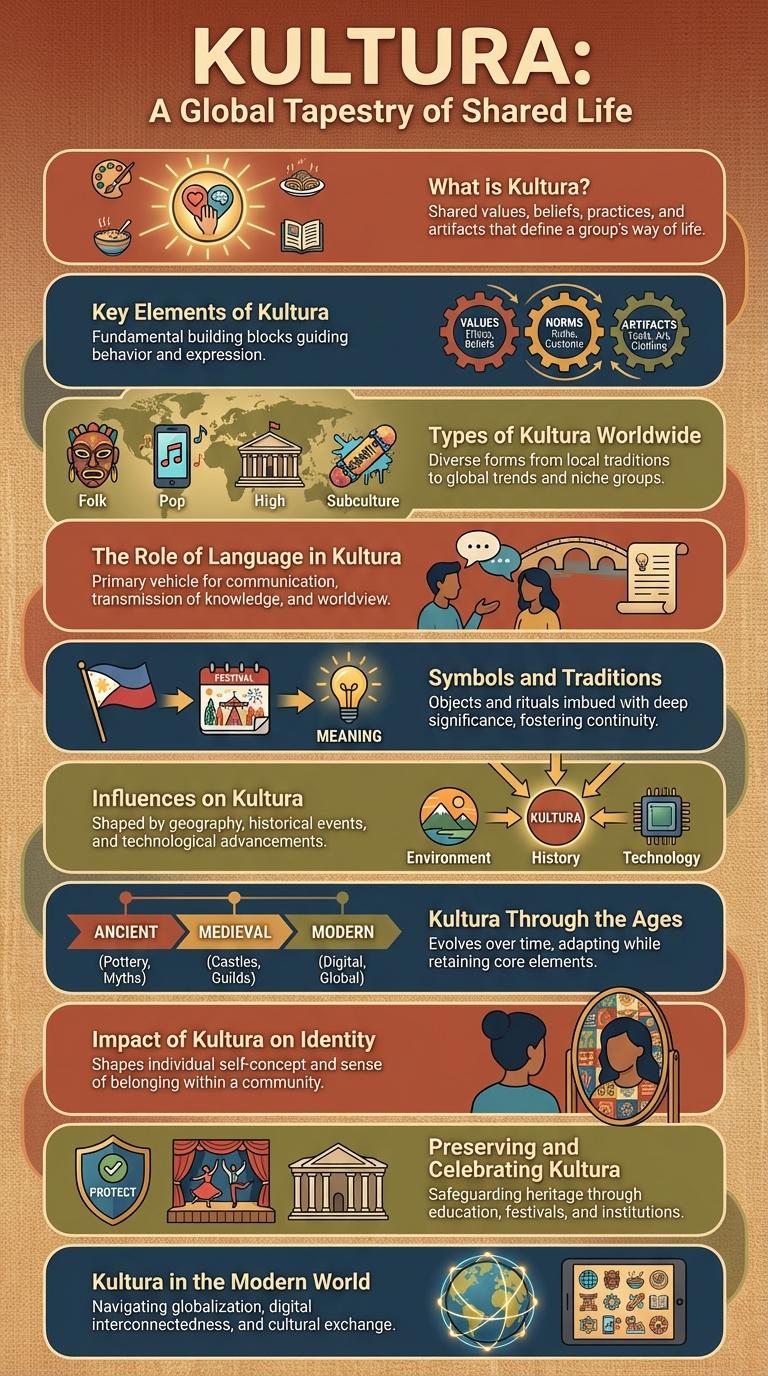
Kultura represents the vibrant fusion of traditions, art, and social practices that shape a community's identity. Infographics offer a visual narrative that simplifies complex cultural elements, making them accessible and engaging for diverse audiences. This infographic illustrates key aspects of kultura, highlighting its impact on societal values and everyday life.
What is Kultura?
Kultura refers to the shared customs, traditions, and social behaviors of a particular group or society. It encompasses language, religion, art, cuisine, and social habits that define a community's identity. Understanding kultura helps preserve heritage and fosters respect among diverse populations.
Key Elements of Kultura
| Key Element | Description |
|---|---|
| Language | Primary medium for communication and expression in any culture. |
| Traditions | Customs and rituals passed down through generations, shaping cultural identity. |
| Art | Visual, performing, and literary arts reflecting cultural values and creativity. |
| Beliefs | Spiritual and moral principles guiding behaviors and community practices. |
| Social Norms | Rules and expectations governing social interactions within the culture. |
Types of Kultura Worldwide
Kultura encompasses the diverse traditions, customs, and social behaviors that define communities worldwide. It reflects the collective identity and heritage passed down through generations.
Types of kultura vary widely, including linguistic, religious, artistic, and culinary forms. Each type contributes uniquely to the rich tapestry of global cultural diversity.
The Role of Language in Kultura
Language serves as the backbone of kultura, embodying the values, beliefs, and traditions of a community. It enables the transmission of cultural knowledge across generations, preserving collective identity.
The role of language in kultura extends beyond communication; it shapes worldviews and social interactions. Dialects and linguistic expressions reflect the diversity within a culture, highlighting unique experiences and histories. Through storytelling, rituals, and everyday conversations, language reinforces cultural norms and fosters a sense of belonging among members.
Symbols and Traditions
What are common symbols in kultura representing Filipino identity? Kultura includes the iconic jeepney and the traditional bahay kubo, which reflect Filipino creativity and community life. These symbols embody the rich cultural heritage and daily experiences of the Filipino people.
Which traditions define major Filipino celebrations? Festivals like Sinulog and Pahiyas showcase vibrant costumes, dances, and rituals honoring religious and agricultural themes. These traditions strengthen community bonds and preserve historical values.
How do Filipino symbols influence modern art and design? Elements such as the sun from the Philippine flag and indigenous patterns appear frequently in contemporary artworks and fashion. This integration celebrates national pride and cultural continuity.
Why is the practice of bayanihan important in Filipino culture? Bayanihan represents communal unity and cooperation, often depicted as neighbors helping to move a house. This tradition highlights the spirit of mutual support and collective effort.
What role do traditional dances play in Filipino cultural identity? Dances like Tinikling and Singkil showcase graceful movements symbolizing historical narratives and natural elements. These performances preserve ancestral stories and promote cultural education.
Influences on Kultura
Kultura embodies the collective customs, traditions, and values of a community, shaped by various external and internal influences. Understanding these influences reveals how cultural identity evolves over time.
- Historical Events - Past occurrences like colonization, migration, and conflicts significantly shape cultural practices and societal norms.
- Geography and Environment - The natural surroundings impact lifestyle, cuisine, art, and social structures within a culture.
- Technology and Innovation - Advancements in technology influence communication, entertainment, and cultural expression methods.
Kultura Through the Ages
Kultura reflects the rich heritage and evolving traditions of societies throughout history. This infographic highlights key periods showcasing the transformation of cultural expressions.
From ancient rituals to modern practices, kultura adapts to social changes while preserving core values.
- Prehistoric Era - Early humans developed art and symbolic communication that laid the foundation of culture.
- Classical Period - Ancient civilizations flourished with written language, philosophy, and organized religions shaping societal norms.
- Medieval Times - Kultura was marked by folklore, religious influence, and the rise of vernacular literature.
- Industrial Revolution - Technological advancements brought urbanization and new cultural dynamics to communities.
- Contemporary Age - Digital media and globalization diversify cultural exchanges and creative expressions worldwide.
Impact of Kultura on Identity
Kultura shapes individual and collective identity by preserving heritage, traditions, and languages that define community values. It influences social behavior and self-perception, fostering a sense of belonging and continuity across generations. Understanding kultura helps individuals appreciate their roots and strengthens cultural pride.
Preserving and Celebrating Kultura
Kultura represents the rich heritage and traditions passed down through generations. Preserving and celebrating kultura ensures the continuity of unique cultural identities worldwide.
- Heritage Conservation - Protecting historical sites and artifacts maintains tangible links to past cultures.
- Cultural Festivals - Community events showcase traditional music, dance, and cuisine to honor ancestral customs.
- Language Preservation - Supporting indigenous languages fosters communication and understanding within cultural groups.
Embracing and promoting kultura strengthens social cohesion and enriches global diversity.