
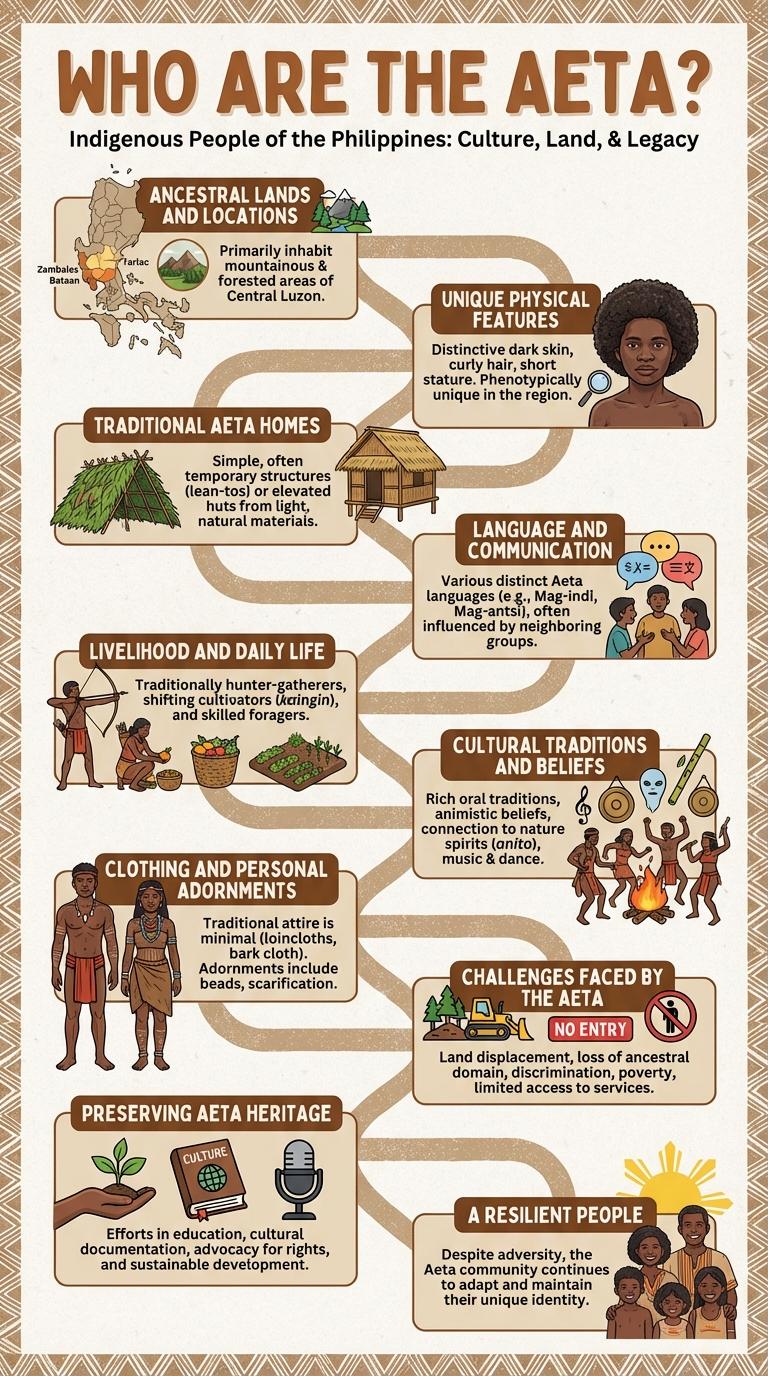
Aeta communities retain rich cultural traditions deeply connected to their ancestral lands in the Philippines. Their unique languages, crafts, and rituals offer valuable insights into indigenous heritage and biodiversity conservation. Understanding Aeta history and lifestyle supports efforts to preserve their identity amidst modern challenges.
Who Are the Aeta?
The Aeta are indigenous people native to the mountainous regions of the Philippines, primarily Luzon. They are considered among the earliest inhabitants of the archipelago, known for their distinct cultural heritage.
The Aeta have a unique lifestyle centered around hunting, gathering, and traditional forest-based practices. Their physical features include curly hair and darker skin, which differentiate them from other Filipino groups. Despite modernization, many Aeta communities maintain ancestral knowledge and continue to advocate for their ancestral land rights.
Ancestral Lands and Locations
Where are the ancestral lands of the Aeta people located?
The Aeta, one of the Philippines' indigenous groups, primarily inhabit mountainous regions across Luzon Island. Their ancestral domains are concentrated in provinces such as Zambales, Bataan, and Pampanga.
Unique Physical Features
| Physical Feature | Description |
|---|---|
| Dark Skin | Deeply pigmented skin providing natural protection against tropical sunlight |
| Curly Hair | Thick, tightly curled hair adapted to hot, humid environments |
| Short Stature | Average height typically under 5 feet, aiding mobility in dense forest areas |
| Robust Build | Muscular and sturdy physique well-suited for survival in rugged terrains |
| Distinct Facial Features | Prominent cheekbones and broad noses typical of Negrito groups including Aeta |
Traditional Aeta Homes
The Aeta people build traditional homes using natural materials found in their environment. These dwellings are typically constructed with bamboo, nipa palm leaves, and wood, providing shelter that blends seamlessly with the forest.
The homes are designed to be lightweight and portable to accommodate the Aeta's semi-nomadic lifestyle. Raised off the ground on stilts, they protect inhabitants from flooding and wild animals.
Language and Communication
The Aeta people, indigenous to the Philippines, speak various languages belonging to the Austronesian family, with many using Aeta-specific dialects. Their communication is rich in oral traditions, including storytelling, chants, and songs that preserve their history and culture.
Aeta language use varies by region, with some communities bilingual in Filipino or local languages. Nonverbal communication like gestures and body language plays a significant role in their daily interactions and traditional rituals.
Livelihood and Daily Life
The Aeta people, indigenous to the Philippines, maintain a sustainable lifestyle deeply connected to their natural environment. Their livelihood and daily activities revolve around traditional practices that have been passed down for generations.
- Hunting and Gathering - The Aeta rely on hunting wild animals and gathering forest fruits, roots, and herbs for food and medicinal purposes.
- Swidden Agriculture - They practice shifting cultivation by clearing small forest plots to grow root crops such as sweet potatoes and yams.
- Basket Weaving and Crafts - Crafting baskets and other handmade items supports their daily needs and sometimes provides additional income through local trade.
Cultural Traditions and Beliefs
The Aeta people, indigenous to the Philippines, maintain rich cultural traditions deeply connected to nature and ancestral spirits. Their belief system centers on respect for the natural world, with rituals that honor forest deities and ancestral guardians. These traditions preserve their identity and guide community practices, emphasizing harmony with the environment and spiritual heritage.
Clothing and Personal Adornments
The Aeta people wear clothing made from natural fibers such as bark cloth, woven expertly by hand. Their personal adornments include necklaces, bracelets, and headdresses crafted from beads, shells, and animal teeth, symbolizing cultural identity. Traditional attire and ornaments play a vital role in ceremonies and daily life, reflecting the Aeta's deep connection to nature.
Challenges Faced by the Aeta
The Aeta people, an indigenous group in the Philippines, face numerous challenges impacting their traditional lifestyle. Pressures from modern society and environmental changes threaten their cultural heritage and survival.
- Land Displacement - The Aeta are often forced to leave ancestral lands due to mining, logging, and agricultural expansion.
- Loss of Cultural Identity - Exposure to external influences and lack of support endanger preservation of their customs and languages.
- Limited Access to Healthcare - Remote living areas restrict availability of medical services, leading to health disparities.
- Poverty and Marginalization - Economic disadvantages limit educational and employment opportunities for Aeta communities.
- Environmental Degradation - Deforestation and climate change affect natural resources vital for their traditional means of subsistence.