
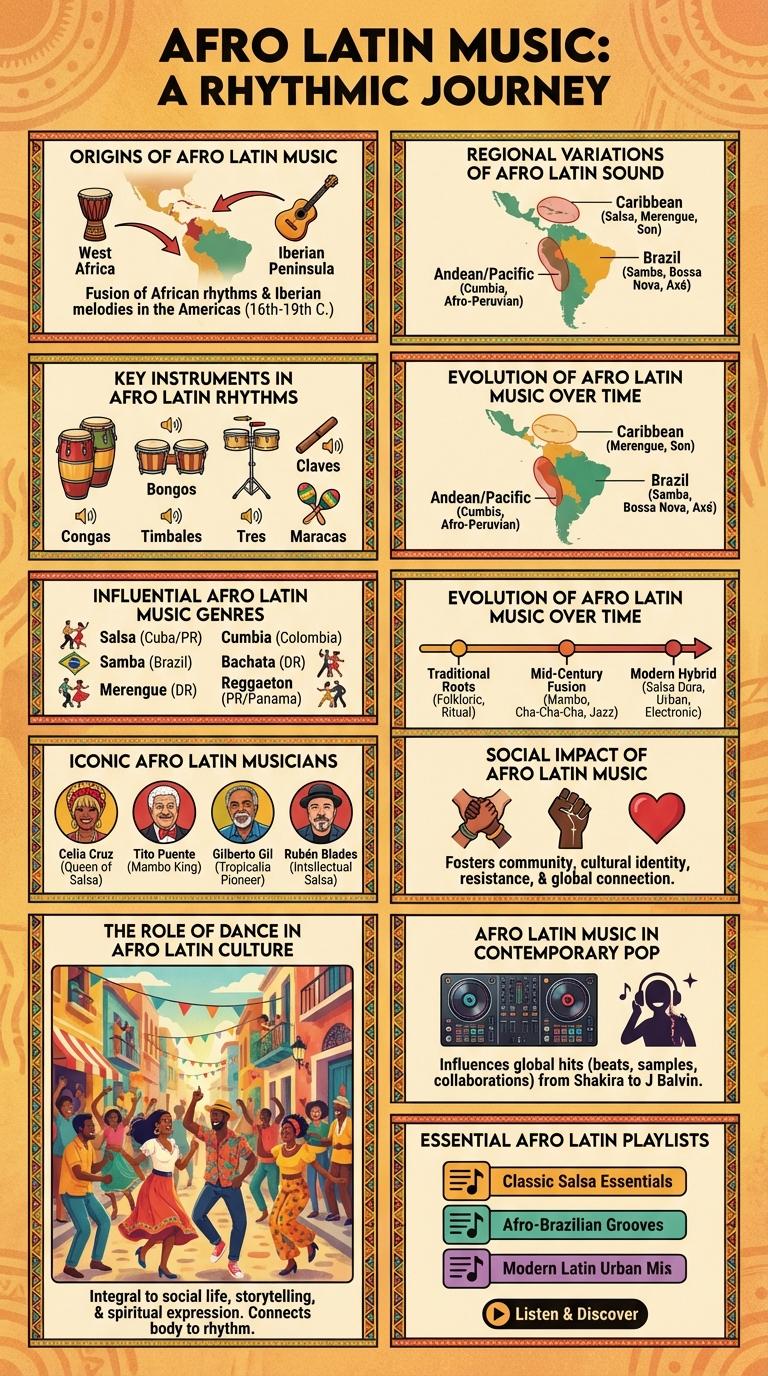
Afro Latin music blends vibrant African rhythms with rich Latin American melodies, creating a dynamic and influential soundscape. This genre highlights the cultural fusion that shapes Latin America's diverse musical heritage. The infographic visually explores key artists, instruments, and styles that define Afro Latin music's unique identity.
Origins of Afro Latin Music
Afro Latin music is a vibrant fusion of African rhythms and Latin American melodies that originated from the transatlantic slave trade. This genre reflects the rich cultural exchange between African, Indigenous, and European peoples in Latin America.
- African Rhythms - Central to Afro Latin music, African drum patterns and syncopation laid the foundation for its distinctive sound.
- Colonial Influence - Spanish and Portuguese colonization introduced European instruments and harmonic structures.
- Indigenous Contributions - Native American musical elements blended with African and European traditions, enriching Afro Latin music's textures.
Afro Latin music continues to evolve, preserving its diverse origins and influencing global music styles.
Key Instruments in Afro Latin Rhythms
Afro Latin music blends African rhythms with Latin American styles, creating vibrant and diverse sounds. Its key instruments drive the unique beats and melodies central to this cultural fusion.
- Congas - Tall, narrow drums played with hands, essential for rhythmic patterns in Afro Latin music.
- Bongos - Small paired drums producing high-pitched tones, adding syncopation and texture.
- Claves - Two wooden sticks struck together, providing the fundamental rhythmic pattern called clave.
- Maracas - Shaken percussion instruments that create a rattling sound to enhance rhythm.
- Bass Guitar - Supplies the low-end groove that anchors Afro Latin rhythms in harmony.
Influential Afro Latin Music Genres
Afro Latin music is a vibrant fusion of African rhythms and Latin American sounds, creating dynamic and influential genres. Its cultural roots and rhythmic complexity have shaped global music trends for centuries.
- Salsa - Originating in New York City, salsa blends Afro-Cuban rhythms with jazz and Puerto Rican influences, known for its energetic dance beats.
- Cumbia - This Colombian genre combines African drum patterns with Indigenous and Spanish melodies, making it a staple in Latin American culture.
- Reggaeton - Emerging from Puerto Rico, reggaeton fuses reggae and dancehall with Latin beats, propelled by Afro-Caribbean rhythm structures.
Iconic Afro Latin Musicians
| Musician | Contribution |
|---|---|
| Celia Cruz | Known as the "Queen of Salsa," Celia Cruz popularized Afro-Cuban music worldwide with her powerful voice and vibrant performances. |
| Machito | Fused Afro-Cuban rhythms with jazz, founding the Machito and His Afro-Cubans band, pivotal in Latin jazz development. |
| Gilberto Gil | Brazilian artist blending Afro-Brazilian rhythms with rock and reggae, influential in the Tropicalia movement. |
| Ray Barretto | Master conguero who brought Afro-Caribbean percussion to mainstream salsa and Latin jazz genres. |
| Toto la Momposina | Preserved traditional Afro-Colombian music and rhythms, symbolizing Colombia's rich cultural heritage. |
The Role of Dance in Afro Latin Culture
Afro Latin music is deeply intertwined with dance, serving as a vital expression of cultural identity and heritage. Dance movements reflect African rhythms and storytelling traditions passed down through generations.
In Afro Latin communities, dance acts as a social connector, bringing people together during celebrations and rituals. It reinforces community bonds and preserves the rich history of Afro Latin culture.
Regional Variations of Afro Latin Sound
Afro Latin music showcases diverse regional variations, blending African rhythms with Latin American styles. In Cuba, genres like rumba and son feature vibrant percussion and call-and-response vocals. Brazil's samba incorporates syncopated beats and lively dance, while Colombia's cumbia combines African drums with indigenous flute melodies, highlighting the rich cultural fusion across Latin America.
Evolution of Afro Latin Music Over Time
Afro Latin music blends African rhythms and Latin American melodies, evolving through centuries of cultural exchange. This genre traces its roots back to the transatlantic slave trade, where African slaves infused traditional sounds with local instruments and languages.
During the 20th century, Afro Latin music gained global recognition with popular styles like salsa, mambo, and cumbia. Modern artists continue to innovate, fusing Afro Latin beats with hip-hop, reggaeton, and electronic music to reach wider audiences.
Social Impact of Afro Latin Music
Afro Latin music blends African rhythms with Latin American sounds, creating a powerful cultural expression. It serves as a voice for marginalized communities, highlighting their histories and struggles.
Afro Latin music fosters social cohesion by bridging diverse ethnic groups through shared musical traditions. It promotes cultural pride and identity among Afro-descendant populations in Latin America. The genre also inspires social movements advocating for racial equality and justice.
Afro Latin Music in Contemporary Pop
Afro Latin music has profoundly shaped contemporary pop by infusing vibrant rhythms and culturally rich sounds such as reggaeton, salsa, and cumbia. Artists like Bad Bunny, J Balvin, and Rosalia have popularized Afro Latin influences, blending traditional beats with modern pop melodies for global appeal. This fusion continues to drive innovation in the music industry, expanding diversity and representation across mainstream platforms.