
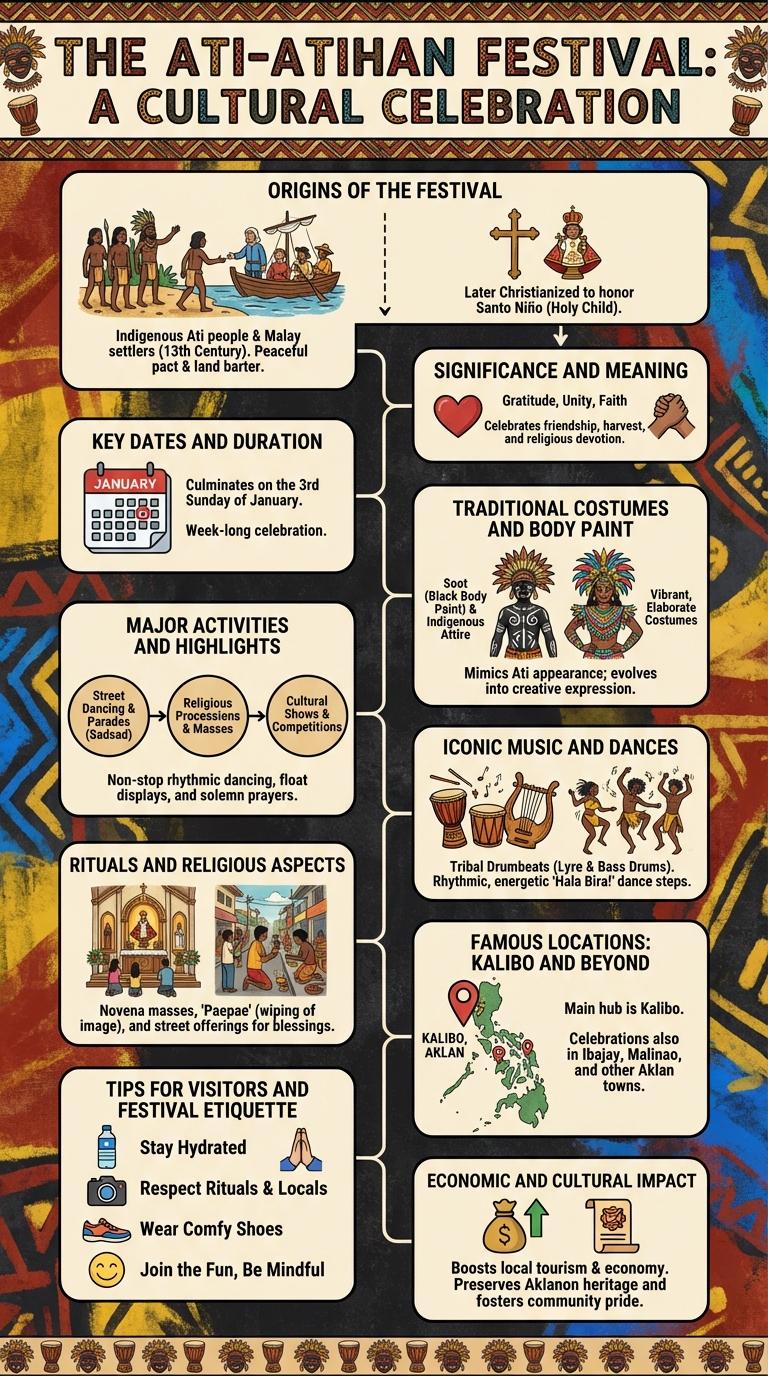
Ati-Atihan Festival showcases vibrant street dancing, colorful costumes, and rich cultural heritage celebrated in Kalibo, Philippines. This annual event honors the Santo Nino and highlights indigenous traditions through lively parades and rhythmic music. Spectators experience a dynamic fusion of history, faith, and community spirit.
Origins of the Ati-Atihan Festival
The Ati-Atihan Festival traces its origins to the 13th century as a celebration honoring the indigenous Ati people in Aklan, Philippines. It commemorates the peaceful coexistence between the Ati natives and Malay settlers through rituals and vibrant street dances. The festival highlights devotion to the Santo Nino, blending indigenous traditions with Catholic influences.
Significance and Meaning
The Ati-Atihan Festival is a vibrant cultural celebration held annually in Kalibo, Aklan, Philippines. It honors the Santo Nino (Holy Child Jesus) and showcases the rich heritage of the indigenous Ati people.
- Cultural Heritage - The festival preserves and promotes the traditions, music, and dances of the Ati tribe, reflecting centuries-old customs.
- Religious Significance - It serves as a tribute to the Santo Nino, symbolizing faith, devotion, and thanksgiving.
- Community Unity - The event strengthens social bonds by bringing together diverse groups in joyful participation and shared identity.
Key Dates and Duration
The Ati-Atihan Festival is a vibrant annual celebration held in the Philippines, attracting thousands of visitors. Known as the "Mother of All Philippine Festivals," it showcases rich cultural heritage through music, dance, and colorful costumes.
- Start Date - The festival officially begins on the second Sunday of January each year.
- Duration - The celebration lasts for a full week featuring continuous street dancing and religious ceremonies.
- Peak Day - The highlight occurs on the third Sunday of January, marked by grand parades and major events.
Traditional Costumes and Body Paint
| Aspect | Details |
|---|---|
| Traditional Costumes | Ati-Atihan participants wear vibrant, hand-crafted costumes inspired by the indigenous Ati people of Panay Island. Costumes typically feature bright colors, native fabrics, and intricate beadwork symbolizing the tribe's rich heritage and connection to nature. |
| Body Paint | Black and dark brown body paint covers the skin, mimicking the appearance of the Ati tribe. This paint is made from natural ingredients such as charcoal and soot, emphasizing tribal identity and cultural authenticity during the festival. |
| Symbolism | The costumes and body paint honor the Ati people, celebrating their resilience and historical role in the island's origins. The attire reflects a blend of indigenous traditions and festive vibrancy, reinforcing cultural pride. |
| Materials Used | Materials include natural fibers, beads, feathers, and soil-based pigments for paint. The use of sustainable, locally sourced materials highlights environmental respect and historical accuracy. |
| Festival Context | Ati-Atihan takes place annually in Kalibo, Aklan. The costumes and body paint are essential elements during street dancing and ritual performances, attracting tourists and preserving Filipino indigenous culture. |
Major Activities and Highlights
The Ati-Atihan Festival, held annually in Kalibo, Aklan, features vibrant street dancing and colorful tribal costumes reflecting the rich cultural heritage of the Ati people. Participants paint their faces with black soot and wear intricate ornaments to honor the Santo Nino (Holy Child).
Major activities include the grand street parade, tribal contests, and nightly tribal shows, attracting thousands of locals and tourists. Key highlights showcase traditional music, rhythmic drumbeats, and energetic dance performances symbolizing unity and thanksgiving.
Iconic Music and Dances
The Ati-Atihan Festival, held annually in Kalibo, Aklan, showcases iconic music and dances rooted in indigenous Ati culture. Drumming rhythms and vibrant chants create an energetic atmosphere, while dancers adorned in striking tribal costumes perform traditional moves symbolizing the Ati people's history. These dynamic performances highlight cultural heritage and foster community pride through lively street celebrations.
Rituals and Religious Aspects
The Ati Atihan Festival is a vibrant event celebrated annually in Kalibo, Aklan, Philippines, with deep spiritual roots. It honors the Santo Nino (Holy Child Jesus) through colorful rituals and religious ceremonies.
- Tribute to Santo Nino - The festival involves a solemn procession and masses venerating the Holy Child Jesus, symbolizing faith and devotion.
- Body Paint Ritual - Participants paint their skin with black soot, representing the Ati tribe and commemorating their ancestral heritage.
- Prayer and Dance - Traditional Ati Atihan dances are performed as acts of worship and expressions of gratitude towards divine blessings.
The Ati Atihan Festival blends indigenous culture with Catholic traditions, creating a unique spiritual celebration.
Famous Locations: Kalibo and Beyond
Where is the Ati-Atihan Festival most famously celebrated? The Ati-Atihan Festival takes place primarily in Kalibo, Aklan, a province in the Philippines renowned for this vibrant event. Beyond Kalibo, neighboring towns and cities also host lively celebrations that showcase the festival's rich cultural heritage.
What makes Kalibo a central hub for the Ati-Atihan Festival? Kalibo serves as the focal point due to its historical significance and large-scale festivities featuring traditional dances, music, and colorful costumes. Visitors flock to Kalibo every January to experience the authentic Ati-Atihan spirit firsthand.
Which locations beyond Kalibo participate in the Ati-Atihan Festival? Nearby municipalities like Lezo, Numancia, and some parts of the Boracay island hold their own versions of the festival, embracing local customs and adding unique flavors to the celebrations. These areas contribute to the widespread popularity of the Ati-Atihan throughout the region.
How do other regions contribute to the Ati-Atihan Festival's reach? Various provinces in the Visayas and Mindoro display their cultural interpretations of Ati-Atihan, spreading awareness and fostering tourism. This extended participation strengthens the festival's influence beyond its origin.
| Famous Location | Festival Highlights |
|---|---|
| Kalibo, Aklan | Street dancing, Tribal costumes, Religious processions |
| Lezo, Aklan | Community parades, Local drum beats |
| Numancia, Aklan | Traditional rituals, Cultural exhibitions |
| Boracay Island | Beach festivities, Night performances |
Tips for Visitors and Festival Etiquette
The Ati-Atihan Festival, held annually in Kalibo, Aklan, is a vibrant celebration honoring the Santo Nino. Visitors immerse themselves in colorful street dancing, traditional music, and cultural rituals that showcase the rich heritage of the Ati people.
Visitors should wear comfortable, old clothes and shoes, as participants often splash paint and colored powder during the festivities. Hydration and sun protection are essential due to the tropical climate and outdoor activities.
Respect local customs by participating respectfully in rituals and asking permission before photographing participants. Offering polite greetings and learning basic phrases in the local language, Aklanon or Hiligaynon, enhances cultural appreciation.
Keep the environment clean by disposing of trash properly and avoiding littering in streets and public spaces. Support local vendors by purchasing souvenirs or food, which contributes to the community's economy and festival sustainability.