
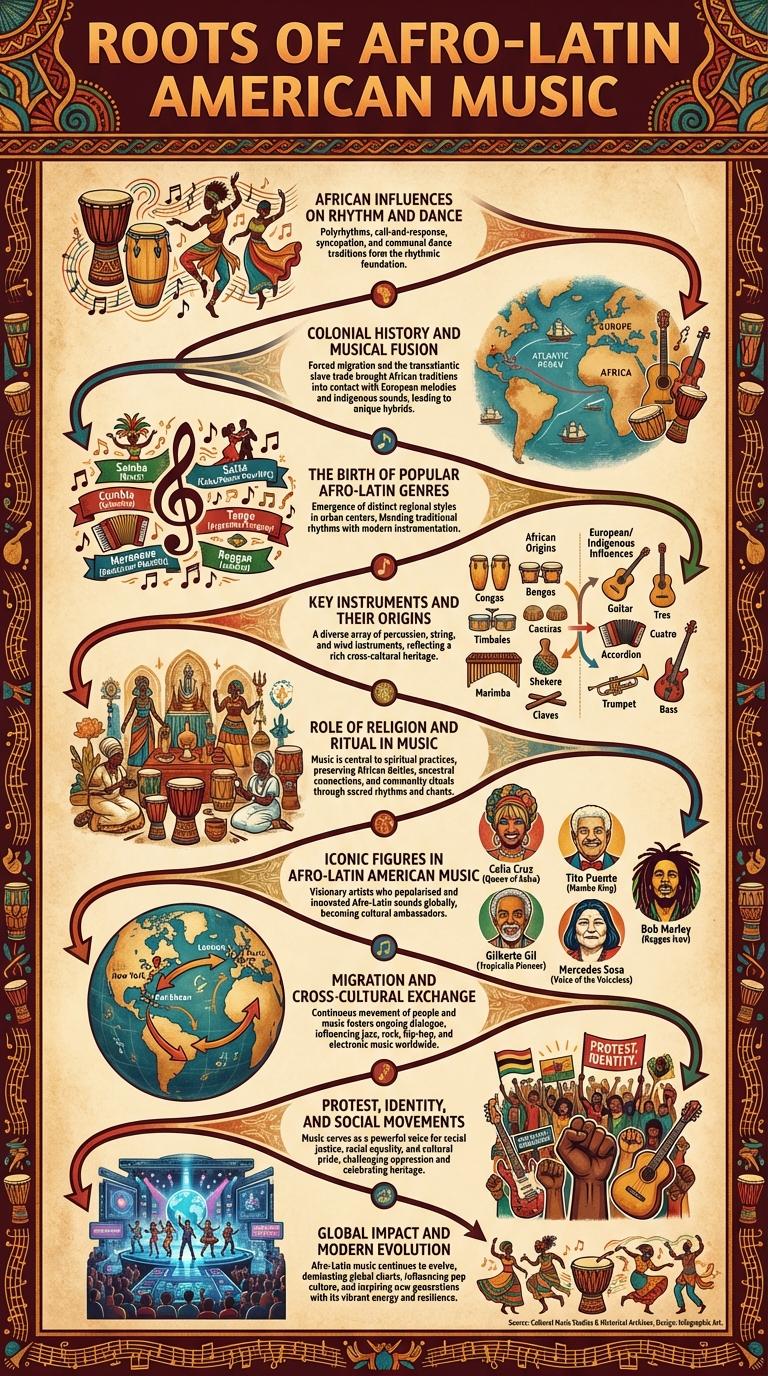
Afro Latin American music embodies a rich tapestry of cultural and historical influences rooted in African heritage and Latin American traditions. The fusion of rhythms, instruments, and storytelling reflects centuries of resilience, migration, and identity. This infographic explores the origins, key contributors, and evolution of popular Afro Latin American musical genres.
Roots of Afro-Latin American Music
Afro-Latin American music traces its origins to the blending of African rhythms with Indigenous and European influences during the colonial period. This fusion created distinct cultural expressions that continue to shape popular music genres across Latin America.
Roots of Afro-Latin American Music:
- African Rhythmic Heritage - Enslaved Africans brought complex drum patterns and call-and-response singing styles that became foundational to Afro-Latin music.
- Syncretism with Indigenous Sounds - The mixture of African percussion with Indigenous instruments like flutes enriched the musical texture and diversity.
- Colonial Cultural Exchange - European harmonic structures combined with African rhythms, forming unique genres such as rumba, samba, and cumbia.
African Influences on Rhythm and Dance
African rhythms and dance traditions have profoundly shaped Afro Latin American music, infusing it with complex polyrhythms and dynamic movement styles. These influences stem from the transatlantic slave trade, which brought African cultural expressions to Latin America.
Key African rhythmic patterns such as the clave and call-and-response vocal techniques are fundamental to genres like salsa, cumbia, and samba. Dance forms like the rumba and samba directly reflect African heritage, emphasizing fluid, energetic motions rooted in community and celebration.
Colonial History and Musical Fusion
The cultural and historical background of Afro Latin American music is deeply rooted in the colonial era, where African, Indigenous, and European influences merged. This fusion created rich popular music traditions that continue to shape Latin America's diverse soundscape.
Colonial history played a crucial role in shaping Afro Latin American music through the forced migration of African peoples and the blending of cultures under European rule.
- African Rhythms Integration - African drum patterns and call-and-response vocals combined with Indigenous melodies to form new musical styles.
- European Harmonic Influence - Spanish and Portuguese musical structures influenced the harmonies and instrumentation of Afro Latin music.
- Syncretism in Religion and Music - Afro Latin American spiritual practices merged with Catholic traditions, shaping lyrical themes and ceremonies.
The Birth of Popular Afro-Latin Genres
| Aspect | Details |
|---|---|
| Historical Roots | African slaves brought rich musical traditions to Latin America during the transatlantic slave trade from the 16th to 19th centuries. |
| Cultural Fusion | Interaction between African rhythm, Indigenous melodies, and European harmonies created unique Afro-Latin sounds. |
| Key Genres | Salsa, Samba, Cumbia, Merengue, and Reggaeton emerged from Afro-Latin communities blending percussion and dance. |
| Influential Instruments | Conga drums, bongos, maracas, claves, and the cajon are central to Afro-Latin music's distinctive rhythms. |
| Social Impact | Afro-Latin popular music fostered cultural identity, resistance, and widespread global influence in the 20th century and beyond. |
Key Instruments and Their Origins
The cultural and historical background of Afro-Latin American music is deeply rooted in the fusion of African rhythms, indigenous sounds, and European melodies. Popular music genres such as salsa, cumbia, and samba showcase this blend through vibrant percussion and string instruments. Key instruments include the conga drum, derived from African traditions, the cuatro guitar with indigenous Latin American origins, and the maracas, which trace back to native South American cultures.
Role of Religion and Ritual in Music
The cultural and historical background of Afro Latin American music is deeply intertwined with religion and ritual. These elements serve as foundational influences shaping the rhythms, lyrics, and performance styles of popular music in the region.
- Syncretism in Music - Afro Latin American music blends African spiritual traditions with Catholicism, creating unique religious musical forms.
- Ritualistic Drumming - Drumming patterns in Afro Latin rituals convey spiritual messages and connect communities to ancestral heritage.
- Ceremonial Dance - Dance in religious ceremonies often accompanies music, reinforcing social bonds and cultural identity.
These religious and ritualistic practices continue to influence contemporary popular music across Afro Latin America.
Iconic Figures in Afro-Latin American Music
Who are the iconic figures in Afro-Latin American music? Afro-Latin American music has been shaped by legendary artists such as Celia Cruz and Tito Puente, who popularized Afro-Cuban rhythms globally. These figures blended African beats with Latin traditions, creating influential genres like salsa and mambo.
What impact did Celia Cruz have on Afro-Latin American music? Known as the "Queen of Salsa," Celia Cruz brought Afro-Cuban music to international audiences with her powerful voice and vibrant performances. Her music preserved Afro-Latin rhythms and inspired generations of musicians worldwide.
How did Tito Puente contribute to popular music? Tito Puente, called the "King of Mambo," revolutionized Latin jazz by incorporating Afro-Caribbean rhythms and brass instrumentation. His work bridged cultural divides and helped establish Afro-Latin music as a major influence in popular music.
Which genres did Afro-Latin American artists influence? Afro-Latin American artists have greatly impacted genres such as salsa, mambo, son, and Latin jazz. Their music integrates African percussion, call-and-response vocals, and danceable rhythms that remain central to Latin music worldwide.
Why is the cultural background important in Afro-Latin music? The cultural and historical roots highlight the African diaspora's influence in Latin America, enriching the music's rhythm, instruments, and storytelling. Understanding this background clarifies the significance of Afro-Latin sounds in the global music landscape.
Migration and Cross-Cultural Exchange
The Afro Latin American cultural and historical background is deeply shaped by migration and cross-cultural exchange, blending African, Indigenous, and European influences. Enslaved Africans brought rich musical traditions that merged with local rhythms, creating genres like salsa, cumbia, and son. This dynamic exchange fostered popular music styles that reflect resilience, identity, and the vibrant multicultural heritage of Latin America.
Protest, Identity, and Social Movements
Afro Latin American culture deeply influences popular music genres such as salsa, reggaeton, and cumbia. These musical styles reflect a rich history of African heritage intertwined with Latin American rhythms and traditions.
Protest in Afro Latin American music often addresses issues like racial injustice, inequality, and colonial history. Music acts as a powerful tool for expressing identity, preserving cultural roots, and inspiring social movements. Artists use lyrics and rhythms to amplify marginalized voices and provoke societal change.