
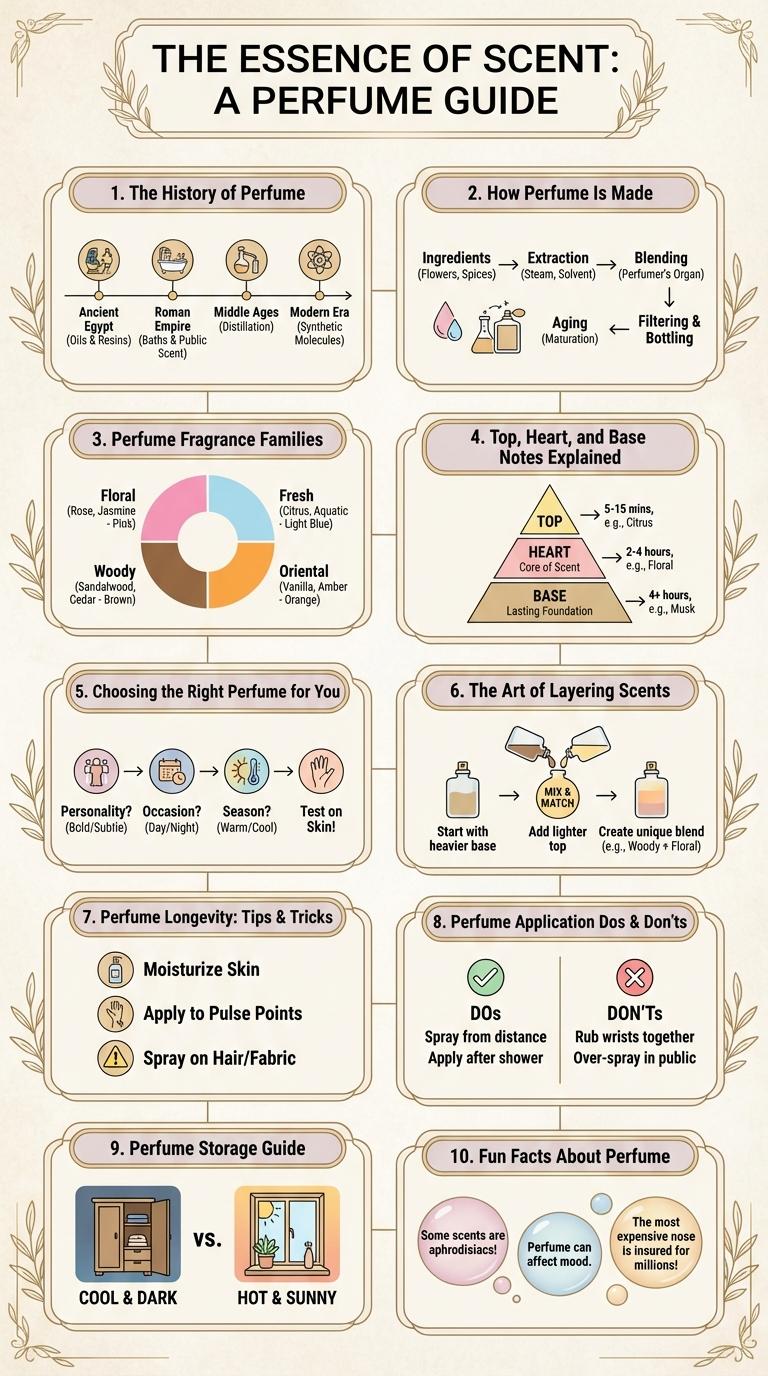
Perfume infographics visually capture the essence, history, and composition of fragrances, breaking down complex scent profiles into easily digestible visuals. They highlight key ingredients, fragrance families, and the art of blending aromas to create signature scents. This engaging format offers a quick yet comprehensive overview, perfect for both novices and enthusiasts seeking to deepen their understanding of perfumes.
The History of Perfume
Perfume has a rich history dating back over 4,000 years to ancient Mesopotamia, where aromatic resins were burned as offerings to the gods. Early civilizations like the Egyptians and Romans developed complex methods for extracting fragrant oils from plants and flowers.
During the Renaissance, perfumery evolved with advances in distillation techniques, spreading through Europe as a symbol of luxury and status. Today, perfume blends art and science, combining natural and synthetic ingredients to create a vast array of fragrances worldwide.
How Perfume Is Made
How is perfume crafted to capture unique scents? Perfume creation begins with extracting aromatic ingredients from flowers, spices, and woods. These natural essences blend with alcohol and fixatives to develop a balanced and long-lasting fragrance experience.
Perfume Fragrance Families
Perfume fragrance families categorize scents based on their dominant olfactory characteristics. These families help consumers identify and select perfumes aligned with their personal preferences.
There are several primary fragrance families including Floral, Woody, Oriental, and Fresh. Floral perfumes feature scents derived from flowers like rose and jasmine. Woody fragrances emphasize notes such as sandalwood and cedar, providing depth and warmth.
Top, Heart, and Base Notes Explained
Perfume is composed of three main layers known as Top, Heart, and Base Notes. These layers create a harmonious scent profile that evolves over time.
Top Notes are the initial, light scents perceived immediately after application, often including citrus and herbal elements. They last for about 5 to 15 minutes before fading away.
Heart Notes form the core of the fragrance and emerge after the Top Notes dissipate. Common Heart Notes include floral and fruity aromas, which can last for several hours.
Base Notes provide depth and longevity to the perfume, appearing once the Heart Notes begin to fade. Typical Base Notes are woody, musky, or amber scents that can linger for hours or even days.
Choosing the Right Perfume for You
| Step | Choosing the Right Perfume |
|---|---|
| Identify Fragrance Families | Citrus, Floral, Woody, Oriental, Fresh |
| Consider Personal Preferences | Pick scents matching your personality and lifestyle |
| Test on Skin | Apply perfume on pulse points, observe how it evolves |
| Evaluate Longevity | Choose perfumes with lasting power suitable for daily use |
| Season and Occasion | Light, fresh scents for spring/summer; warm, intense for fall/winter |
The Art of Layering Scents
The Art of Layering Scents involves combining multiple fragrances to create a unique and personalized aroma. By mixing base, middle, and top notes, one can achieve a complex and evolving scent profile. This technique enhances longevity and allows for creative expression in perfume application.
Perfume Longevity: Tips & Tricks
Perfume longevity varies based on skin type, fragrance composition, and application method. Understanding how to extend the scent can enhance your fragrance experience throughout the day.
- Apply on Pulse Points - Target areas like wrists, neck, and behind ears to boost scent projection due to increased warmth.
- Moisturize Skin - Hydrated skin retains fragrance molecules longer, helping the scent last hours more.
- Layer Fragrances - Use matching scented lotions or body washes to build a longer-lasting aroma.
Perfume Application Dos & Don'ts
Proper perfume application enhances fragrance longevity and ensures a pleasant scent experience. Avoid common mistakes to make the most of your perfume.
- Apply on pulse points - Target wrists, neck, and behind ears for optimal scent release.
- Do not rub wrists - Rubbing breaks down fragrance molecules, reducing scent duration.
- Spray from a distance - Hold the bottle 6-8 inches away to avoid overpowering spots.
- Avoid over-application - Excessive perfume can be overwhelming and less appealing.
- Moisturize skin first - Hydrated skin helps fragrance last longer and stay vibrant.
Perfume Storage Guide
Proper perfume storage preserves fragrance quality and extends its shelf life. Knowing the ideal conditions keeps scents fresh and true to their original notes.
- Avoid direct sunlight - Store perfumes in cool, dark places to prevent degradation from UV rays.
- Maintain consistent temperature - Keep perfumes away from heat sources to avoid altering the chemical composition.
- Keep bottles tightly sealed - Prevent air exposure that can cause oxidation and scent changes.
Following these guidelines ensures your perfumes smell vibrant and authentic for longer periods.