
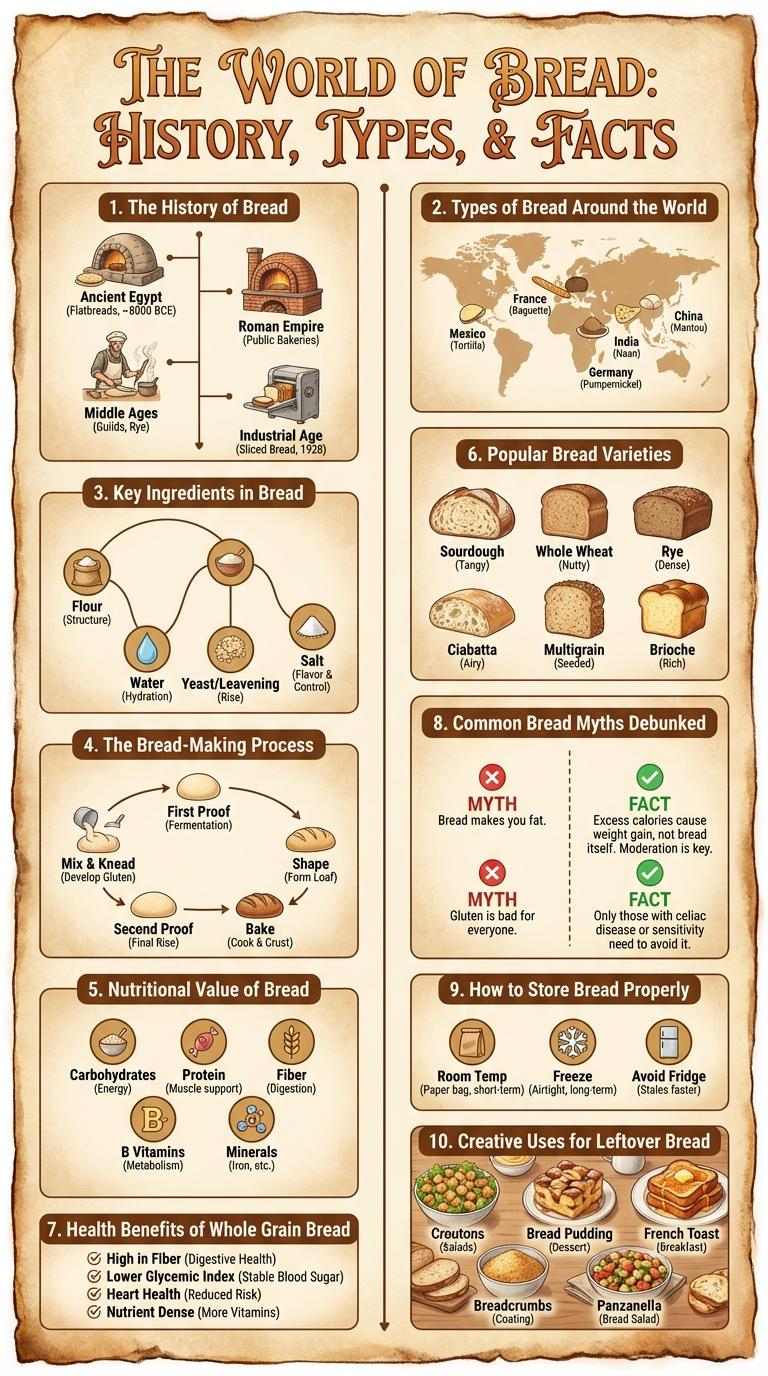
Bread, a staple food enjoyed worldwide, comes in diverse varieties and rich cultural significance. Infographics visually highlight the key ingredients, baking processes, and nutritional benefits of different types of bread. This visual guide offers a comprehensive overview, helping consumers appreciate the art and science behind bread-making.
The History of Bread
| Period | Key Development |
|---|---|
| Circa 10,000 BCE | Early humans began grinding wild grains, creating simple flatbreads |
| Circa 6,000 BCE | First evidence of leavened bread in ancient Egypt using natural yeast |
| Ancient Rome | Development of advanced ovens and introduction of varied bread types |
| Middle Ages | Bread became a staple food across Europe; guilds regulated bread quality |
| Modern Era | Industrial revolution enabled mass production and sliced bread innovation |
Types of Bread Around the World
What are the most popular types of bread around the world? Bread varies widely by region, reflecting local ingredients and baking traditions. Common types include sourdough, baguette, naan, pita, and ciabatta, each with unique textures and flavors.
Key Ingredients in Bread
Bread is a staple food made from a combination of essential ingredients that contribute to its texture, flavor, and rise. Understanding these key ingredients helps in appreciating the baking process and the final product.
Each ingredient plays a specific role in the chemistry of bread, influencing its quality and characteristics.
- Flour - The primary ingredient providing the structure through gluten formation, essential for dough elasticity and strength.
- Water - Hydrates the flour, activates yeast, and helps develop gluten networks.
- Yeast - A leavening agent that ferments sugars, producing carbon dioxide for dough rising and flavor development.
The Bread-Making Process
Bread-making is a timeless craft involving precise steps to transform simple ingredients into delicious bread. Understanding each stage helps achieve the perfect texture and flavor.
The process begins with mixing flour, water, yeast, and salt to form dough. Kneading develops gluten, creating elasticity and structure. Fermentation allows yeast to produce carbon dioxide, causing the dough to rise and develop flavor.
Nutritional Value of Bread
Bread is a staple food rich in carbohydrates, providing a primary source of energy for the body. Whole grain bread contains essential nutrients like fiber, vitamins, and minerals that support digestive health.
White bread is often enriched with iron and B vitamins such as folic acid, important for red blood cell formation. The protein content in bread varies, with whole grain types offering higher amounts compared to refined varieties.
Popular Bread Varieties
Bread is a staple food with diverse varieties enjoyed worldwide. Popular bread types include sourdough, known for its tangy flavor and chewy texture, and baguette, a French classic with a crisp crust. Other favorites are whole wheat, rye, and ciabatta, each offering unique taste and nutritional benefits.
Health Benefits of Whole Grain Bread
Whole grain bread is rich in dietary fiber, which supports digestive health and helps regulate blood sugar levels. It contains essential nutrients like B vitamins, iron, magnesium, and antioxidants that contribute to overall wellness.
Consuming whole grain bread may reduce the risk of heart disease by lowering cholesterol and improving blood pressure. Its complex carbohydrates provide sustained energy, promoting better weight management and metabolic health.
Common Bread Myths Debunked
Bread has been a staple food for centuries, surrounded by numerous myths and misconceptions. Understanding the truth about bread can help you make informed dietary choices.
- Bread Causes Weight Gain - Consuming bread in moderation as part of a balanced diet does not inherently lead to weight gain.
- Gluten-Free Bread is Always Healthier - Gluten-free bread is not necessarily more nutritious and may contain more sugar or fats.
- Brown Bread is Always Whole Grain - Some brown breads are colored with molasses and may lack whole grains entirely.
Choosing bread varieties based on nutritional content rather than myths promotes healthier eating habits.
How to Store Bread Properly
Properly storing bread extends its freshness and maintains its texture. Understanding the best storage methods prevents mold growth and staleness.
- Room Temperature Storage - Keep bread in a bread box or paper bag to allow airflow and reduce moisture buildup.
- Freezing Bread - Freeze bread in airtight plastic bags to preserve flavor and texture for up to three months.
- Avoid Refrigeration - Refrigerating bread accelerates staling by causing the starch to crystallize faster.