
Infographics about fashion provide a visually engaging way to explore trends, styles, and industry insights. They combine data and design to highlight key fashion elements such as seasonal colors, popular fabrics, and consumer behavior. These visuals help readers quickly grasp complex information while staying updated on the latest fashion developments.
Evolution of Fashion Through the Decades
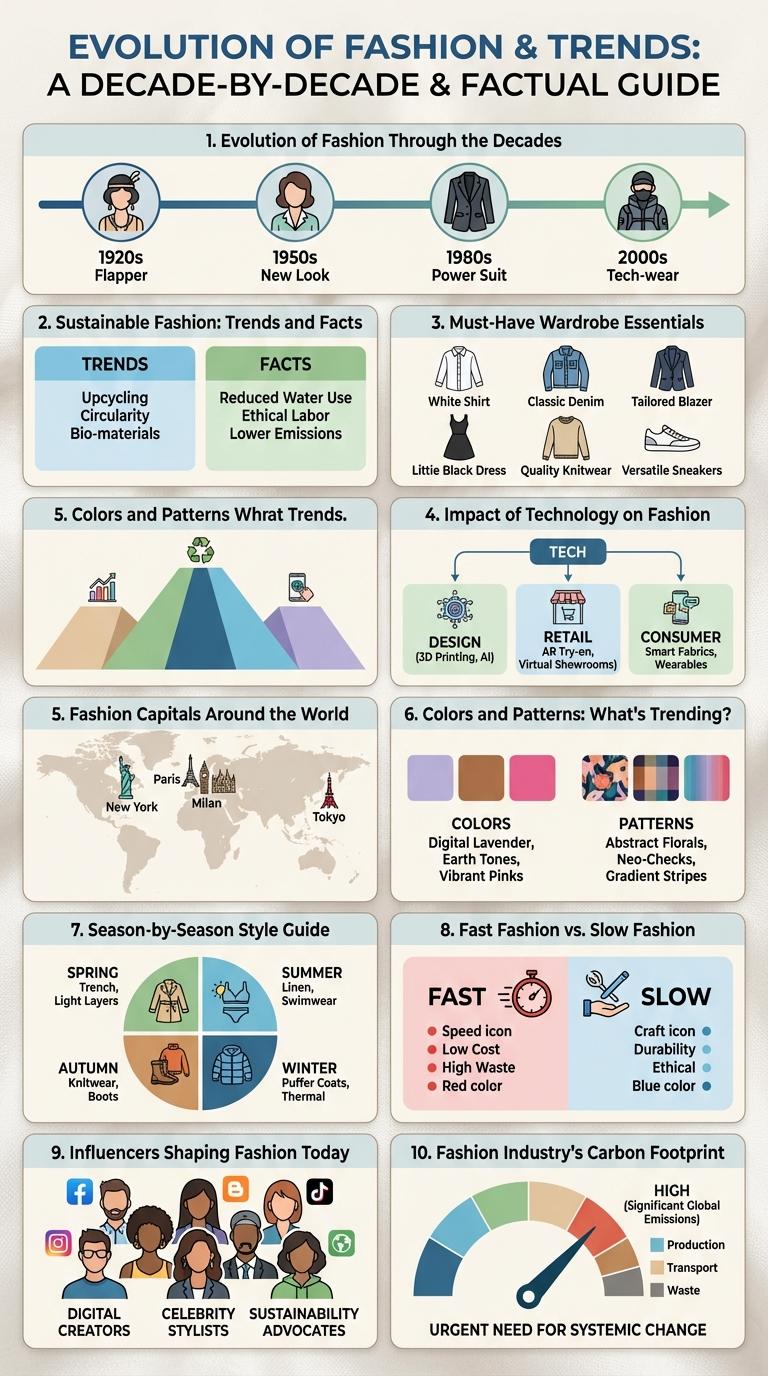
The evolution of fashion through the decades showcases dynamic changes influenced by cultural, social, and technological developments. Each era represents distinct styles that reflect the values and trends of its time.
In the 1920s, flapper dresses and bobbed hair symbolized women's liberation and the Jazz Age's carefree spirit. The 1960s introduced bold patterns and miniskirts, highlighting youth rebellion and the rise of pop culture.
Sustainable Fashion: Trends and Facts
Sustainable fashion is transforming the apparel industry by emphasizing eco-friendly materials and ethical production. Consumers increasingly prefer brands that reduce environmental impact and support fair labor practices.
Popular sustainable materials include organic cotton, recycled polyester, and Tencel, which minimize water use and pollution. Circular fashion models promote recycling, upcycling, and clothing rental to extend product life cycles. Leading brands report a significant rise in sales of sustainable collections, reflecting growing consumer awareness and demand.
Must-Have Wardrobe Essentials
| Wardrobe Essential | Description |
|---|---|
| White T-Shirt | Classic, versatile piece that pairs well with jeans, skirts, and jackets for a timeless look. |
| Dark Denim Jeans | Durable and stylish, suitable for casual and semi-formal occasions, offering a flattering fit. |
| Blazer | Structured jacket that enhances professional attire and adds polish to casual outfits. |
| Little Black Dress | Essential for events and evening wear, known for its simplicity and elegance. |
| Neutral Cardigan | Comfortable layering piece ideal for transitional weather and versatile styling. |
Impact of Technology on Fashion
Technology has revolutionized the fashion industry by enabling advanced design techniques such as 3D printing and virtual prototyping. Smart fabrics embedded with sensors enhance functionality, offering features like temperature control and health monitoring. Digital platforms streamline production and marketing, allowing brands to reach global audiences and adopt sustainable practices efficiently.
Fashion Capitals Around the World
What are the top fashion capitals around the world? These cities set global trends and influence the fashion industry every season. Known for their iconic fashion weeks and designer hubs, they shape styles that reach millions.
| City | Fashion Highlights |
|---|---|
| Paris | Known as the "City of Fashion," famous for haute couture and luxury brands. |
| New York | Home to New York Fashion Week, influential in ready-to-wear trends. |
| Milan | Renowned for Italian craftsmanship and luxury fashion houses. |
| London | Famous for edgy, innovative styles and emerging designers. |
| Tokyo | Distinguished by street fashion and avant-garde design culture. |
Colors and Patterns: What's Trending?
Fashion trends this season emphasize bold colors and dynamic patterns. Designers are exploring new palettes and prints that redefine personal style.
- Vibrant Hues - Bright colors like electric blue, fiery red, and neon green dominate runway collections, bringing energy to outfits.
- Animal Prints - Leopard, zebra, and snake patterns continue to be popular, adding an edgy and wild touch to garments.
- Geometric Patterns - Sharp shapes and abstract designs create visually striking looks across various fashion pieces.
Mixing vibrant colors with bold patterns is a powerful way to stay on trend and express individuality.
Season-by-Season Style Guide
Discover essential fashion tips for each season to elevate your wardrobe year-round. This Season-by-Season Style Guide highlights key trends and practical advice for effortless style.
Adapt your outfit choices to changing weather while staying trendy and comfortable.
- Spring Refresh - Embrace light layers and pastel colors to capture the fresh, blooming vibe of springtime.
- Summer Essentials - Opt for breathable fabrics like linen and cotton alongside bold prints to keep cool and stylish.
- Fall Transition - Integrate warm tones and versatile outerwear such as trench coats and knit sweaters.
- Winter Warmth - Choose insulated fabrics, statement scarves, and boots to maintain warmth without sacrificing fashion.
Fast Fashion vs. Slow Fashion
Fast fashion accelerates clothing production to meet high consumer demand, often compromising quality and sustainability. Slow fashion emphasizes mindful consumption, durability, and ethical sourcing for a reduced environmental impact.
- Production Speed - Fast fashion releases new trends weekly, while slow fashion focuses on seasonal, timeless collections.
- Environmental Impact - Fast fashion generates significant textile waste and pollution, whereas slow fashion prioritizes sustainable materials and low waste.
- Consumer Behavior - Fast fashion encourages frequent purchases and disposability; slow fashion advocates for thoughtful buying and garment longevity.
Influencers Shaping Fashion Today
Fashion influencers play a pivotal role in shaping contemporary style trends by reaching millions on social media platforms like Instagram and TikTok. These influencers collaborate with top fashion brands to showcase new collections, driving consumer engagement and boosting brand visibility. Their unique ability to blend personal style with cultural moments continually redefines fashion norms worldwide.