
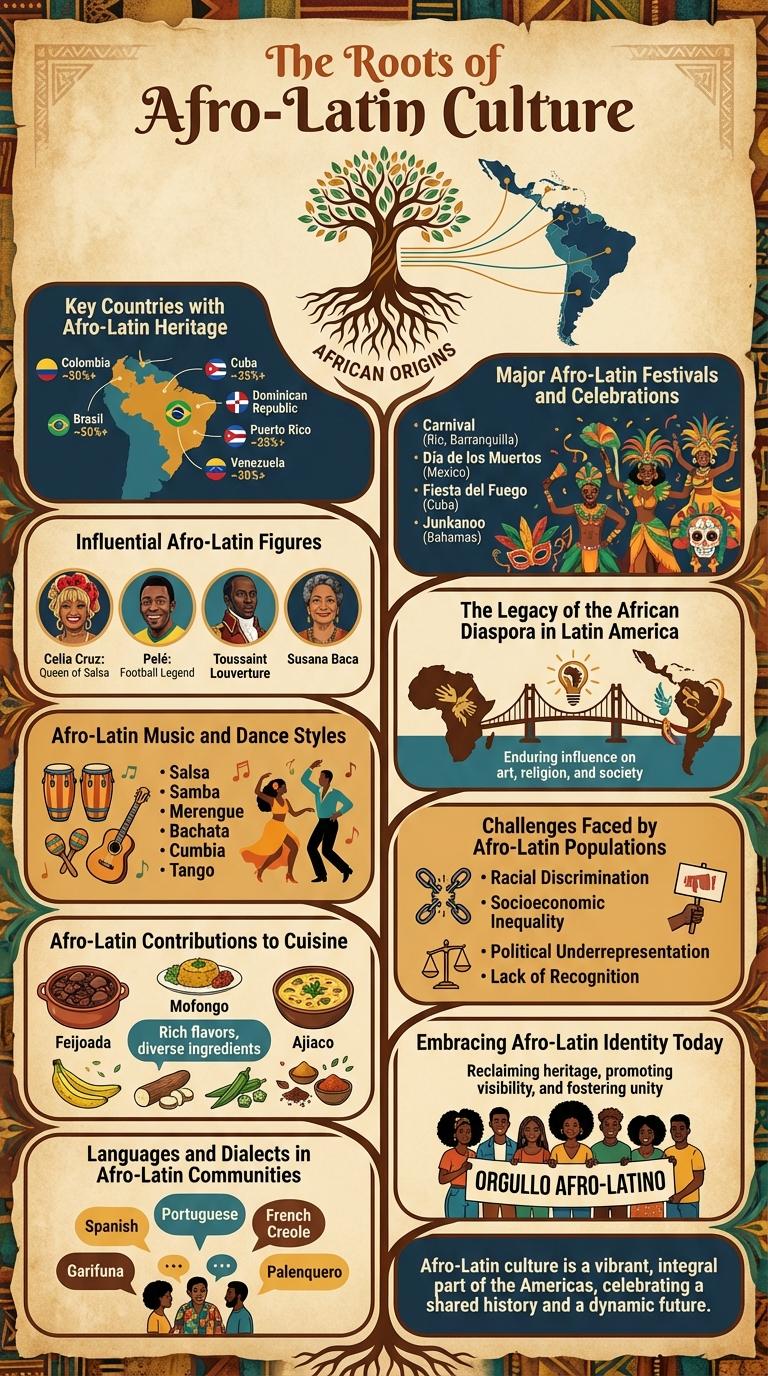
Explore the vibrant cultural fusion of Afro-Latin heritage through a detailed infographic that highlights its rich history, influential figures, and enduring traditions. Discover how African roots have shaped Latin American music, dance, and social movements, creating a unique and dynamic cultural identity. This visual guide offers insightful data and compelling stories celebrating Afro-Latin contributions worldwide.
The Roots of Afro-Latin Culture
Afro-Latin culture traces its origins to the African diaspora brought to Latin America through the transatlantic slave trade between the 16th and 19th centuries. Enslaved Africans contributed rich cultural traditions, including music, dance, religion, and cuisine, which fused with indigenous and European influences.
Key African ethnic groups such as the Yoruba, Bantu, and Fon shaped Afro-Latin identity across countries like Brazil, Cuba, Colombia, and the Dominican Republic. This cultural fusion created vibrant Afro-Latin communities that continue to influence language, art, and social practices throughout Latin America.
Key Countries with Afro-Latin Heritage
Afro-Latin heritage represents the rich cultural and historical contributions of African descendants in Latin America. This heritage is deeply rooted in several key countries, where African influence shapes music, cuisine, and traditions.
- Brazil - Home to the largest Afro-descendant population in Latin America, influencing samba, capoeira, and Candomble.
- Colombia - Significant Afro-Colombian communities contribute to coastal culture, especially in cities like Cartagena and Cali.
- Cuba - Afro-Cuban heritage is prominent in music genres like rumba and salsa, blending African and Spanish elements.
- Dominican Republic - Afro-Dominican culture is vital in merengue and the nation's religious practices.
- Peru - Afro-Peruvians impact traditional dance and music, including the festejo rhythm and cultural festivals.
These countries provide vibrant examples of Afro-Latin identity through their cultural expressions and historical legacies.
Influential Afro-Latin Figures
Afro-Latin figures have significantly shaped the cultural, political, and artistic landscapes of Latin America and the world. Iconic personalities such as Celia Cruz, the Queen of Salsa, and Oscar Michelen, a Nobel laureate in Literature, highlight the rich contributions of Afro-Latin communities. Their legacies continue to inspire movements for racial equality and cultural pride across the globe.
Afro-Latin Music and Dance Styles
Afro-Latin music and dance styles are vibrant cultural expressions rooted in African heritage blended with Latin American influences. Key genres include salsa, rumba, cumbia, and samba, each showcasing unique rhythms and movements that reflect Afro-Latin identity. These styles play a crucial role in preserving history, fostering community, and celebrating African ancestry in Latin America.
Afro-Latin Contributions to Cuisine
| Afro-Latin Contribution | Description |
|---|---|
| Plantains | Staple in Afro-Latin cuisine, plantains are used in dishes like tostones and maduros, reflecting African agricultural heritage. |
| Callaloo | A leafy green dish with African roots, commonly prepared with okra and spices in Caribbean Afro-Latin communities. |
| Beans and Rice | Symbolizes the blending of African, indigenous, and Spanish culinary traditions, forming a foundation in many Afro-Latin meals. |
| Seafood Soups | Influenced by African coastal cooking methods, seafood stews like moqueca in Brazil highlight Afro-Latin flavors. |
| Spices and Techniques | Use of ingredients like annatto, allspice, and the method of slow-cooking demonstrates African culinary impact on Afro-Latin gastronomy. |
Languages and Dialects in Afro-Latin Communities
Afro-Latin communities exhibit a rich tapestry of languages and dialects shaped by African, indigenous, and European influences. These linguistic patterns reflect the diverse cultural heritage and historical experiences within Afro-Latin populations.
Languages spoken in Afro-Latin communities include Spanish, Portuguese, and various African-rooted creoles and dialects that have evolved over centuries.
- Spanish and Portuguese Dominance - Most Afro-Latin individuals speak Spanish or Portuguese as their primary language, influenced by colonial history in Latin America.
- Afro-Latin Creole Languages - Creole languages such as Palenquero in Colombia and Papiamento in the Caribbean blend African, Spanish, Portuguese, and indigenous elements.
- Preservation of African Dialects - Some communities maintain African African-derived dialects, preserving unique linguistic traditions linked to their ancestral origins.
Major Afro-Latin Festivals and Celebrations
Afro-Latin festivals celebrate the rich cultural heritage and vibrant traditions of African descendants in Latin America. These events showcase music, dance, art, and cuisine that highlight Afro-Latin identity and history.
Major festivals include the Carnaval de Barranquilla in Colombia, known for its colorful parades and Afro-Caribbean rhythms. Another key celebration is the Festival de Orishas in Cuba, which honors Afro-Cuban religious practices through elaborate ceremonies and performances.
The Afro-Brazilian Festa do Candomble features traditional drumming, dancing, and rituals dedicated to African deities. In the Dominican Republic, the Festival de Merengue Afro celebrates Afro-Dominican music and dance, emphasizing the genre's African roots.
These festivals play a crucial role in preserving Afro-Latin cultural identity and fostering community pride across Latin America. They attract diverse audiences, promoting cross-cultural understanding and appreciation of Afro-Latin contributions.
The Legacy of the African Diaspora in Latin America
What is the impact of the African Diaspora on Latin America? The African Diaspora profoundly shaped Latin America's culture, language, and identity. Afro-Latin communities contributed rich traditions in music, cuisine, and religion that continue to influence society today.
How did African heritage influence Latin American culture? African heritage introduced rhythmic music styles like samba, cumbia, and rumba, which remain central to cultural celebrations. Culinary dishes such as feijoada and callaloo trace their roots to African cooking techniques and ingredients.
Which countries have significant Afro-Latin populations? Brazil, Colombia, Cuba, and the Dominican Republic host the largest Afro-Latin populations. These countries showcase diverse expressions of African ancestry in their festivals, religious practices, and social customs.
What role did African traditions play in religion? Afro-Latin religions like Candomble, Santeria, and Vodou blend African spiritual beliefs with Catholicism. These syncretic religions hold deep cultural importance and preserve ancestral knowledge.
Why is preserving Afro-Latin heritage important today? Preserving Afro-Latin heritage fosters cultural pride and combats historical marginalization. It ensures the contributions of Afro-descendants are recognized and integrated into national histories and identities.
Challenges Faced by Afro-Latin Populations
Afro-Latin populations face unique social and economic challenges rooted in historical marginalization and systemic discrimination. These communities often experience disparities in education, employment, and healthcare access.
Racial prejudice and colorism contribute to limited opportunities and social exclusion for Afro-Latin individuals. Economic inequality is prevalent, with many living in poverty and lacking upward mobility. Representation in media and politics remains insufficient, hindering the visibility and influence of Afro-Latin voices.