
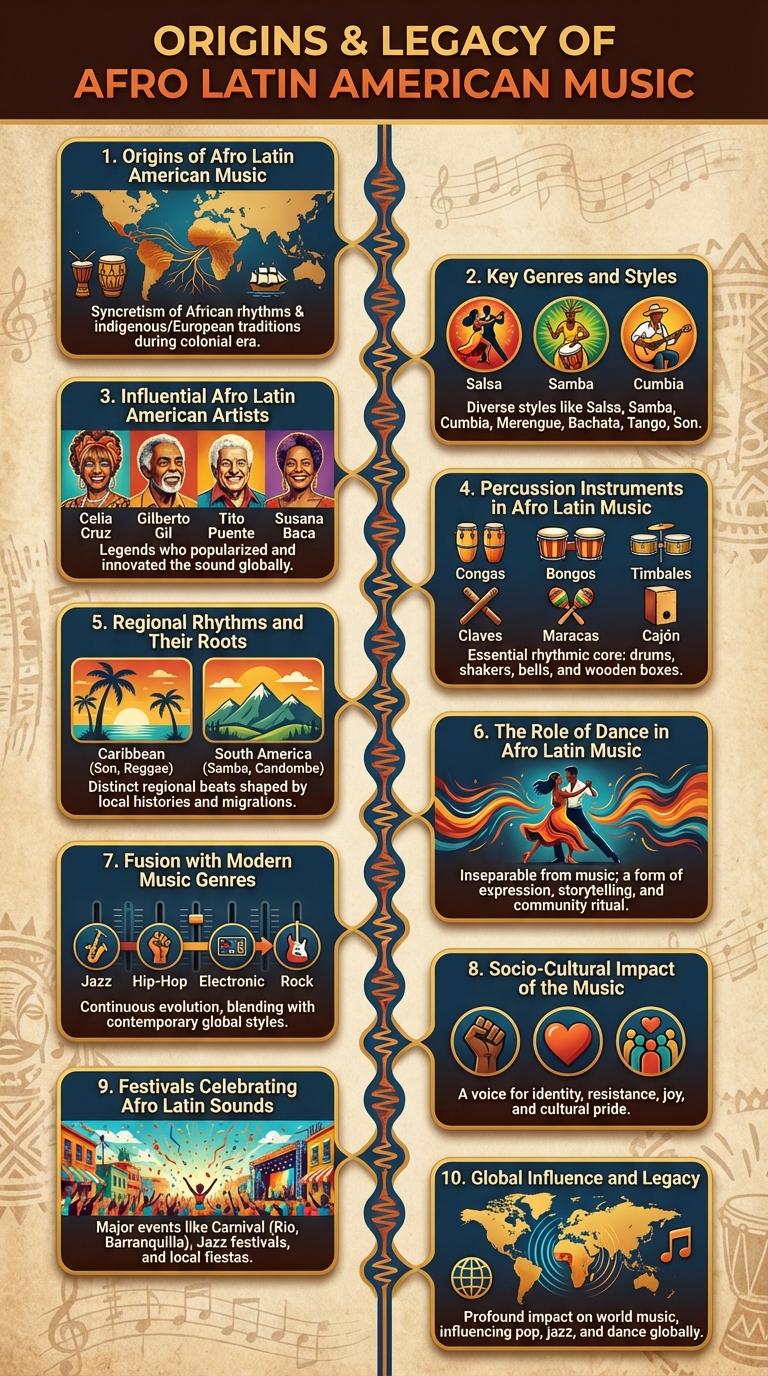
Afro Latin American music blends African rhythms with Latin American cultural elements, creating vibrant and rhythmic sounds that have influenced global music trends. This rich musical heritage encompasses genres like salsa, samba, reggae, and cumbia, reflecting the diverse histories and experiences of Afro-descendant communities. Exploring the evolution, instruments, and key artists of Afro Latin American music reveals its profound impact on identity, culture, and artistic expression.
Origins of Afro Latin American Music
Afro Latin American music originated from the fusion of African rhythms and indigenous Latin American sounds during the transatlantic slave trade. Enslaved Africans brought their rich musical heritage, including percussion instruments and call-and-response singing, which blended with Spanish and Portuguese influences. This cultural synthesis created vibrant genres like cumbia, samba, and rumba that remain central to Latin America's musical identity.
Key Genres and Styles
Afro Latin American music is a vibrant fusion of African rhythms and Latin American traditions shaping a unique cultural soundscape. This music reflects deep historical roots and diverse influences across various regions in Latin America.
- Samba - Originating in Brazil, Samba blends African beats with Portuguese melodies to create lively dance rhythms.
- Cumbia - Cumbia combines African drum patterns with indigenous and Spanish instruments, widely popular in Colombia and surrounding countries.
- Rumba - Developed in Cuba, Rumba features complex percussion and call-and-response vocals rooted in African heritage.
Influential Afro Latin American Artists
Afro Latin American music has profoundly shaped global soundscapes through its rich rhythms and cultural depth. Influential artists have preserved and innovated traditional styles like salsa, cumbia, and samba.
- Celia Cruz - Known as the "Queen of Salsa," she popularized Afro Cuban music worldwide with her powerful voice and vibrant performances.
- Gilberto Gil - A Brazilian singer and composer who fused Afro Brazilian rhythms with rock and reggae, impacting global music trends.
- Toto la Momposina - A Colombian singer who revitalized Afro Colombian folklore through her music, highlighting African heritage in Latin America.
Percussion Instruments in Afro Latin Music
Percussion instruments are the heartbeat of Afro Latin American music, providing complex rhythms that drive the genre's dynamic energy. These instruments have African origins and deeply influence the sound and culture of Latin American music.
Key percussion instruments include the conga, bongos, timbales, maracas, and cajon. The conga drums produce deep, resonant sounds essential for salsa and rumba rhythms. Bongos offer high-pitched tones used in son and mambo, while timbales deliver sharp, metallic beats characteristic of mambo and cha-cha-cha. Maracas add rhythmic shaking patterns, and the cajon provides a versatile box drum sound prominent in Afro-Peruvian music.
Regional Rhythms and Their Roots
Afro Latin American music is deeply rooted in the diverse cultures of Africa and Latin America, blending traditional African rhythms with local sounds from countries like Cuba, Brazil, and Colombia. This fusion creates vibrant regional rhythms that tell stories of heritage and identity.
Key regional rhythms include Cuba's Rumba, Brazil's Samba, Colombia's Cumbia, and Puerto Rico's Bomba. These rhythms reflect the unique history and cultural influences of Afro-descendant communities in each region.
The Role of Dance in Afro Latin Music
Dance plays a central role in Afro Latin American music, serving as a powerful expression of cultural identity and history. Movements in dances like Samba, Rumba, and Cumbia connect rhythm to storytelling, embodying traditions passed through generations. The physicality of dance enhances musical engagement, making it an essential element of community celebrations and spiritual rituals.
Fusion with Modern Music Genres
Afro Latin American music blends traditional African rhythms with contemporary sounds, creating a dynamic fusion that resonates globally. This genre incorporates elements from hip-hop, reggaeton, and electronic dance music, enriching its cultural depth and appeal.
The fusion manifests in the use of traditional percussion instruments alongside modern synthesizers and digital production techniques. Artists innovate by merging call-and-response vocal patterns with rap verses, expanding the genre's influence across diverse audiences.
Socio-Cultural Impact of the Music
| Aspect | Details |
|---|---|
| Historical Roots | Afro Latin American music stems from the African diaspora, blending indigenous and European elements, shaping cultural identity across countries like Cuba, Brazil, Colombia, and Venezuela. |
| Community Identity | Music acts as a tool for preserving African heritage, fostering pride and solidarity among Afro-descendant communities in Latin America. |
| Resistance and Empowerment | Genres like Cumbia, Salsa, and Samba serve as mediums for social protest, highlighting issues of racial inequality and marginalization. |
| Cultural Fusion | Afro Latin American music influences mainstream Latin genres, promoting cross-cultural exchange and enriching national cultural landscapes. |
| Economic Impact | Music festivals and cultural tourism centered on Afro Latin rhythms boost local economies and create job opportunities for artists and communities. |
Festivals Celebrating Afro Latin Sounds
Afro Latin American music represents a vibrant fusion of African, Indigenous, and Latin American rhythms that have shaped cultural identities across the Americas. Festivals celebrating these sounds highlight the rich heritage and diverse expressions of Afro Latin communities.
- Cali Fair (Colombia) - Features Afro Pacific music, showcasing genres like currulao and marimba, reflecting Afro Colombian culture.
- Luanda Festival (Angola and Latin America) - Celebrates Afro Latin music connecting African roots with Latin American influences, featuring live performances and workshops.
- Festival de Musica Afro (Brazil) - Focuses on Afro Brazilian genres like samba and maracatu, promoting African heritage within Latin America.
These festivals serve as important platforms for preserving tradition, fostering cultural exchange, and promoting Afro Latin American musical innovation.