
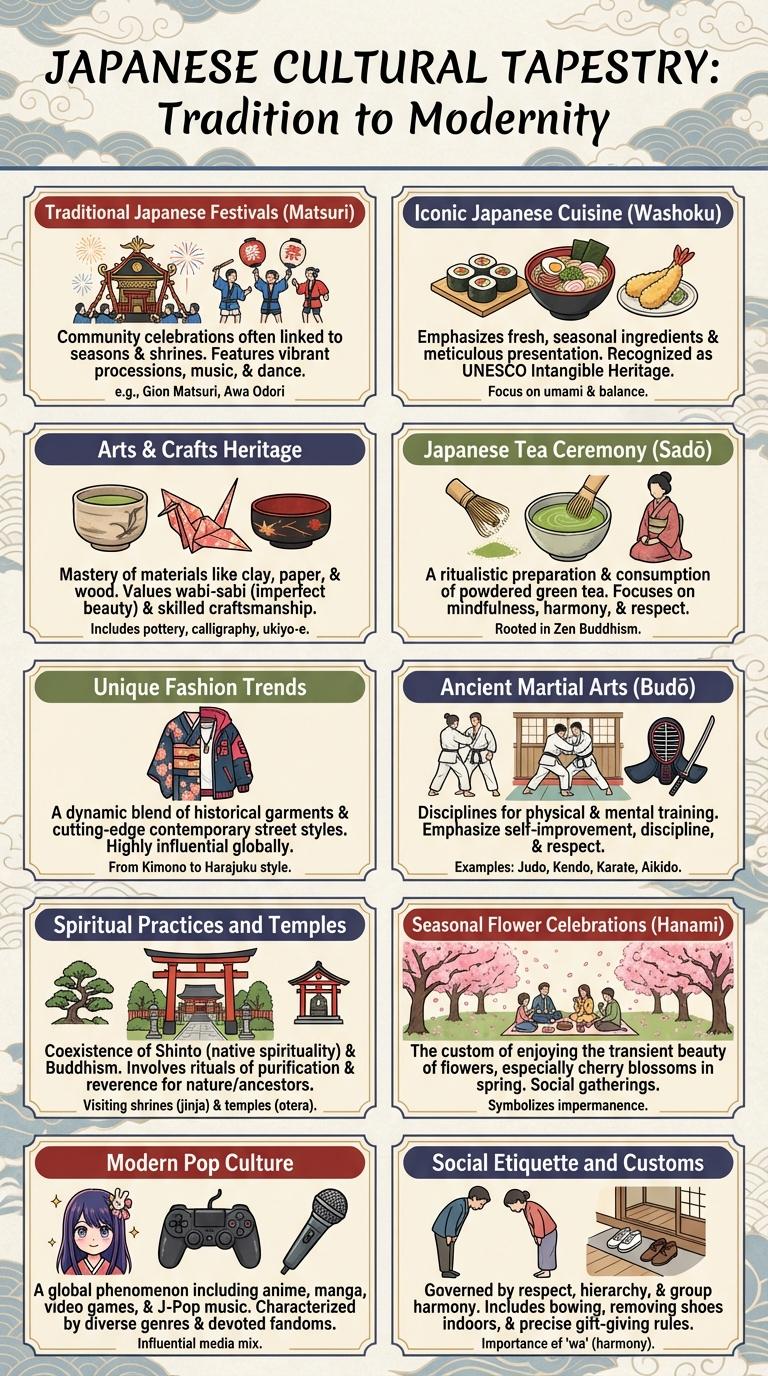
Japan's rich culture blends ancient traditions with modern innovation, creating a unique and fascinating society. From tea ceremonies and kimono attire to cutting-edge technology and pop culture, its diverse elements offer endless insights. This infographic highlights key aspects that define Japan's cultural identity.
Traditional Japanese Festivals
Traditional Japanese festivals, known as "matsuri," celebrate seasonal changes, historical events, and community spirit. These vibrant events feature music, dance, elaborate costumes, and rituals that have been preserved for centuries.
Famous matsuri include the Gion Matsuri in Kyoto, held every July, and the Nebuta Matsuri in Aomori, known for its illuminated floats. Each festival reflects unique regional customs, showcasing Japan's rich cultural heritage through colorful parades and traditional performances.
Iconic Japanese Cuisine
| Dish | Description |
|---|---|
| Sushi | Vinegared rice combined with raw fish, seafood, or vegetables, often served with wasabi and soy sauce. |
| Ramen | Noodles served in a savory broth, typically garnished with meat, eggs, and vegetables. Varieties include Shoyu, Miso, and Tonkotsu. |
| Tempura | Lightly battered and deep-fried seafood or vegetables, known for its crispy texture and delicate flavor. |
| Sashimi | Fresh, thinly sliced raw fish or seafood served without rice, emphasizing purity and freshness. |
| Okonomiyaki | Savory pancake made with flour, eggs, shredded cabbage, and various toppings such as meat, seafood, and sauces. |
Arts & Crafts Heritage
Japan's arts and crafts heritage reflects centuries of meticulous craftsmanship and aesthetic refinement. This tradition combines functional beauty with deep cultural symbolism.
- Kimono Weaving - The art of kimono weaving uses silk threads and intricate dyeing techniques to create vibrant traditional garments.
- Pottery and Porcelain - Japanese pottery, including styles like Arita and Kutani, showcases detailed hand-painted designs and unique glazing methods.
- Woodblock Printing - Ukiyo-e, a famous woodblock printing art, captures historical scenes and landscapes with vivid colors and bold outlines.
Japanese Tea Ceremony
The Japanese Tea Ceremony, known as "Chanoyu" or "Sado," is a traditional ritual centered on the preparation and consumption of matcha, powdered green tea. This ceremony emphasizes harmony, respect, purity, and tranquility, reflecting deep Zen Buddhist influences. The precise movements and setting create an atmosphere that encourages mindfulness and appreciation of the present moment.
Unique Fashion Trends
Japan's culture is renowned for its diverse and innovative fashion trends that blend tradition with modernity. Unique fashion styles in Japan often reflect a bold expression of individuality and cultural identity.
- Harajuku Fashion - Harajuku style is characterized by vibrant colors and eclectic combinations, originating from Tokyo's Harajuku district.
- Kimono Revival - Contemporary adaptations of traditional kimonos have gained popularity, merging classic patterns with modern designs.
- Streetwear Influence - Japanese streetwear brands like A Bathing Ape and Comme des Garcons lead global fashion with cutting-edge aesthetics.
Ancient Martial Arts
Japan's ancient martial arts are a vital part of its cultural heritage, blending physical discipline with spiritual growth. These practices have influenced modern martial arts around the world and remain respected traditions in Japan today.
- Kendo - A swordsmanship art developed from samurai techniques, focusing on strikes with bamboo swords and protective armor.
- Jujutsu - A method of close combat using joint locks, throws, and grappling, originating from feudal Japan's battlefield tactics.
- Aikido - A martial art emphasizing harmony and self-defense by redirecting an opponent's energy using fluid movements.
The preservation of these ancient martial arts continues to foster cultural pride and international appreciation for Japan's historical traditions.
Spiritual Practices and Temples
Japan's spiritual practices are deeply rooted in Shintoism and Buddhism, which coexist harmoniously and shape daily life and cultural traditions. Temples and shrines across the country serve as sacred spaces for worship, meditation, and seasonal festivals.
Renowned temples such as Kyoto's Kinkaku-ji and Tokyo's Senso-ji attract millions of visitors annually, showcasing exquisite architecture and historical significance. Rituals like purification, offering prayers, and participating in matsuri festivals highlight the enduring spiritual connection within Japanese culture.
Seasonal Flower Celebrations
Japan's culture cherishes seasonal flower celebrations, reflecting deep connections with nature and the changing seasons. Iconic events such as Cherry Blossom (Sakura) Viewing in spring and Chrysanthemum Festivals in autumn highlight the nation's appreciation for floral beauty. These celebrations blend traditional rituals, poetry, and community gatherings, emphasizing harmony and renewal.
Modern Pop Culture
What defines modern pop culture in Japan?
Modern Japanese pop culture blends technology, entertainment, and fashion, shaping a unique global influence. Trends like anime, J-pop, and street fashion highlight Japan's innovative creativity and youth culture.
How has anime impacted Japan's cultural exports?
Anime serves as a major cultural export, captivating international audiences with diverse storytelling and art styles. Its popularity has boosted tourism and global interest in Japanese language and traditions.
Why is J-pop significant in contemporary Japan?
J-pop reflects Japan's evolving music scene, combining traditional instruments with modern sounds. It influences fashion and lifestyle, representing a dynamic and youthful identity.
What role does technology play in Japan's pop culture?
Technology integrates seamlessly with entertainment, from virtual idols to gaming innovations. This fusion creates immersive experiences, driving both domestic and international fan engagement.
How does street fashion express Japan's modern culture?
Street fashion showcases individuality and creativity through bold styles in areas like Harajuku. It captures youth trends, social attitudes, and Japan's position as a trendsetter in global fashion.