
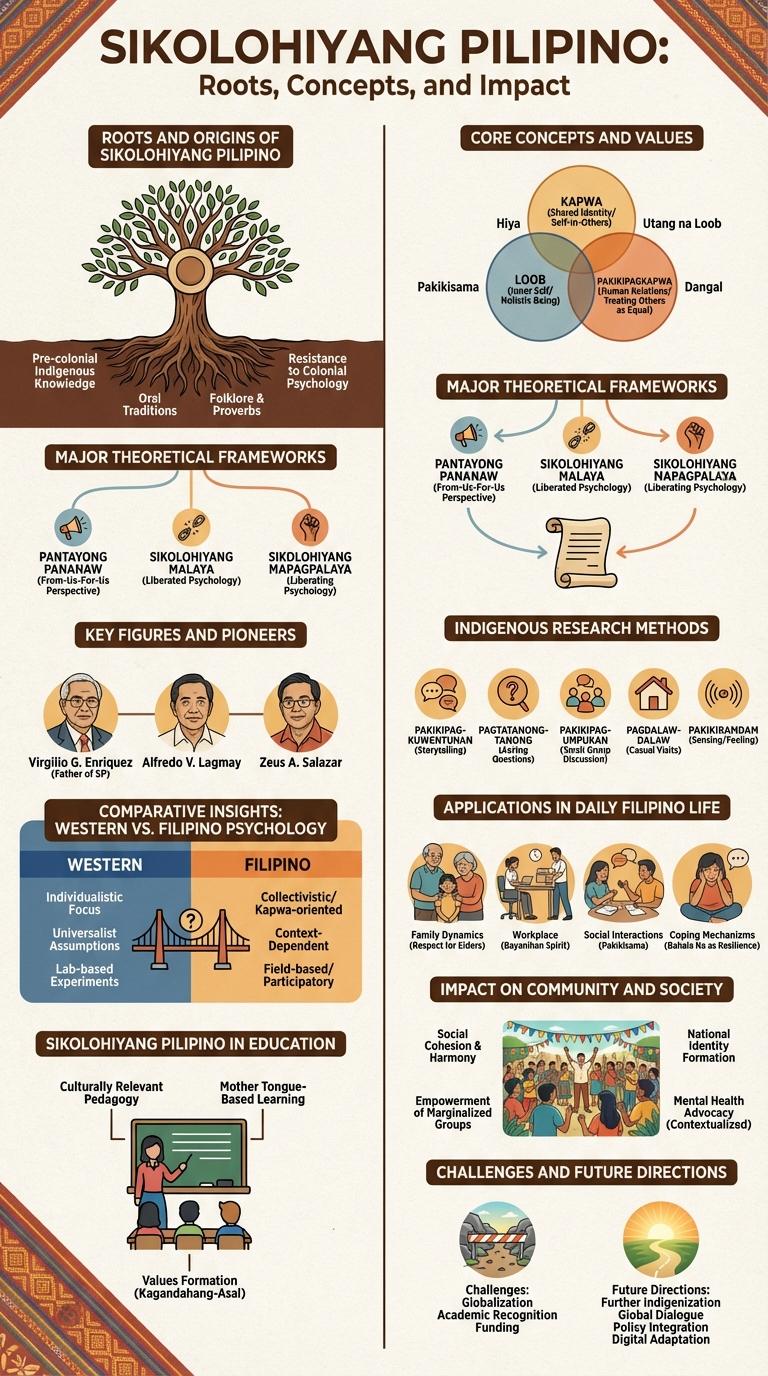
Sikolohiyang Pilipino focuses on understanding Filipino behavior and culture through indigenous perspectives. It emphasizes concepts like kapwa (shared identity) and pakikipagkapwa-tao (empathy and social interaction). This approach challenges Western psychological frameworks by centering Filipino experiences and values.
Roots and Origins of Sikolohiyang Pilipino
| Aspect | Details |
|---|---|
| Definition | Sikolohiyang Pilipino is a branch of psychology grounded in Filipino culture, values, and experiences. |
| Historical Roots | Developed in the early 1970s as a response to Western psychological approaches that overlooked Filipino cultural context. |
| Founder | Founded by Virgilio G. Enriquez, a pioneer in Filipino psychology, emphasizing indigenous concepts and methods. |
| Cultural Foundations | Incorporates Filipino values such as kapwa (shared identity), pakikipagkapwa-tao (social relatedness), and bayanihan (community spirit). |
| Purpose | Seeks to understand Filipino behavior and psychology through the Filipino worldview, language, and social environment. |
Core Concepts and Values
Sikolohiyang Pilipino emphasizes understanding Filipino psychology through the lens of indigenous culture and experiences. Core concepts include kapwa (shared identity), pakikipagkapwa-tao (interpersonal relations), and bayanihan (community spirit). These values foster social harmony, collective responsibility, and cultural pride in Filipino society.
Major Theoretical Frameworks
Sikolohiyang Pilipino is a psychology framework rooted in Filipino culture and values. It emphasizes understanding psychological concepts through indigenous perspectives.
- Kapwa Framework - Highlights the core Filipino value of shared identity and interconnectedness among people.
- Pakikipagkapwa Model - Focuses on mutual respect and social relationships as essential to Filipino psychology.
- Filipino Indigenous Methods - Utilizes native practices and oral traditions to study behavior and cognition.
This framework fosters a culturally relevant understanding of Filipino human behavior and mental health.
Key Figures and Pioneers
Sikolohiyang Pilipino is a Filipino-centered approach to psychology that emphasizes indigenous knowledge and cultural context. This movement challenges Western psychological frameworks and promotes the study of Filipino behavior from a local perspective.
Key figures include Virgilio Enriquez, known as the father of Sikolohiyang Pilipino, who pioneered the development of this field in the 1970s. Other pioneers like Prospero Covar and Ricardo Nolasco contributed to expanding research and applications that resonate with Filipino values and experiences.
Indigenous Research Methods
What are Indigenous Research Methods in Sikolohiyang Pilipino? Indigenous Research Methods emphasize community-based and culturally relevant approaches rooted in Filipino values and experiences. These methods prioritize collaboration, oral traditions, and holistic understanding of Filipino psychology.
| Feature | Description |
|---|---|
| Kaalaman (Knowledge) | Derived from indigenous cultural wisdom and lived experiences. |
| Pakikipagkuwentuhan (Storytelling) | Utilizes narratives and oral traditions for data gathering and interpretation. |
| Bayanihan (Community Collaboration) | Engages community members as active partners in the research process. |
| Pamayanang Sikolohikal (Psychological Community) | Focuses on collective identity and shared psychological experiences. |
| Holistic Approach | Considers spiritual, social, and emotional dimensions in research. |
Comparative Insights: Western vs. Filipino Psychology
Sikolohiyang Pilipino (Filipino Psychology) offers a culturally relevant approach to understanding the Filipino psyche. It contrasts significantly with Western psychology by emphasizing community, indigenous concepts, and historical context.
- Focus on Collectivism - Filipino psychology prioritizes interconnectedness and family ties over individualism typical in Western psychology.
- Indigenous Values - It integrates native Filipino values like "kapwa" (shared identity), unlike Western psychology's more universal theories.
- Contextual Methodologies - Filipino psychology uses methodologies grounded in local culture and experiences, differing from the often Eurocentric methods of Western psychology.
Applications in Daily Filipino Life
Sikolohiyang Pilipino explores the unique psychological experiences of Filipinos, emphasizing cultural values such as "kapwa" (shared identity) and "pakikisama" (smooth interpersonal relationships). It seeks to understand behavior through indigenous perspectives, promoting mental health and social harmony.
In daily Filipino life, Sikolohiyang Pilipino guides community interactions by encouraging empathy and bayanihan (communal unity). It supports conflict resolution and enhances family dynamics by respecting cultural nuances and collective well-being.
Sikolohiyang Pilipino in Education
Sikolohiyang Pilipino emphasizes culturally relevant approaches in education, integrating Filipino values and experiences into the learning process. It aims to promote understanding of Filipino identity and psychology by incorporating local languages, traditions, and social realities in the curriculum. This framework enhances student engagement and supports holistic development aligned with the Philippine socio-cultural context.
Impact on Community and Society
Sikolohiyang Pilipino centers on the Filipino psyche, culture, and social realities, shaping local psychological practices and theories. This approach promotes understanding and appreciation of indigenous values and experiences unique to Filipino communities.
The impact on community and society is profound, fostering mental health frameworks that align with Filipino cultural contexts. It encourages empowerment through shared identity and collective healing practices. Sikolohiyang Pilipino actively supports social development by addressing societal issues such as poverty, discrimination, and social inequality.