
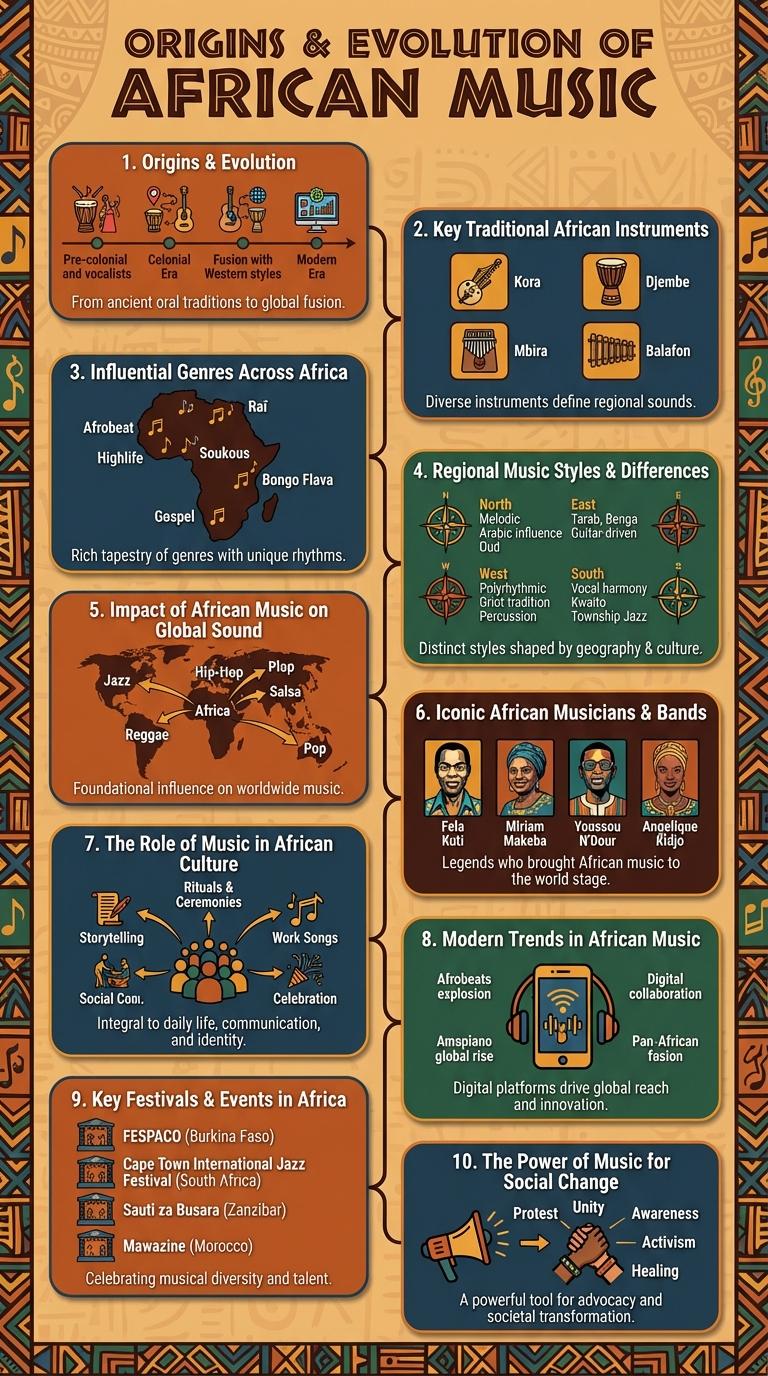
Africa's music is a rich tapestry of rhythms, melodies, and cultural stories that span diverse regions and ethnic groups. This infographic highlights the unique instruments, traditional styles, and contemporary influences that shape the continent's vibrant musical heritage. Explore how African music continues to inspire global sounds and connect generations through its dynamic expression.
Origins and Evolution of African Music
| Aspect | Description |
|---|---|
| Origins | African music traces back over 10,000 years, deeply embedded in African oral traditions and rituals. It is one of the oldest music forms globally, originating from early hunter-gatherer societies. |
| Instruments | Traditional African instruments include the djembe (drum), kora (string instrument), balafon (xylophone), talking drums, and mbira (thumb piano), reflecting regional diversity. |
| Characteristics | Percussion and polyrhythm dominate African music, with call-and-response patterns, complex rhythms, and vocal harmonies defining many styles. |
| Evolution | African music evolved through interaction with Arab, European, and indigenous cultures, leading to genres like Highlife, Afrobeat, and Soukous. It also significantly influenced global music styles including jazz, blues, and hip-hop. |
| Cultural Role | Music serves social, religious, and ceremonial functions. It communicates stories, history, and traditions, reinforcing community identity across African societies. |
Key Traditional African Instruments
African music features diverse traditional instruments that have shaped cultural expression for centuries. These instruments reflect the continent's rich heritage and community storytelling traditions.
- Djembe - A rope-tuned skin-covered drum played with bare hands, originating from West Africa, known for its versatile sounds.
- Kora - A 21-string lute-bridge-harp used predominantly in West African countries, producing melodic and harmonic tones.
- Mbira - Also called the thumb piano, it consists of metal tines attached to a wooden board, common in Southern Africa for spiritual music.
Traditional African instruments continue to influence modern music worldwide through their unique sounds and cultural significance.
Influential Genres Across Africa
Africa's musical landscape is rich and diverse, characterized by influential genres that have shaped both local and global sounds. Genres such as Afrobeat, Highlife, and Soukous offer vibrant rhythms and melodies rooted in African culture and history.
Afrobeat, pioneered by Fela Kuti in Nigeria, blends traditional African music with jazz, funk, and soul, becoming a symbol of political resistance. Highlife from Ghana combines Western instruments with African rhythms, creating danceable and melodic tunes embraced across West Africa.
Regional Music Styles and Differences
Africa's music showcases rich diversity with distinct regional styles influenced by local cultures and traditions. These styles highlight the continent's vibrant heritage through unique rhythms, instruments, and vocal techniques.
- West African Highlife - Combines traditional melodies with jazz and brass instruments, creating upbeat dance music.
- East African Taarab - Blends Swahili poetic lyrics with Arab and Indian musical elements, emphasizing string instruments.
- Central African Soukous - Features fast guitar rhythms and lively percussion, promoting dynamic dance beats.
- Southern African Mbube - Known for its powerful a cappella vocal harmonies rooted in Zulu culture.
- North African Rai - Fuses Bedouin folk music with Western pop, characterized by electronic instruments and socially conscious lyrics.
Impact of African Music on Global Sound
African music has profoundly influenced global sound, shaping genres from jazz to hip-hop. Rhythms, instruments, and vocal styles originating in Africa have been integrated worldwide.
Traditional African percussion and call-and-response patterns are foundational in many modern music styles. Artists across the globe incorporate African beats and melodies, enriching their compositions. This cultural exchange continues to evolve, highlighting Africa's vital role in the music industry.
Iconic African Musicians and Bands
African music has produced iconic musicians and bands who have significantly influenced global music styles. Legendary artists such as Fela Kuti, Miriam Makeba, and Youssou N'Dour pioneered Afrobeat, traditional rhythms, and contemporary African sounds. Bands like Ladysmith Black Mambazo and Tinariwen blend cultural heritage with modern influences to create timeless music.
The Role of Music in African Culture
Music plays a central role in African culture, serving as a means of communication, storytelling, and spiritual expression. It connects communities and preserves historical traditions across diverse ethnic groups.
Rhythms, instruments, and dance forms vary widely across the continent, reflecting local customs and social values. Music often accompanies rituals, ceremonies, and celebrations, strengthening cultural identity and social cohesion.
Modern Trends in African Music
Modern African music blends traditional rhythms with contemporary styles, creating a dynamic and evolving soundscape. Artists across the continent are gaining international recognition, influencing global music trends.
- Afrobeats Dominance - Afrobeats has become the most popular genre, blending African percussion with hip-hop, funk, and dancehall.
- Digital Platforms - Streaming services like Spotify and Boomplay boost African artists' global reach and fan engagement.
- Collaborations - Cross-continental partnerships enhance exposure, mixing African sounds with Western and Caribbean influences.
- Urban Youth Influence - Young listeners drive innovation by embracing genres like hip-hop, trap, and R&B fused with African musical elements.
- Festival Growth - Music festivals like Afrochella and Lake of Stars showcase modern African music to worldwide audiences.
Key Festivals and Events in Africa
Africa hosts vibrant music festivals celebrating diverse cultural heritages and contemporary sounds. Notable events include the Festival au Desert in Mali, known for Tuareg music and Saharan cultural exchange, and the Cape Town International Jazz Festival in South Africa, which attracts global jazz artists. These festivals showcase traditional instruments like the kora and djembe while promoting cross-cultural musical collaboration across the continent.