
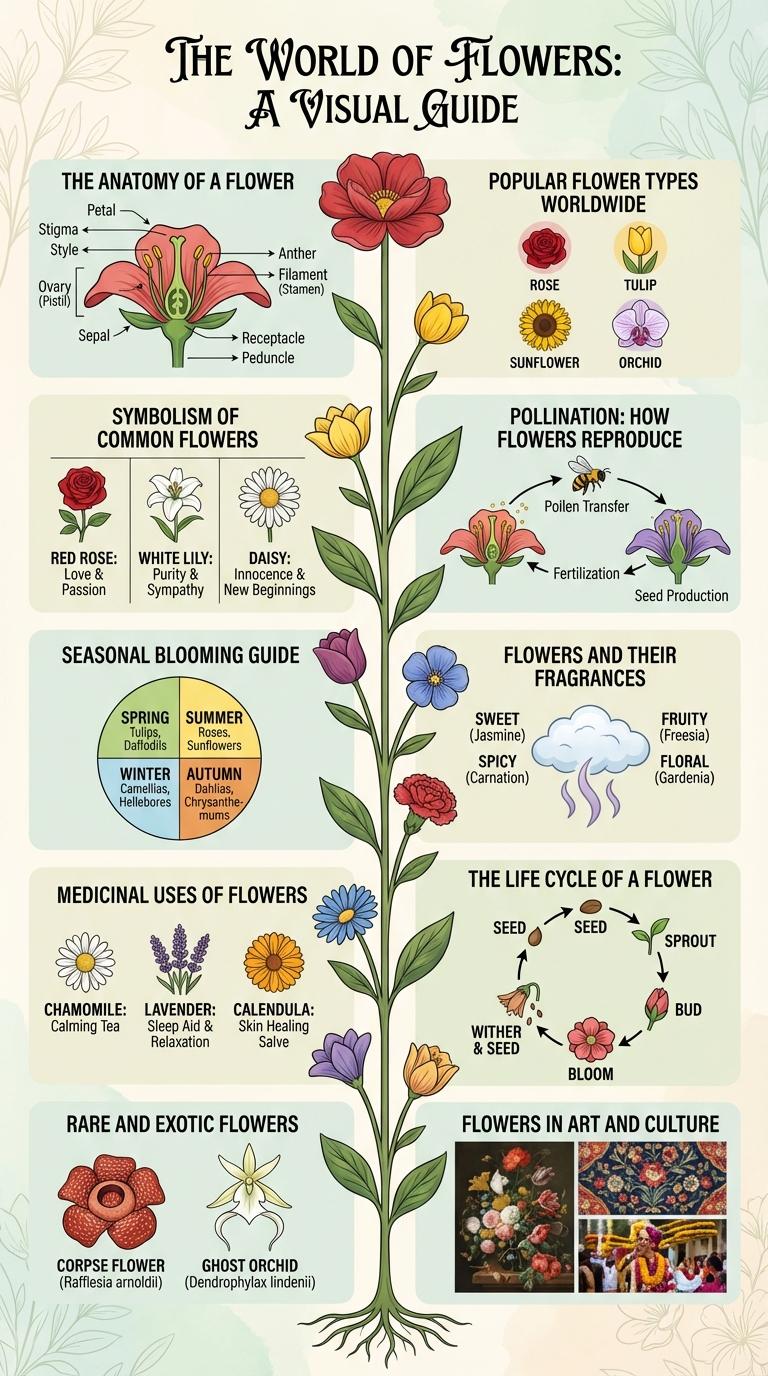
Flowers symbolize beauty and nature, captivating with their vibrant colors and intricate shapes. Infographics present detailed information about flower types, blooming seasons, and their ecological roles in a visually engaging format. This approach helps viewers quickly grasp key facts and appreciate the diversity found within the floral world.
The Anatomy of a Flower
| Flower Part | Description |
|---|---|
| Petal | Brightly colored structures that attract pollinators like bees and butterflies. |
| Sepal | Protective leaf-like parts that enclose the flower bud before it blooms. |
| Stamen | Male reproductive organ consisting of anther and filament; produces pollen. |
| Pistil | Female reproductive part containing the stigma, style, and ovary; site of fertilization. |
| Ovule | Located inside the ovary; develops into seeds after fertilization. |
Popular Flower Types Worldwide
Flowers are celebrated globally for their beauty and symbolic meanings. Different types of flowers dominate gardens and floral arrangements worldwide.
- Rose - Known for its classic beauty and fragrance, the rose symbolizes love and passion in many cultures.
- Tulip - Tulips are popular for their vibrant colors and simple shapes, especially prominent in spring gardens.
- Orchid - Orchids represent luxury and elegance, with a wide variety of species thriving in tropical regions.
Symbolism of Common Flowers
Flowers carry rich symbolism that varies across cultures and occasions. Understanding the meanings behind common flowers enhances their significance in gifts and decorations.
Roses symbolize love and passion, with red roses representing deep romance and yellow roses conveying friendship. Lilies stand for purity and renewal, often used in weddings and funerals to signify new beginnings or remembrance.
Pollination: How Flowers Reproduce
Flowers play a critical role in plant reproduction through pollination, which enables the transfer of pollen to fertilize ovules. This natural process ensures the production of seeds for the next generation of plants.
- Pollen Production - Flowers produce pollen grains containing male gametes essential for fertilization.
- Pollinator Attraction - Bright colors and scents attract insects, birds, or wind that carry pollen between flowers.
- Fertilization Process - Pollen reaches the stigma of a flower, allowing fertilization and subsequent seed formation.
Effective pollination is vital for biodiversity, agricultural productivity, and ecosystem health.
Seasonal Blooming Guide
Flowers bloom in different seasons, each offering unique colors and fragrances that brighten gardens year-round. Understanding the seasonal blooming guide helps gardeners select the right flowers for continuous beauty throughout the year.
Spring features tulips, daffodils, and cherry blossoms, known for their vibrant and fresh appearance. Summer showcases sunflowers, roses, and lavender, providing warmth and rich aromas to outdoor spaces.
Flowers and Their Fragrances
Flowers captivate the senses with their vibrant colors and enchanting fragrances. Each bloom emits a unique scent that plays a crucial role in attracting pollinators and enhancing human experiences.
Floral fragrances arise from complex mixtures of volatile organic compounds such as terpenes, esters, and phenylpropanoids. Roses are renowned for their rich, sweet aroma, while jasmine offers an intense, exotic scent. These fragrances influence emotions and are widely used in perfumery and aromatherapy.
Medicinal Uses of Flowers
Flowers have been used in traditional medicine for centuries, offering natural remedies for various ailments. Calendula is known for its anti-inflammatory and wound-healing properties, while chamomile aids in relaxation and digestive health. Lavender is widely used to reduce anxiety and improve sleep quality through its calming effects.
The Life Cycle of a Flower
What stages make up the life cycle of a flower? The life cycle of a flower includes seed germination, growth, blooming, pollination, and seed dispersal. Each stage is essential for the plant's reproduction and survival.
| Stage | Description |
|---|---|
| Seed Germination | The seed absorbs water and nutrients, beginning to sprout roots and shoots. |
| Growth | The plant develops leaves and stems, preparing for flowering. |
| Blooming | Flower buds open, displaying petals to attract pollinators. |
| Pollination | Pollen transfer occurs between flowers, enabling fertilization. |
| Seed Dispersal | Seeds are spread to new locations, continuing the cycle. |
Rare and Exotic Flowers
Rare and exotic flowers captivate with their unique beauty and scarcity. These blooms often thrive in specific climates and carry fascinating histories.
- Middlemist Red - One of the rarest flowers globally, originally from China and now found in only two locations worldwide.
- Ghost Orchid - A mysterious flower native to Florida swamps, known for its ethereal appearance and elusive nature.
- Youtan Poluo - A tiny flower said to bloom once every 3,000 years, shrouded in myth and scientific curiosity.