
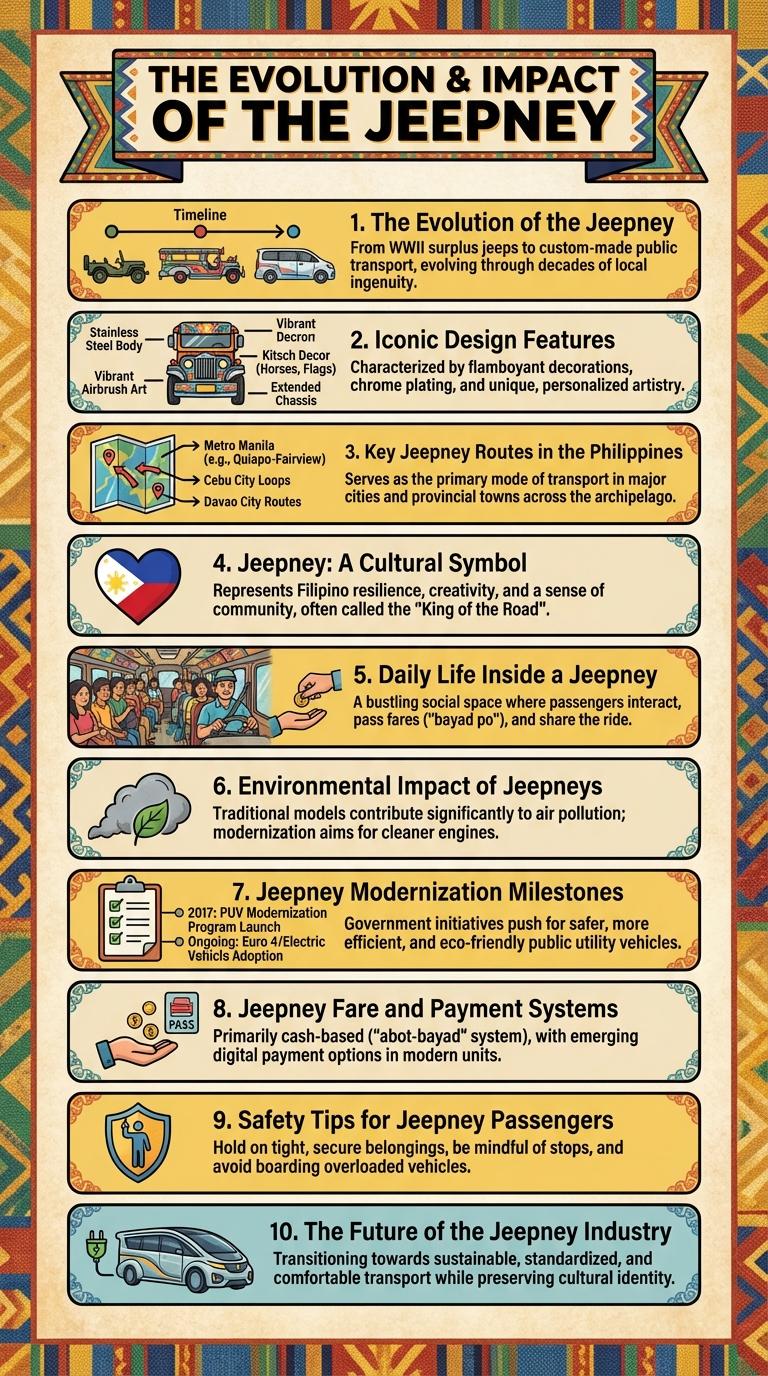
Jeepneys represent a vibrant symbol of Filipino culture and ingenuity, blending colorful design with practical transportation. Known for their unique art and crowded seating, these vehicles serve as an essential mode of public transit in the Philippines. Infographics about jeepneys reveal fascinating insights into their history, design, and social impact.
The Evolution of the Jeepney
The jeepney is a popular mode of public transportation in the Philippines, known for its vibrant designs and cultural significance. It originated from surplus military jeeps left by the United States after World War II.
Initially, jeepneys were modified to carry more passengers by extending their bodies and adding roofs. Over time, they evolved to include modern features such as improved engines, better seating, and environmental upgrades to reduce emissions.
Iconic Design Features
The jeepney is a symbol of Filipino culture, known for its vibrant colors and unique design. Its construction blends art and utility, making it an iconic mode of transportation across the Philippines.
- Distinctive Front Grill - The chrome-plated grill often features elaborate patterns and reflects the jeepney's military vehicle origins.
- Colorful Hand-Painted Art - Bright, intricate designs and religious motifs decorate the exterior, showcasing local creativity.
- Extended Roof and Open Windows - The roof is elongated to accommodate more passengers while open windows provide ventilation during tropical weather.
Key Jeepney Routes in the Philippines
The jeepney is a popular mode of public transportation in the Philippines, known for its colorful decorations and affordability. Key jeepney routes include EDSA in Metro Manila, which connects major business districts and residential areas. Other important routes run between Cubao to Quiapo, Pasay to Taft Avenue, and along Roxas Boulevard, facilitating daily commutes across the city.
Jeepney: A Cultural Symbol
The jeepney is a popular mode of public transportation in the Philippines, known for its vibrant and colorful designs. It originated from modified military jeeps left by the Americans after World War II.
Jeepneys have become a cultural symbol representing Filipino creativity, resilience, and community spirit. They are often decorated with unique artwork, religious symbols, and witty slogans, reflecting local culture and identity.
Daily Life Inside a Jeepney
Daily life inside a jeepney captures the vibrant atmosphere of Filipino public transportation. Passengers engage in conversations, listen to music, and navigate tight spaces while sharing rides. The jeepney remains a cultural icon, reflecting community bonding and urban mobility.
Environmental Impact of Jeepneys
Jeepneys are a popular mode of public transportation in the Philippines, known for their unique design and cultural significance. However, their environmental impact is a growing concern due to emissions and fuel efficiency issues.
- High Emissions - Traditional jeepneys use diesel engines that release significant amounts of carbon monoxide, nitrogen oxides, and particulate matter.
- Fuel Inefficiency - Older jeepneys often have outdated engines that consume more fuel compared to modern vehicles, increasing their carbon footprint.
- Urban Air Pollution - Concentrated jeepney traffic contributes to poor air quality in metropolitan areas, worsening public health.
Efforts to modernize jeepneys with electric or cleaner alternative fuel technologies aim to reduce their negative environmental effects.
Jeepney Modernization Milestones
The jeepney, an iconic Philippine public transport vehicle, has undergone significant modernization to improve safety, efficiency, and environmental impact. Key milestones in its evolution reflect government initiatives and technological advancements.
- Introduction of Euro 4 Engines - Upgrading jeepneys with Euro 4-compliant engines reduces harmful emissions and aligns with global environmental standards.
- Electric Jeepney Deployment - Pilot programs launched several electric jeepneys to promote sustainable urban transport and decrease reliance on fossil fuels.
- Government Incentive Programs - Financial subsidies and assistance schemes encourage operators to replace old vehicles with modern, safer jeepneys.
Jeepney Fare and Payment Systems
Jeepneys are a popular mode of public transportation in the Philippines, known for their colorful designs and accessibility. They serve millions of commuters daily, making fare systems essential for efficient operation.
The standard jeepney fare varies based on distance, with a basic rate usually starting at 12 PHP. Passengers can pay using traditional cash or through modern reloadable contactless cards, such as Beep and GCash RFID. These electronic payment systems streamline boarding, reduce cash handling, and help jeepney operators manage revenue effectively.
Safety Tips for Jeepney Passengers
How can jeepney passengers ensure their safety during rides? Passengers should hold onto handrails firmly while standing and avoid overcrowding to prevent accidents. Staying alert and keeping personal belongings secure helps maintain safety throughout the journey.