
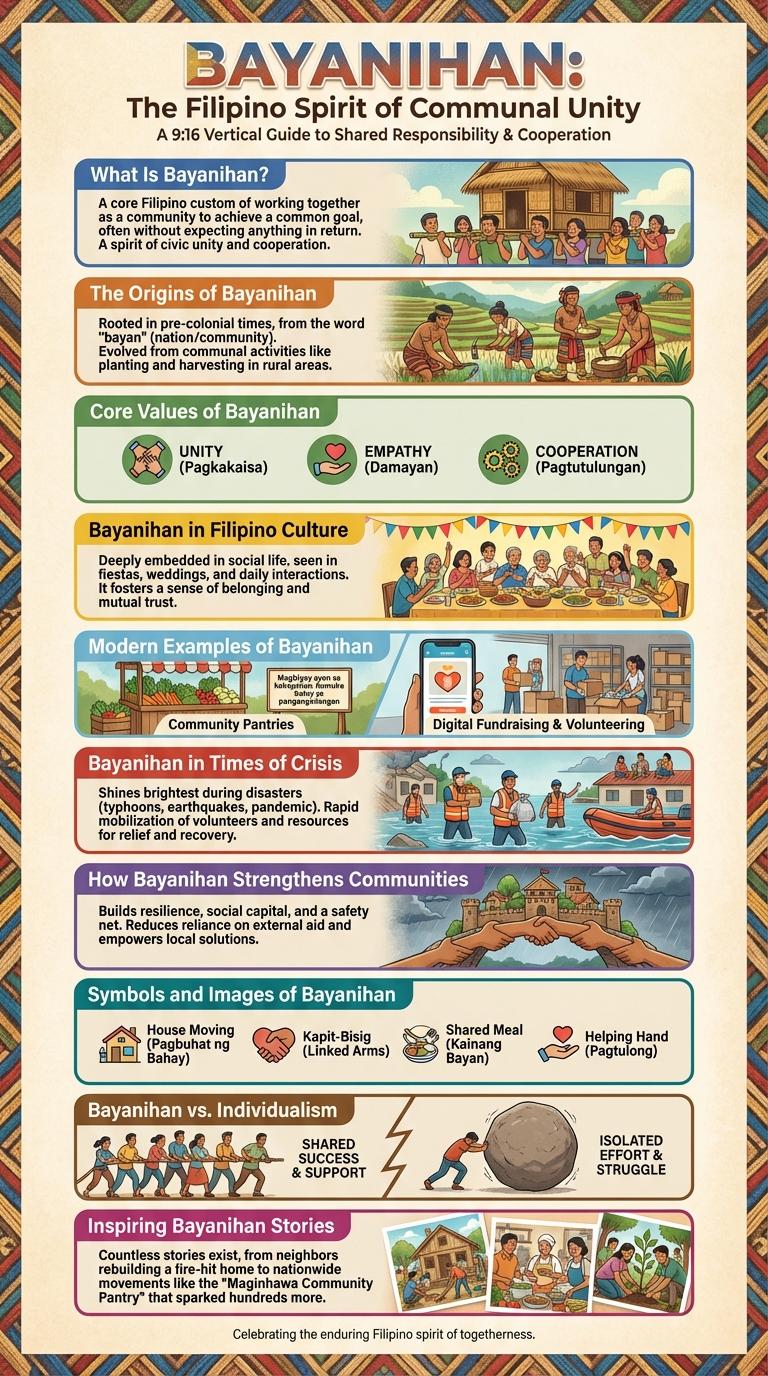
Bayanihan embodies the Filipino spirit of communal unity and cooperation, often illustrated through vibrant visuals in infographics. This concept highlights how communities come together to achieve common goals, emphasizing shared responsibility and mutual support. Infographics effectively capture these cultural values by presenting key elements and real-life examples of bayanihan in action.
What Is Bayanihan?
Bayanihan is a traditional Filipino value emphasizing communal unity and cooperation. It represents the spirit of helping one another in times of need without expecting anything in return.
- Community Support - Bayanihan highlights the importance of collective effort to achieve common goals.
- Mutual Aid - It involves neighbors assisting each other during challenges or celebrations.
- Cultural Symbol - Often depicted by the image of people carrying a house together, symbolizing teamwork and solidarity.
The Origins of Bayanihan
Bayanihan is a traditional Filipino custom rooted in communal unity and cooperation. It symbolizes neighbors helping each other, especially during challenging times.
The origins of Bayanihan trace back to rural Philippines, where villagers would physically carry a family's house to a new location. This act of teamwork highlights the strong community spirit intrinsic to Filipino culture.
Core Values of Bayanihan
Bayanihan is a traditional Filipino value centered on communal unity and cooperation. It emphasizes collective effort to achieve shared goals and support community members in times of need.
- Community Cooperation - People work together harmoniously to accomplish tasks that benefit the entire community.
- Mutual Assistance - Neighbors provide help and resources to one another without expecting immediate returns.
- Solidarity - A strong sense of unity encourages collective responsibility and shared success.
Bayanihan in Filipino Culture
| Aspect | Details |
|---|---|
| Definition | Bayanihan is a Filipino cultural value emphasizing communal unity, cooperation, and helping one another. |
| Origin | The term comes from "bayan," meaning town or community, symbolizing collective effort in Filipino society. |
| Cultural Practice | Traditionally involves neighbors assisting in moving a house by lifting it on bamboo poles, representing teamwork. |
| Modern Significance | Bayanihan extends to community programs, disaster relief efforts, and mutual aid during crises in the Philippines. |
| Symbolism | Represents the Filipino spirit of solidarity, empathy, and collective action for the common good. |
Modern Examples of Bayanihan
Bayanihan is a Filipino tradition of communal unity and cooperation that continues to thrive in modern times. Contemporary examples include community disaster response teams, neighborhood clean-up drives, and volunteer groups supporting healthcare workers during pandemics. These initiatives highlight the enduring spirit of bayanihan, fostering collaboration and mutual aid among Filipinos today.
Bayanihan in Times of Crisis
Bayanihan is a traditional Filipino value emphasizing community cooperation and mutual support during challenging times. It manifests vividly in times of crisis, where neighbors unite to provide aid, share resources, and rebuild communities. This spirit of collective resilience strengthens social bonds and accelerates recovery from disasters.
How Bayanihan Strengthens Communities
Bayanihan is a Filipino tradition of communal unity and cooperation. This cultural practice strengthens social bonds and fosters a spirit of mutual aid among community members.
By working together to achieve common goals, neighbors build trust and resilience. Bayanihan encourages shared responsibility, making communities more supportive and adaptable in times of need. This collective effort enhances social cohesion and empowers individuals to contribute actively to communal well-being.
Symbols and Images of Bayanihan
Bayanihan is a traditional Filipino value symbolizing community spirit and cooperation. It is often represented through imagery of people working together to achieve a common goal.
One of the most iconic symbols of Bayanihan is the image of villagers carrying a nipa hut, showcasing teamwork and mutual support. Other common symbols include intertwined hands and communal farming scenes, reflecting unity and collective effort.
Bayanihan vs. Individualism
Bayanihan represents communal unity and cooperation in Filipino culture, emphasizing collective effort for common good. Individualism highlights personal independence and self-reliance, focusing on individual goals and achievements.
- Bayanihan - Encourages community members to help each other in tasks like moving homes or disaster recovery.
- Individualism - Promotes autonomy and personal responsibility in decision-making and problem-solving.
- Community Impact - Bayanihan fosters social cohesion and mutual support, whereas individualism can lead to isolated efforts and competition.
Understanding these contrasting values helps balance societal progress with cultural heritage in the Philippines.