
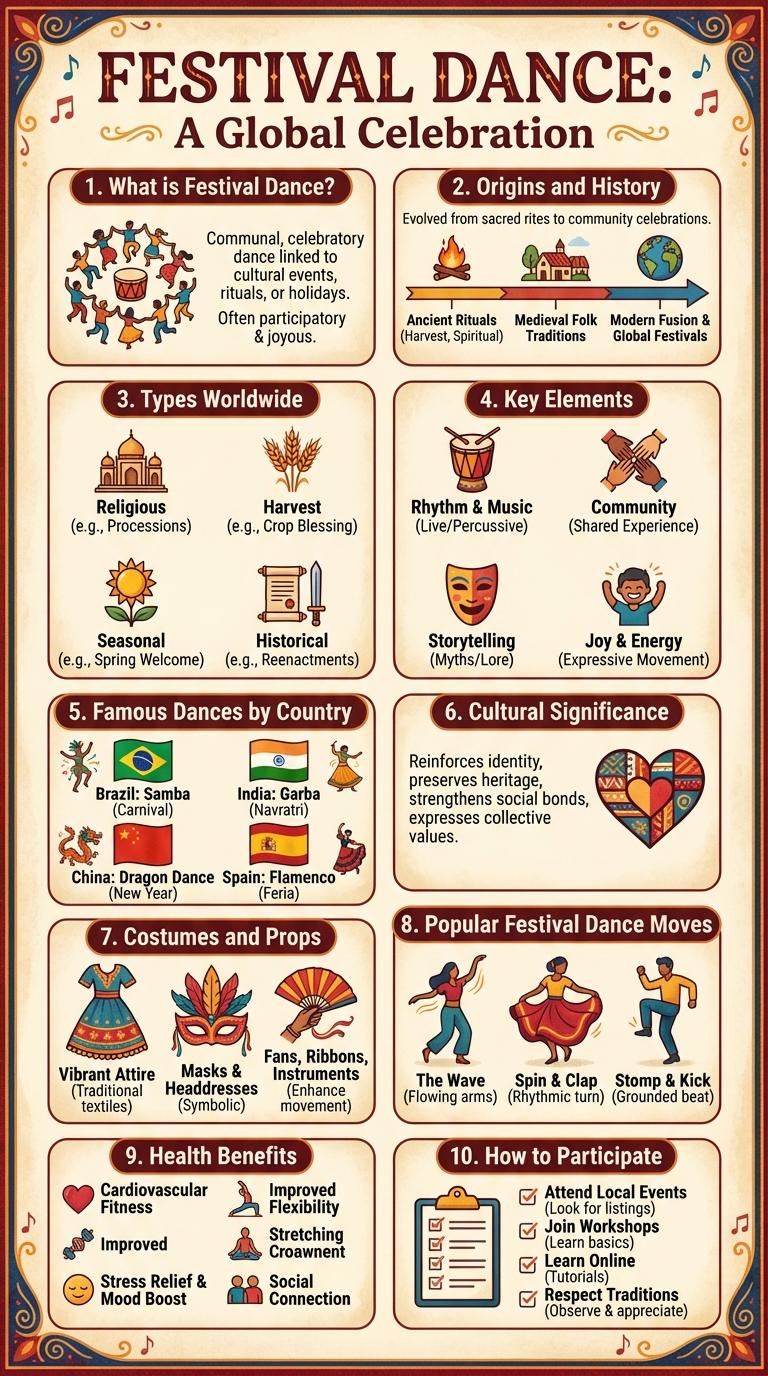
Festival dance embodies vibrant cultural expressions through rhythmic movements and colorful costumes. These dances showcase traditions passed down through generations, uniting communities in celebration. Infographics visually highlight the diversity and significance of festival dance worldwide.
What is Festival Dance?
Festival dance is a vibrant form of traditional or contemporary dance performed during cultural, religious, or seasonal festivals. These dances often represent the unique heritage, history, and values of the community celebrating the event. Festival dances engage participants and audiences in a shared expression of joy, spirituality, and social connection.
Origins and History of Festival Dances
Festival dances are deeply rooted in cultural traditions that date back centuries. These dances often celebrate significant historical events, religious ceremonies, and seasonal changes.
- Ancient Rituals - Many festival dances originated as rituals to honor deities and ensure bountiful harvests.
- Community Bonding - Festival dances historically strengthened social ties and reinforced cultural identity within communities.
- Storytelling - Traditional festival dances frequently narrate myths, legends, and historical tales through expressive movements.
Understanding the origins and history of festival dances reveals their role in preserving cultural heritage and fostering unity.
Types of Festival Dances Worldwide
Festival dances are vibrant cultural expressions performed during celebrations around the world. These dances often showcase traditional costumes, music, and storytelling unique to each region. They play a vital role in preserving heritage and fostering community spirit.
| Type of Festival Dance | Region |
|---|---|
| Samba | Brazil |
| Masquerade Dance | Africa |
| Hula | Hawaii |
| Morris Dance | England |
| Garba | India |
Key Elements of Festival Dance
Festival dance is a vibrant expression of culture, tradition, and community spirit. These dances often combine music, costume, and storytelling to create a memorable celebration.
- Rhythm and Music - Festival dances are typically performed to traditional rhythms and live or recorded music that reflects the cultural heritage of the community.
- Costumes and Attire - Participants wear colorful and symbolic costumes that represent cultural identity and enhance the visual impact of the dance.
- Choreography and Movements - The dance steps and formations tell stories or celebrate important events, often passed down through generations to preserve cultural narratives.
Famous Festival Dances by Country
Festival dances are vibrant expressions of cultural heritage celebrated worldwide. Each country's unique traditions come alive through these colorful, rhythmic performances.
Famous festival dances showcase distinct movements, costumes, and music that reflect the history and values of their regions. These dances play a crucial role in preserving cultural identity during festivities.
Cultural Significance of Festival Dances
What makes festival dances culturally significant? Festival dances embody the traditions and history of a community, serving as a living expression of cultural identity. They preserve ancestral stories and foster social cohesion among participants.
How do festival dances influence cultural heritage? These dances act as vessels for passing down rituals and customs from generation to generation. They reinforce shared values and celebrate unique cultural diversity across regions.
Which elements highlight the cultural importance of festival dances? Costumes, music, and choreography reflect the distinct artistic styles linked to specific cultures. Each movement and symbol carries deep meaning rooted in spiritual beliefs or historical events.
Why are community participation and festival dances connected? Engaging in festival dances strengthens bonds within communities by encouraging collective celebration. This active involvement helps maintain cultural continuity and intergenerational learning.
How do festival dances impact cultural tourism? Festival dances attract visitors interested in authentic cultural experiences, boosting local economies. The global exposure supports cultural preservation by increasing awareness and appreciation.
Costumes and Props in Festival Dances
Festival dances showcase vibrant costumes and distinctive props that enhance the visual storytelling. These elements reflect cultural heritage and regional identity through intricate designs and symbolic accessories.
- Costume Materials - Festival dance costumes often use materials like silk, cotton, and beads to create rich textures and vivid colors.
- Symbolic Colors - Colors in festival costumes hold specific meanings, such as red for energy or white for purity, highlighting cultural symbolism.
- Traditional Props - Props like fans, drums, and masks are integral to festival dances, adding rhythm and narrative depth to the performance.
Popular Festival Dance Moves
| Dance Move | Description |
|---|---|
| Shuffle | Fast heel-and-toe movement creating a smooth gliding effect, common in electronic dance festivals. |
| Dougie | Loose shoulder and arm motion paired with a lateral step, popular in hip-hop themed festivals. |
| Moonwalk | Backward sliding foot movement giving the illusion of walking backward, iconic in pop and street dance events. |
| Flamenco Steps | Staccato footwork combined with rhythmic hand claps, traditional in Spanish cultural festivals. |
| Salsa Basic Step | Core forward and backward stepping pattern, foundational in Latin dance festivals worldwide. |
Health Benefits of Festival Dance
Festival dance offers a vibrant way to enhance physical fitness and emotional well-being. Engaging in rhythmic movements during festivals boosts cardiovascular health and reduces stress.
Dancing at festivals improves flexibility, muscle strength, and coordination. This activity also releases endorphins, which elevate mood and combat anxiety. Regular participation supports social connections, fostering a sense of community and belonging.