
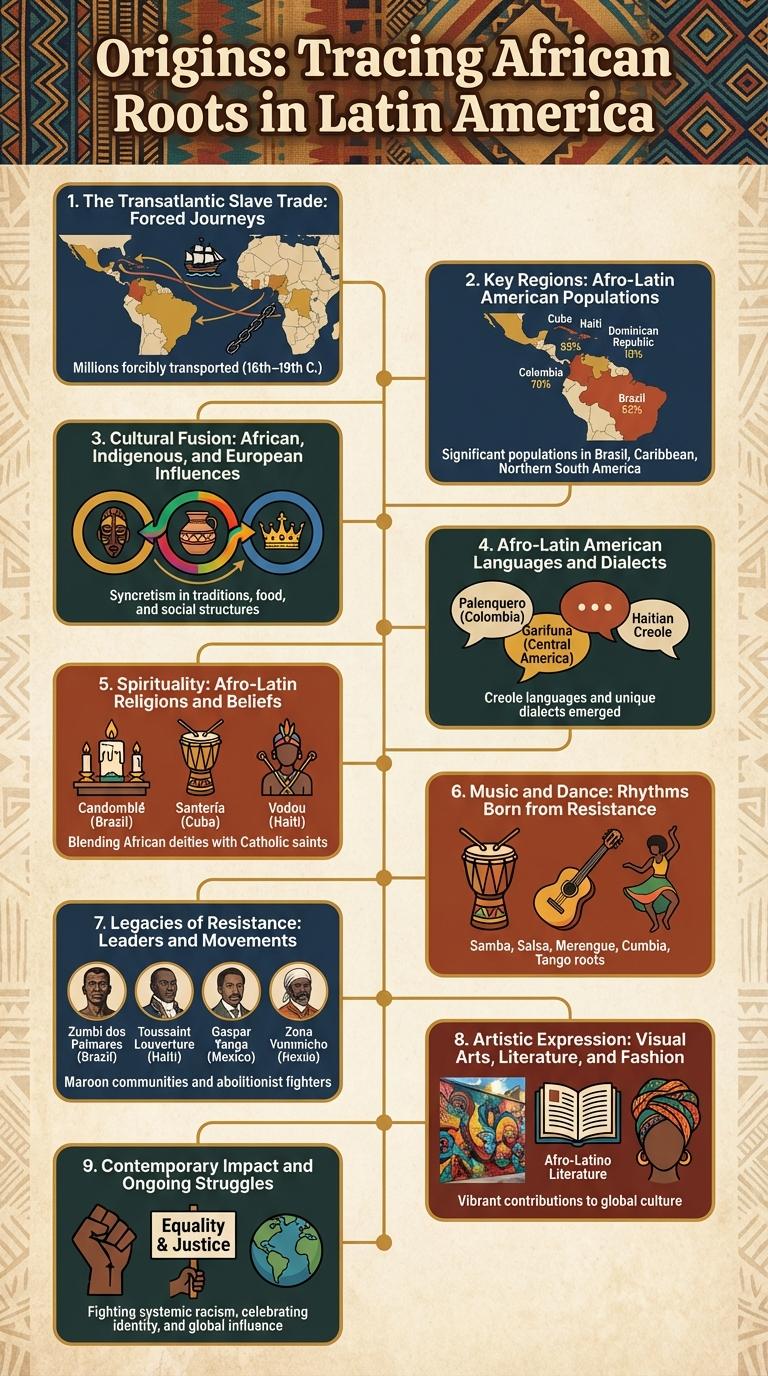
Afro-Latin American culture reflects a rich blend of African, Indigenous, and European influences shaped by centuries of history. The infographic highlights key events, traditions, and contributions that define this vibrant community's identity. Understanding this heritage fosters greater appreciation for its impact on Latin America's social and cultural landscape.
Origins: Tracing African Roots in Latin America
The cultural and historical background of Afro-Latin Americans originates from the forced migration of millions of Africans during the transatlantic slave trade between the 16th and 19th centuries. These individuals were brought primarily to countries such as Brazil, Colombia, Cuba, and the Dominican Republic, shaping the demographic and cultural landscape of Latin America.
African roots are evident in Afro-Latin American languages, music, religion, and cuisine, reflecting a blend of African traditions with Indigenous and European influences. Understanding these origins highlights the resilience and rich heritage of Afro-Latin communities across Latin America.
The Transatlantic Slave Trade: Forced Journeys
The Transatlantic Slave Trade was a brutal chapter in Afro Latin American history, involving the forced migration of millions. This trade profoundly shaped the cultural and demographic landscape of Latin America.
The journey was marked by extreme suffering, high mortality rates, and resilience among the enslaved Africans.
- Origin of the Captives - Enslaved Africans were primarily taken from West and Central Africa to work in plantations and mines across Latin America.
- The Middle Passage - This horrific sea voyage subjected captives to overcrowded, inhumane conditions leading to the deaths of many.
- Cultural Impact - Enslaved Africans brought diverse languages, religions, and traditions that influenced Afro Latin American culture.
Key Regions: Afro-Latin American Populations
Afro-Latin American populations are primarily concentrated in regions such as Brazil, Colombia, and the Caribbean, reflecting a rich blend of African, Indigenous, and European cultures. These communities have shaped the cultural and historical landscape of Latin America through centuries of resilience and creativity.
Brazil holds the largest Afro-Latin American population, particularly in states like Bahia and Rio de Janeiro, known for vibrant traditions like samba and Candomble religion. Colombia's Afro-descendant communities are mainly found along the Pacific coast, contributing significantly to music genres like currulao and cultural festivals. The Caribbean nations, particularly Cuba, the Dominican Republic, and Puerto Rico, showcase Afro-Latin heritage through cuisine, dance, and spiritual practices linked to African roots.
Cultural Fusion: African, Indigenous, and European Influences
What defines the cultural fusion of Afro Latin American communities? Afro Latin American culture is a rich blend of African, Indigenous, and European influences. This fusion is evident in music, dance, language, and religious practices unique to the region.
How did African traditions influence Afro Latin American culture? Enslaved Africans brought diverse customs that merged with local cultures, creating vibrant expressions like cumbia and samba. Their heritage is central to the identity and resilience of Afro Latin American societies.
In what ways do Indigenous cultures contribute to this cultural blend? Indigenous peoples introduced agricultural techniques, traditional knowledge, and spiritual customs. These elements combined with African and European practices to shape Afro Latin American cultural landscapes.
What role did European colonization play in shaping Afro Latin American identity? European powers imposed languages, religion, and political structures, impacting cultural expression. The resulting hybrid culture reflects resilience and adaptation amid colonial histories.
Why is understanding this cultural fusion important today? Recognizing the intertwined histories enhances appreciation for Afro Latin American contributions. It promotes cultural pride and supports efforts toward social inclusion and historical justice.
Afro-Latin American Languages and Dialects
Afro-Latin American languages and dialects reflect a rich fusion of African, Indigenous, and European linguistic influences. These languages emerged from the historical experiences of enslaved Africans who brought their native tongues to Latin America.
Palenquero, spoken in Colombia, blends Spanish with Kikongo and other African languages, showcasing unique phonetic and grammatical traits. Similarly, Garifuna, found in Honduras, Belize, and Guatemala, combines Arawak, Carib, French, and African elements, preserving the cultural heritage of Afro-indigenous communities.
Spirituality: Afro-Latin Religions and Beliefs
Afro-Latin American spirituality reflects a profound fusion of African, Indigenous, and European religious traditions. These syncretic beliefs have shaped cultural identity and social practices across Latin America.
- Candomble - An Afro-Brazilian religion that blends Yoruba spiritual practices with Catholic elements, centered on orixas (deities) representing natural forces.
- Santeria - Originating in Cuba, this faith merges Yoruba beliefs with Roman Catholicism, venerating saints as manifestations of African gods called orishas.
- Palo Monte - Rooted in Central African Kongo traditions, it emphasizes ancestor worship, ritual magic, and communication with spirits through sacred objects.
These religions illustrate resilience and adaptation, maintaining African heritage while integrating into Latin American cultural landscapes.
Music and Dance: Rhythms Born from Resistance
The cultural and historical background of Afro Latin American communities is deeply rooted in resilience and creativity, with music and dance serving as powerful expressions of identity. Rhythms such as salsa, cumbia, and bomba originated from African slaves' resistance against oppression, blending African beats with indigenous and European influences. These art forms continue to symbolize strength, community, and the enduring legacy of Afro Latin American heritage.
Legacies of Resistance: Leaders and Movements
The Afro Latin American community has a rich history of resistance against colonial oppression and systemic racism, led by influential figures and movements. Leaders like Zumbi dos Palmares and movements such as the Quilombo rebellions symbolize the fight for freedom and cultural preservation. These legacies continue to inspire contemporary struggles for social justice and identity within Afro Latin American populations.
Artistic Expression: Visual Arts, Literature, and Fashion
| Cultural & Historical Aspect | Details & Significance |
|---|---|
| Visual Arts | Afro Latin American visual arts reflect African heritage blended with indigenous and European techniques. Notable artists include Wifredo Lam (Cuba), who fused surrealism with Afro-Cuban symbolism. Artistic themes often explore identity, resistance, spirituality, and social justice. |
| Literature | Afro Latin American literature highlights narratives of slavery, race, and cultural pride. Writers such as Nicolas Guillen (Cuba) and Maryse Conde (Guadeloupe) incorporate Afro-descendant folklore, oral traditions, and languages. Literary works emphasize identity, community, and historical memory. |
| Fashion | Fashion among Afro Latin Americans combines African textiles, patterns, and hairstyles with Latin influences. Traditional clothing like the Afro-Brazilian "Baiana" dress symbolizes cultural roots. Modern designers incorporate Afro-centric motifs to celebrate heritage and challenge stereotypes. |