
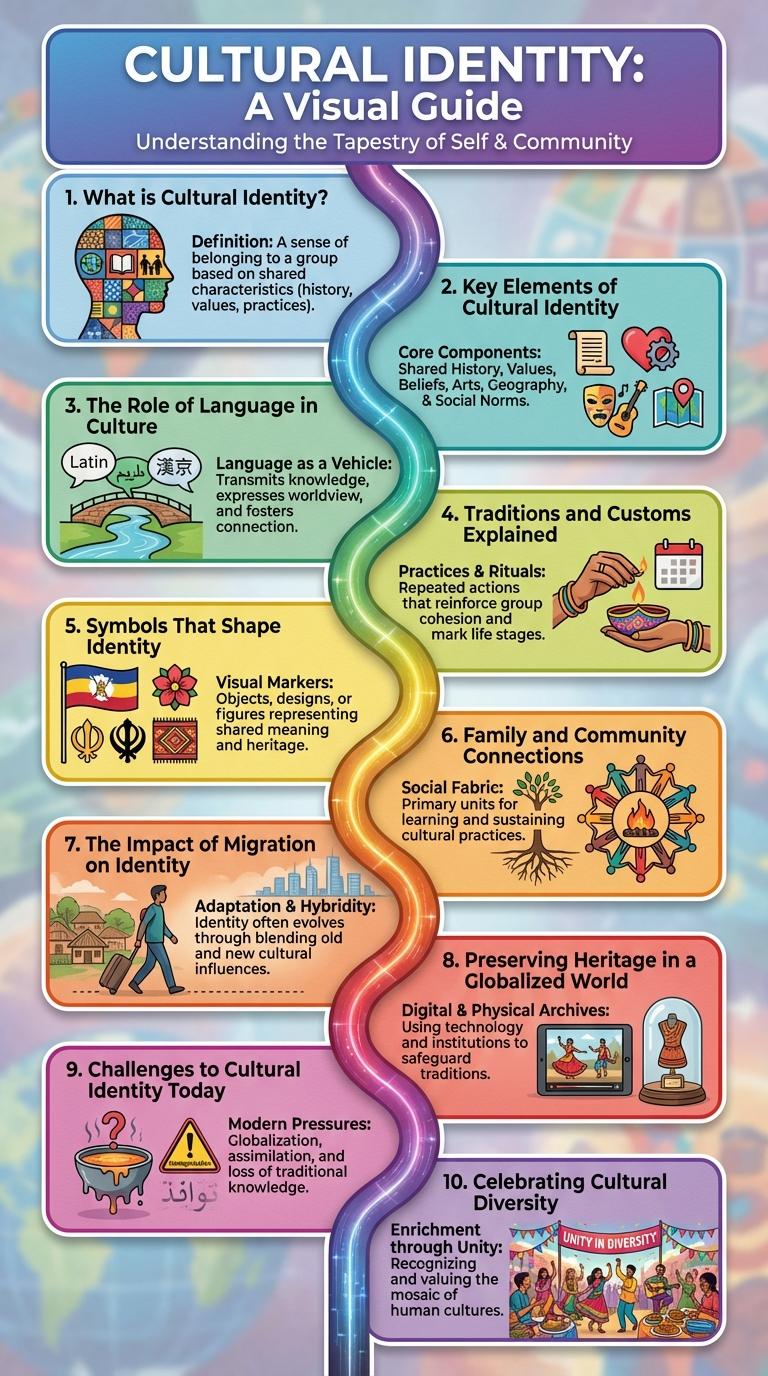
Cultural identity shapes how individuals connect with their heritage, traditions, and values, influencing their sense of belonging. This infographic visually explores key elements such as language, customs, and social norms that define diverse cultural identities. Understanding these components promotes appreciation and respect for multicultural communities worldwide.
What is Cultural Identity?
Cultural identity refers to the shared beliefs, values, customs, and traditions that define a group of people. It shapes an individual's sense of belonging and influences their worldview and behavior.
- Shared heritage - Cultural identity is rooted in the collective history and experiences of a community.
- Language and traditions - These elements play a crucial role in expressing and preserving cultural identity.
- Sense of belonging - Cultural identity fosters connection and unity among members of the same cultural group.
Key Elements of Cultural Identity
Cultural identity shapes how individuals perceive themselves and connect with their heritage. It is reflected through shared values, traditions, and social norms within a community.
- Language - Language serves as a primary tool for communication, preserving cultural stories and expressing identity.
- Traditions - Rituals, festivals, and customs sustain cultural continuity and foster a sense of belonging.
- Beliefs and Values - Core principles and moral codes guide behavior and influence cultural perspectives.
The Role of Language in Culture
Language serves as a key element in shaping cultural identity by reflecting traditions, values, and social norms. It acts as a bridge connecting generations and preserving historical narratives within communities.
The diversity of languages worldwide highlights unique cultural perspectives and worldviews. Through language, individuals express belonging and foster a shared sense of community and heritage.
Traditions and Customs Explained
| Tradition | Description |
|---|---|
| Festivals | Events celebrating heritage, often with music, dance, and food unique to a culture. |
| Ceremonies | Rituals marking important life stages such as birth, marriage, and death. |
| Clothing | Traditional attire symbolizes cultural values, social status, and historical roots. |
| Language | Unique expressions and dialects preserve history and strengthen community bonds. |
| Cuisine | Distinctive dishes reflect geographic, economic, and historical influences of a culture. |
Symbols That Shape Identity
Cultural identity is often expressed through powerful symbols that embody shared values and heritage. These symbols include flags, traditional clothing, religious icons, and language scripts, each reflecting unique stories and histories. Understanding these symbols helps foster respect and appreciation for diverse cultural identities worldwide.
Family and Community Connections
Cultural identity is deeply rooted in family and community connections, shaping values, traditions, and social behaviors. These connections provide a sense of belonging and continuity across generations.
Strong family bonds foster the transmission of languages, customs, and rituals essential to cultural preservation. Community networks support social cohesion and reinforce shared cultural heritage.
The Impact of Migration on Identity
Migration reshapes cultural identity by blending traditions, languages, and customs from diverse backgrounds. Migrants often experience a dynamic identity, balancing heritage with new cultural influences in their host communities. This cultural fusion enriches societies, fostering greater understanding and innovation across cultural boundaries.
Preserving Heritage in a Globalized World
How can cultural identity be preserved in a globalized world?
Preserving cultural heritage involves safeguarding traditions, languages, and customs that define communities. Globalization challenges these identities by blending cultures, but intentional efforts help maintain unique cultural expressions and histories.
Challenges to Cultural Identity Today
Cultural identity faces significant challenges in today's globalized world. Rapid technological advances and migration contribute to complex changes in how individuals connect with their cultural roots.
One major challenge is cultural homogenization, where dominant cultures overshadow smaller or indigenous ones. Language loss threatens the preservation of unique traditions and oral histories. Furthermore, social media platforms can both support and dilute cultural expression, making it harder to maintain authentic cultural narratives.