
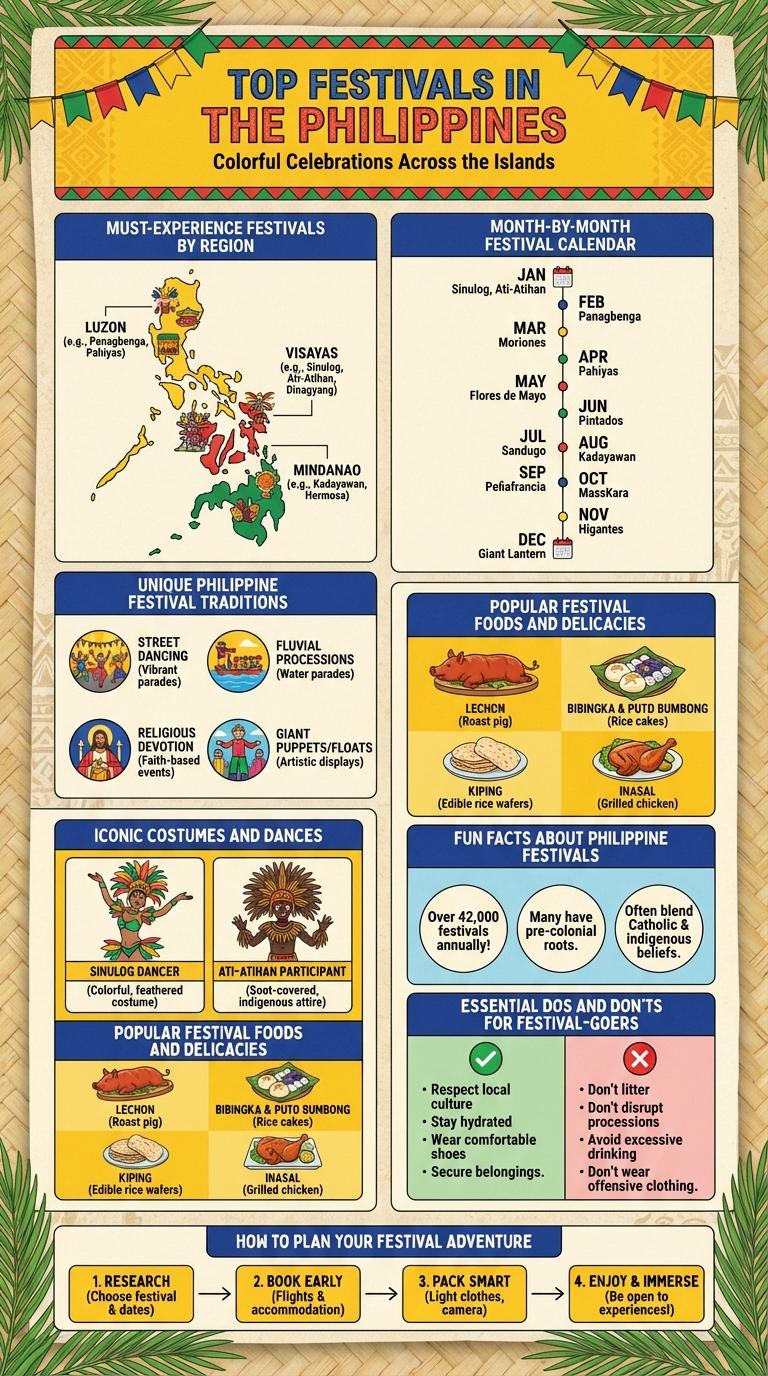
The vibrant festivals in the Philippines showcase rich cultural heritage and colorful traditions celebrated across the archipelago. These lively events feature traditional dances, music, and elaborate costumes that attract both locals and tourists. Infographics effectively capture the essence and key details of these festivals, offering a visual journey through the country's diverse celebrations.
Top Festivals in the Philippines
The Philippines is renowned for its vibrant and colorful festivals that showcase rich cultural heritage. These festivals attract millions of tourists every year, highlighting unique traditions and local craftsmanship.
- Sinulog Festival - Celebrated in Cebu, this festival honors the Santo Nino with street dancing and grand parades every January.
- Ati-Atihan Festival - Known as the "Mother of all Philippine festivals," it features indigenous-inspired costumes and rhythmic drumbeats in Kalibo, Aklan.
- Pahiyas Festival - Held in Lucban, Quezon, it displays vibrant agricultural produce and elaborate decorations to thank the patron saint for a bountiful harvest.
These top festivals demonstrate the Philippines' dynamic cultural identity and festive spirit throughout the year.
Colorful Celebrations Across the Islands
The Philippines is home to vibrant festivals celebrated across its many islands, showcasing rich cultural heritage and traditions. These colorful celebrations draw both locals and tourists, creating lively and festive atmospheres.
Major festivals include the Sinulog Festival in Cebu, renowned for its street dancing and bright costumes, and the Ati-Atihan Festival in Aklan, famous for its tribal music and body paint. The Panagbenga Festival in Baguio features elaborate flower floats and street parades. Each festival highlights unique aspects of Filipino culture through music, dance, and vivid displays.
Must-Experience Festivals by Region
The Philippines boasts a vibrant array of festivals celebrated across its regions, each reflecting unique cultural heritage and traditions. Must-experience festivals highlight the rich diversity and colorful festivities that attract both locals and tourists.
In Luzon, the Panagbenga Festival in Baguio offers a stunning floral parade showcasing the region's blooms. Meanwhile, the Pahiyas Festival in Lucban celebrates a bountiful harvest with houses decorated in colorful rice wafers and fruits.
Visayas region features the Sinulog Festival in Cebu, famous for its grand street dancing honoring the Santo Nino. The Dinagyang Festival in Iloilo features tribal dance rituals that emphasize the rich indigenous heritage.
Mindanao shines with the Kadayawan Festival in Davao, a thanksgiving celebration for nature's gifts, featuring tribal performances and floral floats. The Kaamulan Festival in Bukidnon celebrates indigenous culture with traditional music, dance, and rituals unique to the region.
Month-by-Month Festival Calendar
The Philippines boasts a vibrant array of festivals celebrated throughout the year, reflecting its rich cultural heritage. Each month offers unique festivities, from the colorful Ati-Atihan in January to the lively MassKara Festival in October. These events showcase traditional music, dance, and local customs, drawing visitors nationwide and globally.
| Month | Festival |
|---|---|
| January | Ati-Atihan Festival |
| February | Panagbenga Festival |
| April | Moriones Festival |
| June | Dinagyang Festival |
| October | MassKara Festival |
Unique Philippine Festival Traditions
| Festival Name | Unique Tradition |
|---|---|
| Ati-Atihan Festival | Participants paint their faces with black soot and wear indigenous costumes to honor the Santo Nino and celebrate tribal history. |
| Sinulog Festival | Rhythmic drumbeats and vibrant street dancing commemorate the Filipino's acceptance of Christianity through devotion to the Santo Nino. |
| Pahiyas Festival | Farmers decorate houses with colorful kiping (rice wafers) and agricultural produce to thank the patron saint for a bountiful harvest. |
| Kadayawan Festival | A celebration of indigenous culture featuring floral floats, traditional attire, and rituals that honor nature and the tribal people's resilience. |
| Panagbenga Festival | Flower-filled floats and street dancing represent Baguio City's blooming heritage and promote community creativity and unity. |
Iconic Costumes and Dances
The Philippines is renowned for its vibrant festivals showcasing iconic costumes and traditional dances. These cultural expressions highlight the rich heritage and artistic creativity of Filipino communities.
- Ati-Atihan Festival Costumes - Participants wear elaborate indigenous-inspired outfits adorned with tribal patterns and bright colors.
- Sinulog Dance - This dance features rhythmic movements that honor the Santo Nino, combining native and Spanish influences.
- Binanog Dance Costumes - Performers don bird-like feathers and accessories to mimic the movements of the hawk, native to Mindanao.
Popular Festival Foods and Delicacies
Festivals in the Philippines showcase a vibrant array of popular foods and delicacies enjoyed by locals and tourists alike. These culinary treats highlight regional flavors and cultural traditions during festive celebrations.
- Lechon - A roasted whole pig with crispy skin, commonly served at major festivals, symbolizing celebration and abundance.
- Puto and Kutsinta - Traditional steamed rice cakes often paired and enjoyed as sweet snacks during festival gatherings.
- Bibingka - A baked rice cake made with coconut milk and topped with salted egg, popular during Christmas festivals like the Simbang Gabi.
- Halo-Halo - A colorful mixed dessert with shaved ice, sweet beans, fruits, and leche flan, perfect for cooling down during vibrant summer festivals.
- Balut - A fertilized duck embryo boiled and eaten as street food delicacy, frequently featured in culturally rich festival celebrations.
Fun Facts About Philippine Festivals
What makes Philippine festivals unique around the world? Philippine festivals showcase vibrant cultural traditions that blend indigenous, Spanish, and modern influences. These events often feature colorful costumes, lively music, and large street parades that attract millions of visitors annually.
How many festivals occur in the Philippines each year? The country celebrates over 42,000 festivals, reflecting its rich diversity and local customs. Each region highlights its history, religion, or harvest season with distinct festivities.
Which is the most famous festival in the Philippines? The Sinulog Festival in Cebu is one of the most renowned, honoring the Santo Nino with a grand street dance festival. This event draws international tourists and features a mix of religious devotion and festive celebrations.
What are unique features of Philippine festivals? Many festivals include traditional rituals, elaborate decorations, and community participation that strengthen local identity. Some incorporate competitions involving dance, music, and colorful floats.
How do festivals impact the Philippine economy? Festivals boost tourism, supporting local businesses and artisans. They generate significant income through accommodations, food, souvenirs, and cultural shows, benefiting rural and urban areas alike.
Essential Dos and Don'ts for Festival-Goers
Attending festivals in the Philippines offers a vibrant glimpse into local culture and traditions. Essential dos include respecting local customs, dressing comfortably for the weather, and staying hydrated throughout the event. Avoid littering, disregarding safety guidelines, and interrupting religious or cultural rituals to ensure a respectful and enjoyable experience.