
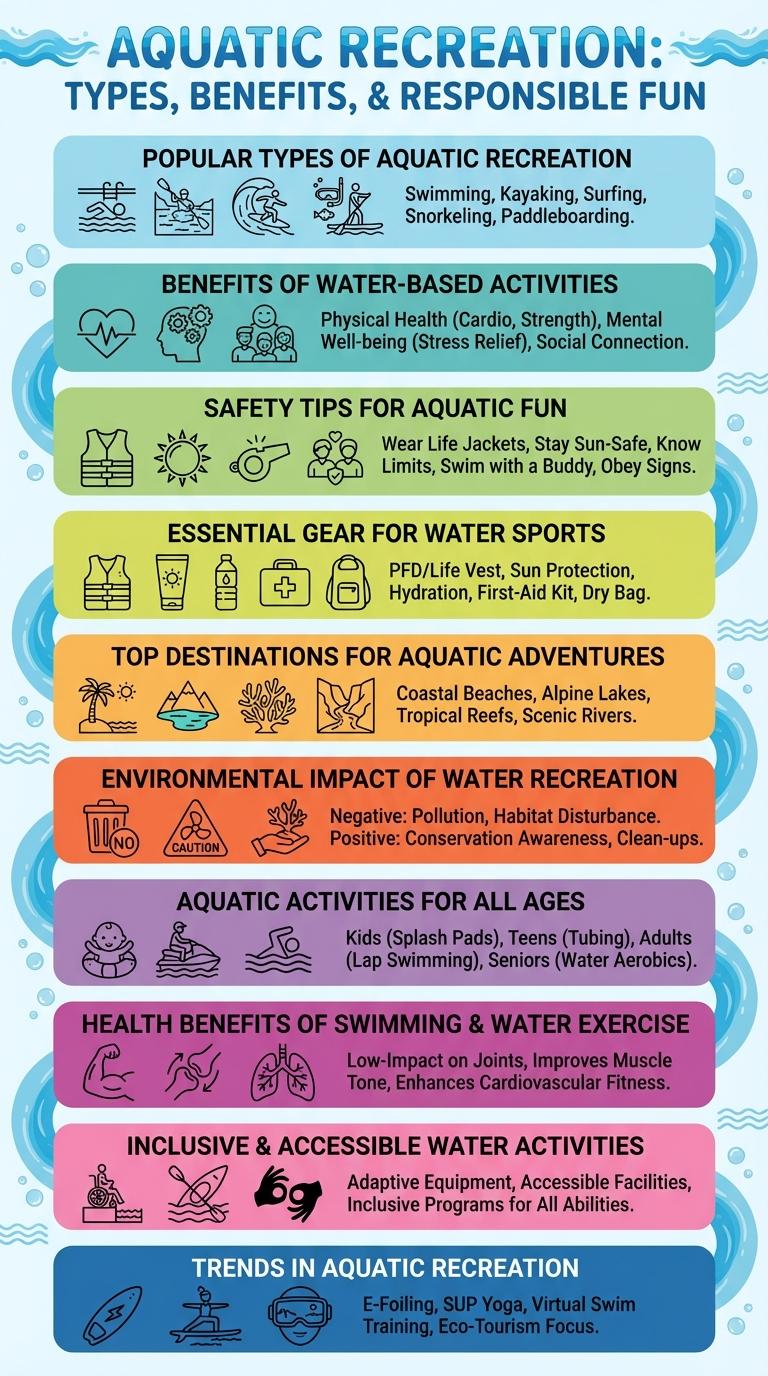
Aquatic recreational activities offer thrilling ways to enjoy water environments, from kayaking and paddleboarding to snorkeling and jet skiing. These activities promote physical fitness, relaxation, and a closer connection to nature. Exploring various water sports through an infographic highlights their unique benefits and essential safety tips.
Popular Types of Aquatic Recreation
Aquatic recreational activities offer a diverse range of experiences for enthusiasts of all ages. Popular types include swimming, kayaking, snorkeling, paddleboarding, and scuba diving. These activities provide opportunities for fitness, adventure, and relaxation in various water environments.
Benefits of Water-Based Activities
Engaging in aquatic recreational activities such as swimming, kayaking, and paddleboarding enhances cardiovascular health and improves muscle strength. These water-based activities offer low-impact exercise, reducing joint stress while boosting mental well-being through stress relief and relaxation. Participating regularly promotes endurance, flexibility, and social interaction, fostering overall physical and emotional wellness.
Safety Tips for Aquatic Fun
Engaging in aquatic recreational activities offers enjoyment and exercise but requires adherence to safety protocols. Understanding these safety tips can prevent accidents and ensure a fun experience for everyone involved.
Always wear appropriate flotation devices such as life jackets certified by the U.S. Coast Guard. Swim in designated areas supervised by lifeguards to reduce the risk of drowning.
Essential Gear for Water Sports
Aquatic recreational activities require specific gear to ensure safety and enhance performance. Proper equipment contributes to an enjoyable and secure water sports experience.
- Life Jackets - Vital for buoyancy and safety in all water sports, life jackets prevent drowning incidents.
- Wetsuits - Provide thermal insulation and protection against abrasions in cold or rough water conditions.
- Waterproof Footwear - Protect feet from sharp objects and improve traction on slippery surfaces.
- Helmets - Essential for high-impact sports like kayaking and jet skiing to protect against head injuries.
- Waterproof Bags - Keep personal belongings dry and secure while engaging in aquatic activities.
Choosing the right gear enhances both safety and enjoyment during aquatic recreational activities.
Top Destinations for Aquatic Adventures
Explore the world's best destinations for aquatic recreational activities that offer unforgettable adventures on water. These top spots attract enthusiasts seeking excitement, relaxation, and natural beauty combined in one experience.
Key locations include the Great Barrier Reef in Australia, known for spectacular snorkeling and diving opportunities amidst vibrant coral ecosystems. Hawaii's Maui Island offers thrilling surfing and whale-watching tours. The Maldives provides pristine waters ideal for scuba diving and luxury water sports.
Environmental Impact of Water Recreation
Aquatic recreational activities provide enjoyment and health benefits but can also affect water ecosystems. Understanding the environmental impact helps promote sustainable practices to protect aquatic habitats.
- Water Pollution - Recreational boating and swimming can introduce pollutants such as oil, sunscreen, and trash into water bodies, harming aquatic life.
- Wildlife Disturbance - Noise and physical presence from water sports disrupt feeding and breeding patterns of fish, birds, and other wildlife.
- Habitat Degradation - Anchoring, wading, and shoreline activities can damage sensitive aquatic vegetation and disrupt sediment layers.
Aquatic Activities for All Ages
What aquatic recreational activities are suitable for all ages? Swimming, kayaking, paddleboarding, snorkeling, and water aerobics offer enjoyable options for children, adults, and seniors alike. These activities promote physical fitness, social interaction, and mental relaxation in various water environments.
| Activity | Age Suitability |
|---|---|
| Swimming | All ages |
| Kayaking | Teens and adults |
| Paddleboarding | Children 8+ and adults |
| Snorkeling | Kids 6+ and above |
| Water Aerobics | Adults and seniors |
Health Benefits of Swimming and Water Exercise
Swimming and water exercise provide a full-body workout that improves cardiovascular health and muscle strength. These activities are low-impact, reducing stress on joints while enhancing flexibility and endurance.
Regular aquatic exercise helps in weight management and boosts mental well-being by releasing endorphins. Water resistance increases calorie burn, making it an effective option for all ages and fitness levels.
Inclusive and Accessible Water Activities
| Activity | Accessibility Features |
|---|---|
| Adaptive Kayaking | Specialized kayaks with stabilizers, easy-entry designs, and accessible launch points |
| Inclusive Swimming | Zero-depth entry pools, pool lifts, tactile guide paths, and sensory-friendly swim sessions |
| Snorkeling for All | Use of adaptive snorkel gear, guided support, and shallow water access |
| Accessible Paddleboarding | Wider boards, seated paddling options, and assisted launch facilities |
| Therapeutic Aquatic Exercises | Warm water therapy pools, underwater treadmills, and guided inclusive classes |