
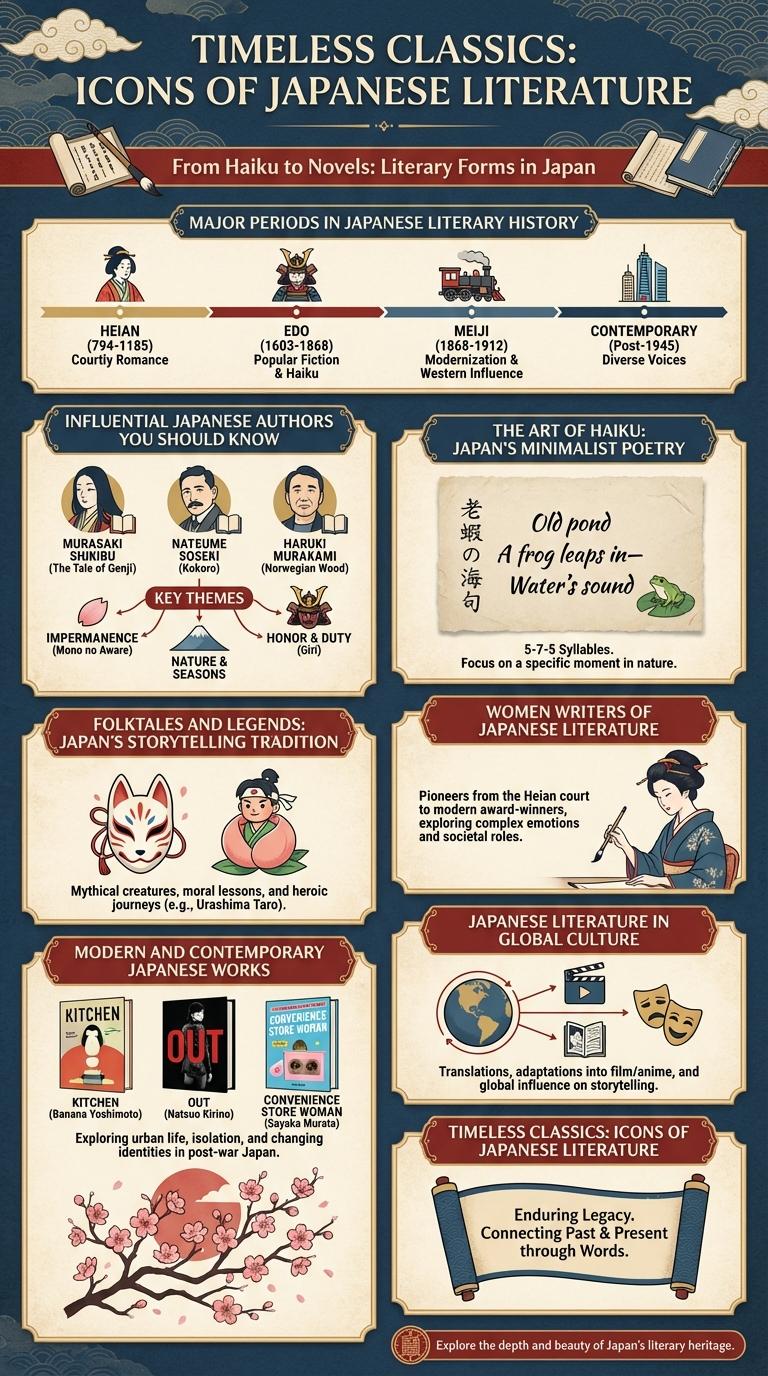
Japanese literature offers a rich tapestry of storytelling that spans centuries, blending classical poetry, epic tales, and modern narratives. This infographic poster visually explores the evolution, key authors, and iconic works that define this unique literary tradition. Discover how historical influences and cultural shifts have shaped the themes and styles celebrated in Japanese literature today.
Timeless Classics: Icons of Japanese Literature
Japanese literature boasts a rich heritage filled with timeless classics that have influenced cultural and literary landscapes worldwide. These iconic works continue to captivate readers with their exploration of human nature, beauty, and existential themes.
- The Tale of Genji - Written by Murasaki Shikibu in the 11th century, it is often regarded as the world's first novel, portraying court life and romance.
- Manyoshu - The oldest existing collection of Japanese poetry, compiled in the 8th century, capturing deep emotions through 4,500 poems.
- No Plays - Classic theatrical works combining poetic language and dance, written by masters like Zeami, exploring spirituality and human conflict.
These timeless masterpieces form the foundation of Japanese literary tradition and offer profound insights into Japan's historical and cultural identity.
From Haiku to Novels: Literary Forms in Japan
What are the key literary forms that define Japanese literature? Japanese literature spans a rich spectrum from concise haiku poetry to expansive novels. This diversity highlights Japan's unique cultural and artistic evolution.
How does haiku reflect Japanese aesthetics? Haiku captures moments with seasonal imagery and simplicity, following a 5-7-5 syllable structure. It emphasizes brevity and depth, embodying the essence of Japanese nature and emotions.
What role do waka and tanka play in Japanese poetry? Waka and tanka poems use 31 syllables arranged in five lines, blending personal expression with classical themes. These forms laid the foundation for much of Japan's poetic tradition.
When did the Japanese novel emerge as a dominant literary form? The novel gained prominence during the Meiji period, influenced by Western storytelling techniques. Authors like Natsume Soseki combined traditional themes with modern style.
How do contemporary Japanese novels connect with traditional forms? Modern writers integrate historical motifs and poetic influences into their narratives. This fusion keeps literary heritage alive while exploring new ideas and social issues.
Major Periods in Japanese Literary History
| Period | Key Features |
|---|---|
| Heian Period (794-1185) | Development of court literature; classics like "The Tale of Genji" by Murasaki Shikibu; emphasis on poetry and narrative prose |
| Kamakura and Muromachi Periods (1185-1573) | Rise of warrior culture themes; emergence of Noh drama; Buddhist influences in literature |
| Edo Period (1603-1868) | Flourishing of popular literature; haiku poetry by Matsuo Basho; growth of kabuki theater and ukiyo-e culture |
| Meiji Period (1868-1912) | Western literary influences introduced; modernization of language and themes; authors like Natsume Soseki and Mori Ogai |
| Modern and Contemporary Period (1912-Present) | Diverse literary movements including naturalism, postwar literature; notable writers include Haruki Murakami and Yoko Ogawa |
Influential Japanese Authors You Should Know
Japanese literature has a rich history shaped by influential authors who have profoundly impacted both national and global literary landscapes. These writers explore themes ranging from tradition and modernity to identity and existentialism.
Murasaki Shikibu, author of "The Tale of Genji," is often considered the world's first novelist, creating a masterpiece of classic Japanese literature. Haruki Murakami is renowned for blending magical realism with contemporary issues, captivating international readers. Yukio Mishima's works delve into post-war identity and cultural conflict, reflecting Japan's societal changes.
Key Themes in Japanese Literature
Japanese literature reflects the country's rich cultural heritage through profound and diverse themes. These themes reveal the depth of human experience and traditional values embedded in Japan's literary works.
- Nature and Seasons - Symbolizes the transient beauty of life and the passage of time, often linked to emotional states.
- Impermanence (Mono no Aware) - Emphasizes the gentle sadness of things that are fleeting, highlighting vulnerability and change.
- Human Connection and Isolation - Explores relationships, loneliness, and the tension between society and individuality.
The Art of Haiku: Japan's Minimalist Poetry
Haiku epitomizes the essence of Japanese literature through its concise and evocative form. This minimalist poetry captures profound emotions and seasonal beauty in just seventeen syllables.
- Historical Roots - Haiku originated in the 17th century, evolving from the linked-verse form called renga.
- Structure and Form - Traditional haiku consists of three lines with a 5-7-5 syllable pattern, emphasizing simplicity and nature.
- Seasonal Themes - Use of kigo, or seasonal words, connects haiku to the cycles of the natural world.
Folktales and Legends: Japan's Storytelling Tradition
Japanese literature boasts a rich tradition of folktales and legends that have been passed down through generations. These stories reflect Japan's cultural values, beliefs, and historical experiences.
Famous tales like Momotaro, Urashima Taro, and the legend of the Tanuki illustrate themes of bravery, kindness, and transformation. Folktales often feature supernatural beings and moral lessons, highlighting the spiritual connection in Japanese storytelling.
Women Writers of Japanese Literature
Japanese literature features a rich tradition of women writers who have shaped its history and cultural narrative. Notable figures include Murasaki Shikibu, author of "The Tale of Genji," recognized as the world's first novel, and Sei Shonagon, famed for her "The Pillow Book." Contemporary authors like Banana Yoshimoto continue to influence global literature with themes of identity and modern life.
Modern and Contemporary Japanese Works
Modern and contemporary Japanese literature showcases a dynamic range of themes from post-war identity to futuristic technology. Prominent authors like Haruki Murakami and Banana Yoshimoto explore psychological depth and urban life in their works. This literary evolution reflects Japan's cultural shifts and global literary influence in the 20th and 21st centuries.