
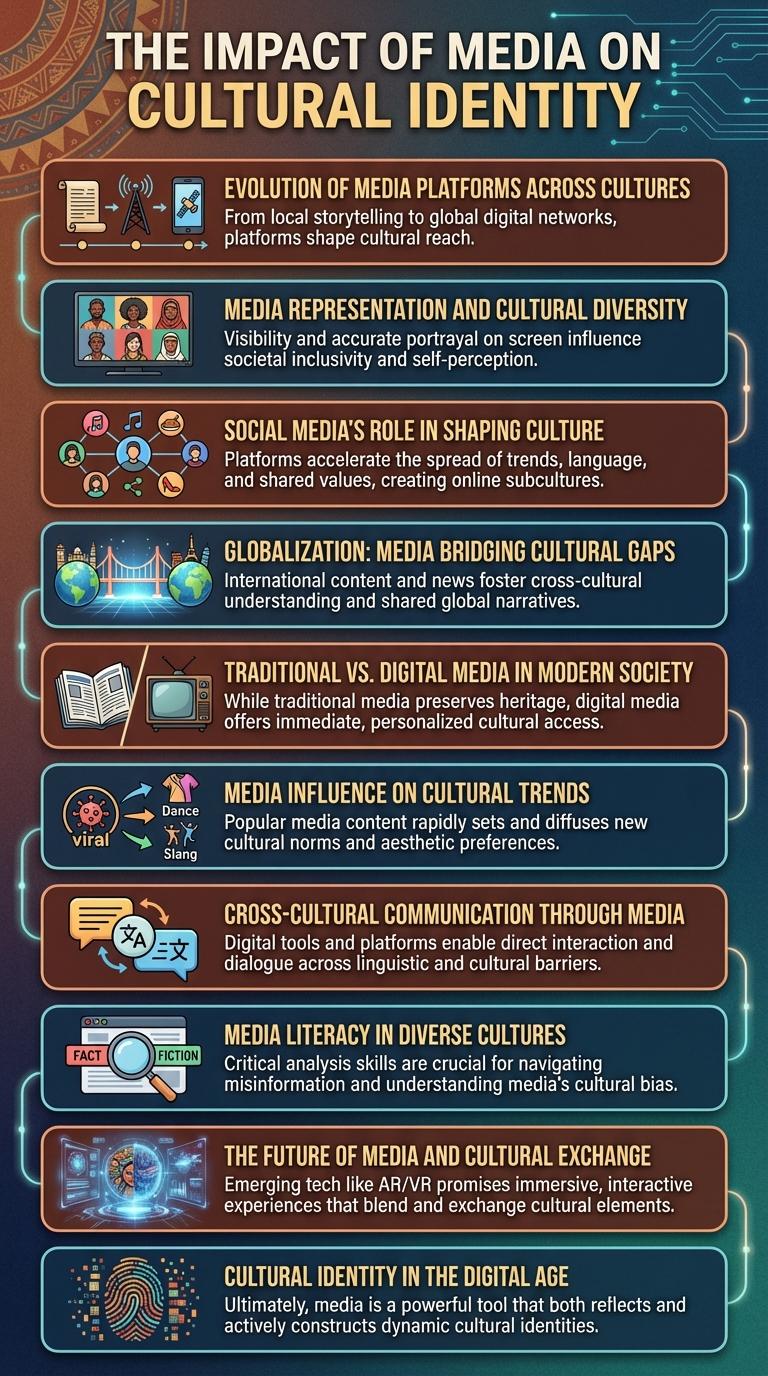
Infographics visually represent the dynamic relationship between media and culture, illustrating how various forms of media influence societal values and norms. They highlight key trends, such as the impact of digital platforms on cultural expression and the transformation of traditional media in shaping public opinion. These visuals offer insights into the evolving dialogue between media technologies and cultural identity.
The Impact of Media on Cultural Identity
Media plays a crucial role in shaping and reflecting cultural identity by influencing perceptions, values, and traditions. It acts as a powerful tool for cultural expression and preservation while also facilitating cross-cultural exchange and hybridization. The impact of media on cultural identity can result in both the reinforcement of cultural heritage and the emergence of new, dynamic cultural forms.
Evolution of Media Platforms Across Cultures
| Media Platform | Cultural Impact and Evolution |
|---|---|
| Oral Traditions | Primary communication in indigenous cultures; storytelling shaped social values and preserved history. |
| Print Media | Mass dissemination of information; facilitated literacy growth and cultural exchange globally. |
| Radio & Television | Introduced audio-visual storytelling; influenced national identities and shared cultural experiences. |
| Internet and Social Media | Enabled global connectivity; accelerated cultural diffusion and localized content creation worldwide. |
| Mobile Media Platforms | Personalized media consumption; empowered real-time communication and cultural expression on-the-go. |
Media Representation and Cultural Diversity
Media representation shapes cultural perceptions and influences societal attitudes towards diversity. Accurate and inclusive portrayal in media promotes understanding and acceptance across different cultures.
- Underrepresentation of Minorities - Many media platforms still show limited roles for ethnic and cultural minorities, affecting visibility and voice.
- Stereotyping in Media - Media often perpetuates cultural stereotypes, reinforcing misconceptions and biases.
- Positive Cultural Representation - Diverse media content can foster empathy and highlight the richness of cultural experiences.
Enhancing cultural diversity in media is essential for building inclusive societies and reflecting true social plurality.
Social Media's Role in Shaping Culture
How does social media influence cultural trends today?
Social media platforms accelerate the spread of cultural trends by enabling real-time sharing and interaction. They create virtual spaces where diverse communities exchange ideas, shaping collective identities and values.
Globalization: Media Bridging Cultural Gaps
Globalization has transformed media into a powerful tool that bridges cultural gaps worldwide. Diverse content now reaches global audiences, promoting cross-cultural understanding and shared experiences.
Media platforms enable people to explore different traditions, languages, and values, fostering inclusivity and tolerance. This interconnectedness helps dissolve cultural barriers and enriches global communication.
Traditional vs. Digital Media in Modern Society
Traditional and digital media play pivotal roles in shaping modern culture. Media consumption patterns reveal distinct influences of both formats on society.
- Audience Reach - Traditional media targets local and broad audiences through TV, radio, and print, while digital media offers global, instant access via internet platforms.
- Content Interaction - Digital media enables interactive engagement through comments, shares, and customization, contrasting with the one-way communication of traditional media.
- Information Speed - Digital media delivers real-time news updates, whereas traditional media often follows scheduled broadcasting and publication cycles.
Media Influence on Cultural Trends
Media plays a crucial role in shaping cultural trends by disseminating new ideas and lifestyles rapidly. Through television, social media, and digital platforms, media influences public perceptions and societal norms.
Popular culture often emerges from media content, reflecting and reinforcing social values and behaviors. Trends in fashion, language, and entertainment frequently originate or gain momentum through media exposure. This continuous interaction between media and culture drives the evolution of collective identities worldwide.
Cross-Cultural Communication through Media
Media serves as a powerful tool for facilitating cross-cultural communication by bridging cultural gaps and fostering mutual understanding. Through various platforms, media enables the exchange of cultural perspectives and values globally.
- Global Reach - Media platforms connect diverse cultures worldwide, enabling real-time sharing of cultural content and ideas.
- Cultural Representation - Media highlights unique cultural narratives, promoting awareness and appreciation of different traditions and customs.
- Language Diversity - Multilingual media content supports effective communication and comprehension among people from various linguistic backgrounds.
Media Literacy in Diverse Cultures
Media literacy varies widely across diverse cultures, influenced by differing values, languages, and communication styles. Understanding cultural context enhances critical analysis of media messages, promoting informed consumption and combating misinformation. Developing media literacy skills empowers individuals to engage with media content thoughtfully and respectfully within their cultural frameworks.